A molecular view of non-classical micellization is provided by researchers from Sweden, Russia and the Czech Republic.
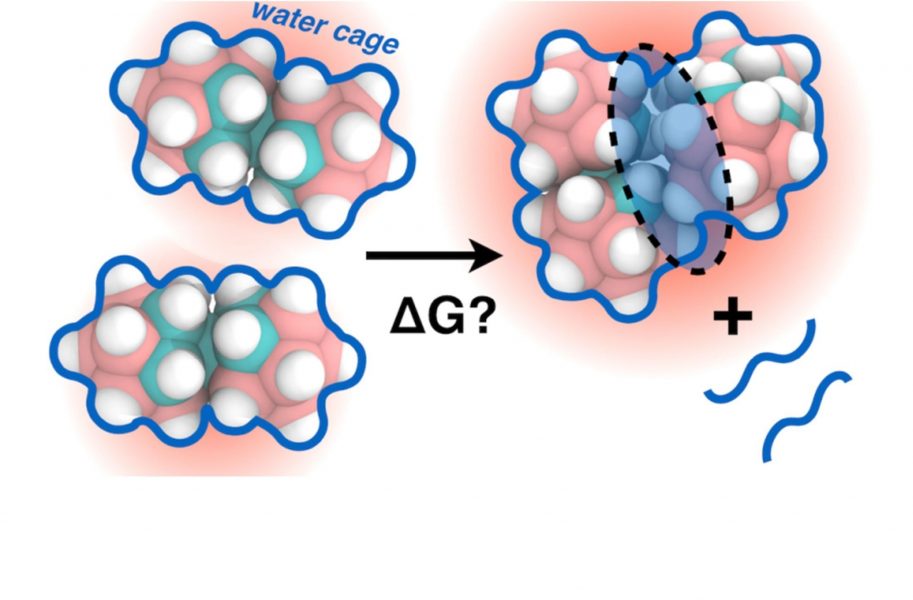

A molecular view of non-classical micellization is provided by researchers from Sweden, Russia and the Czech Republic.
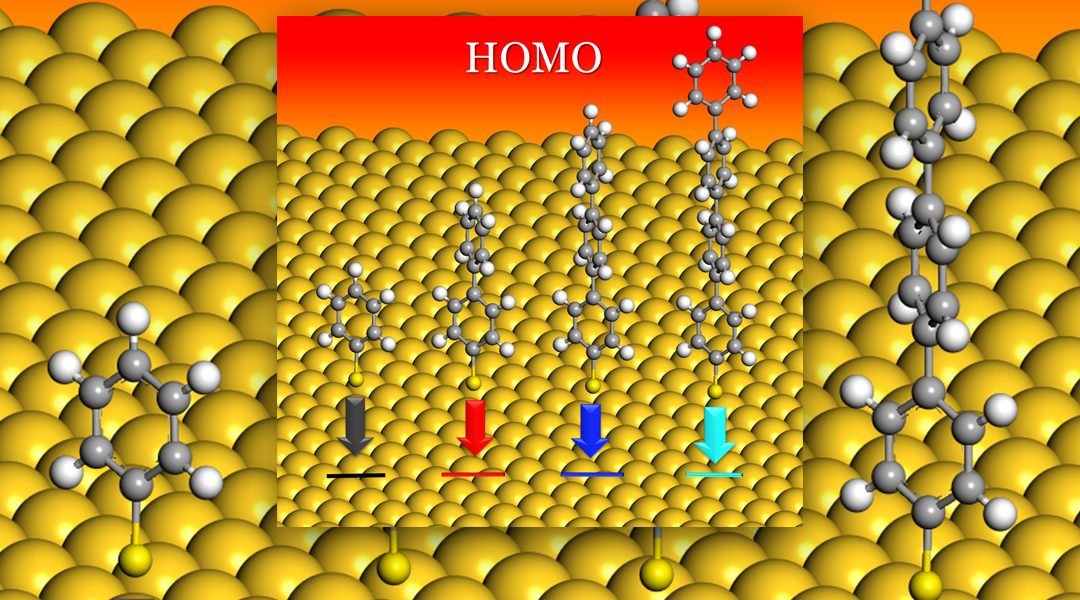
New information about molecular electronics is revealed after conducting DFT simulations.
The burgeoning development and sustained production of advances in the booming field of solar-to-energy conversion have inspired a Special Issue specifically dedicated to “Artificial Photosynthesis: Mimicking Nature for Renewable Energy Production” – guest editors Wee-Jun Ong, Zhiqun Lin and Kazunari Domen.
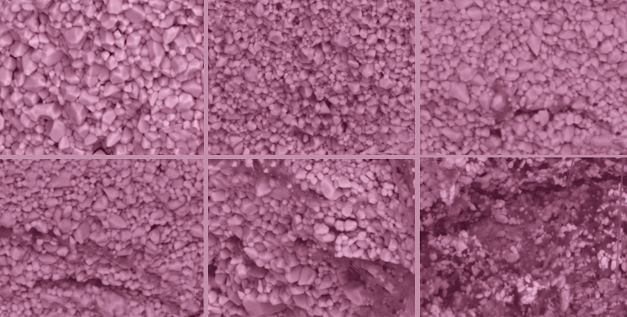
It is shown that polymer such as Teflon can be distributed around each grain of ZnO, and this, in turn, allows for use to form a composite material with an electrical conduction that is blocked at low fields and conducts at high field through the quantum mechanical process known as “tunneling”.

Next-generation electronics should be wearable, versatile, and energy-efficient. A new sensor systems combined with a triboelectric nanogenerator provides an excellent solution.

The 2017 Fall Meeting of the Materials Research Society (MRS) took place in Boston, Massachusetts, USA, from November 26 – December 1. This year’s conference featured 55 technical symposia, eleven tutorial sessions, four poster sessions, and 241 exhibitors. The...

Via a bottom-up approach this research shows the production of scalable, stable InGaN nanowire photonic crystals for high efficient LEDs.
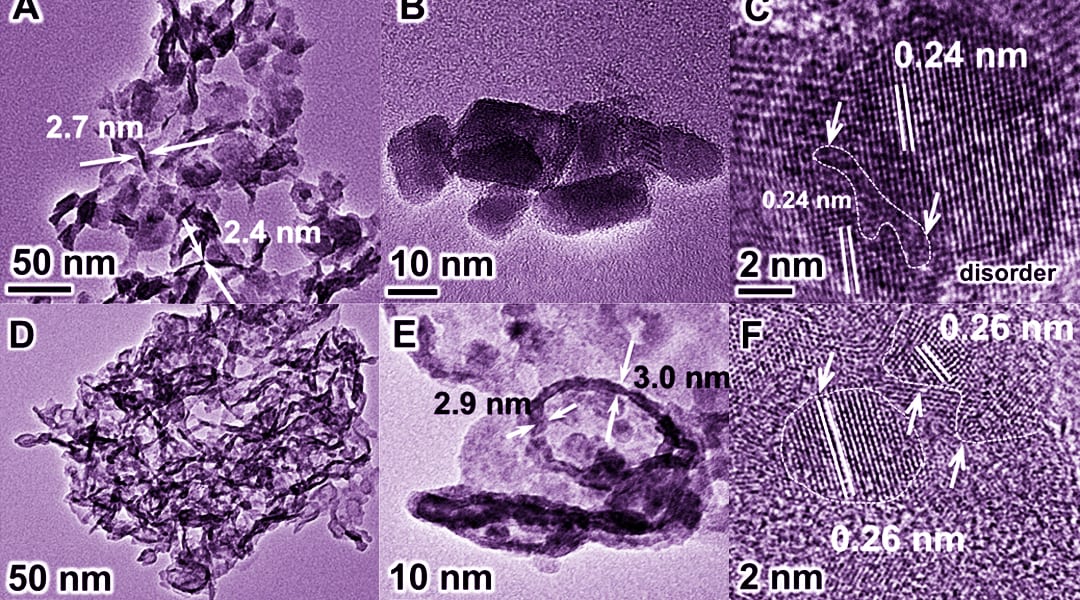
For the first time, a new class of metal-to-metal charge-transfer (MMCT) systems is facilely synthesized.
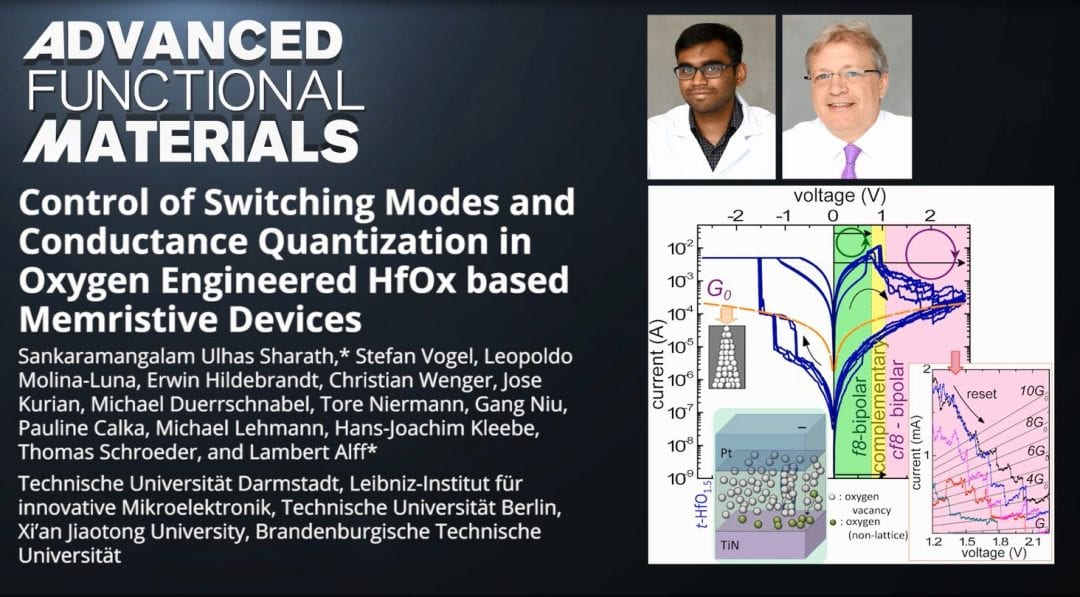
Lambert Alff and his team from Darmstadt University of Technology (TU Darmstadt) in Germany, along with their collaborators, propose a novel unified model for hafnium-oxide resistive random access memory (RRAM) based on the role of oxygen vacancy defects.

A method that allows the long-term labeling of different cell populations in tens of different colors using fluorescent nanoparticles.

 Micron-sized hidden dimensions could solve two of physics’ deepest puzzles
 Turning Periods into Power: Menstrual Blood a Valuable Resource for Medical Diagnostics
 Immune resilience gene signature could hold the key to healthy aging
 Surfactants Steer Supraparticle Structure
 Bone loss in obesity traced to gut microbiota
 Edible electronics realize safe, complex monitoring devices