A team from Stanford University has investigated the effects of graphite oxide nanoparticles on mouse embryonic stem cells.
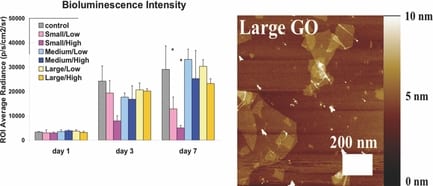

A team from Stanford University has investigated the effects of graphite oxide nanoparticles on mouse embryonic stem cells.
A research team have reported a novel and versatile strategy to assemble inorganic NPs into sub-50 nm vesicles.
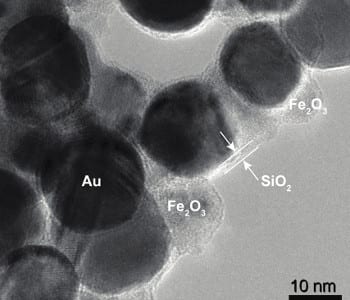
ETH researchers have developed plasmonic particles that are relatively easy to produce and have a wide range of applications, including cancer treatment.
A study to investigate how nanoparticles could be used to improve the diagnosis and treatment of cardiovascular disease has received £3 million funding.
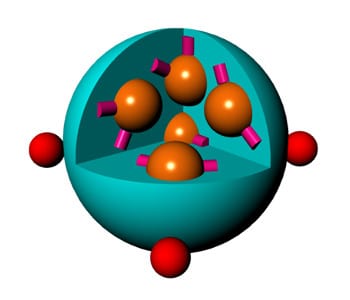
Korean scientists have developed a tumor-targeted, bioreducible nanoparticle system that can deliver cytotoxic anticancer drugs to tumor tissues.

Recent research into the use of polymer-coated nanoparticles for enhanced oil recovery is reviewed in the Journal of Applied Polymer Science.
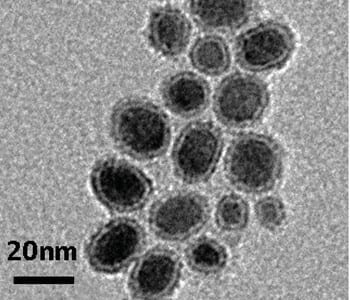
New core/shell structure nanoparticles have been reported by a team led by Peking University researchers.
Drugs used to treat blindness-causing disorders could be successfully administered by eye drops rather than unpleasant and expensive eye injections.
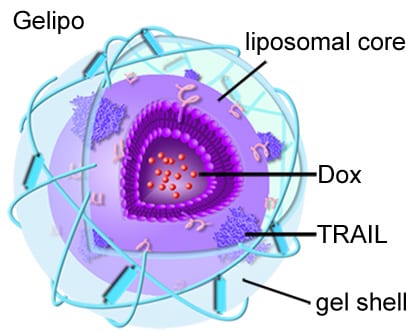
Nanoparticles can carry two different anti-cancer drugs and deliver them to separate parts of the cancer cell where they will be most effective.
Researchers develop polymer-based mucus-penetrating particles (MPP) loaded with paclitaxel, a frontline chemo drug.
 New theory suggests gravity is not a fundamental force
 Higgs boson may be driving the Universe’s expansion
 Water-powered gadgets may be on the horizon thanks to new evaporation-based energy device
 Scientists discover a new class of antibiotics
 Micron-sized hidden dimensions could solve two of physics’ deepest puzzles
 A new type of dark matter could explain mysterious radiation from the Milky Way’s core