Scientists have established comprehensive maps of the human epigenome, shedding light on how the body regulates which genes are active in which cells.
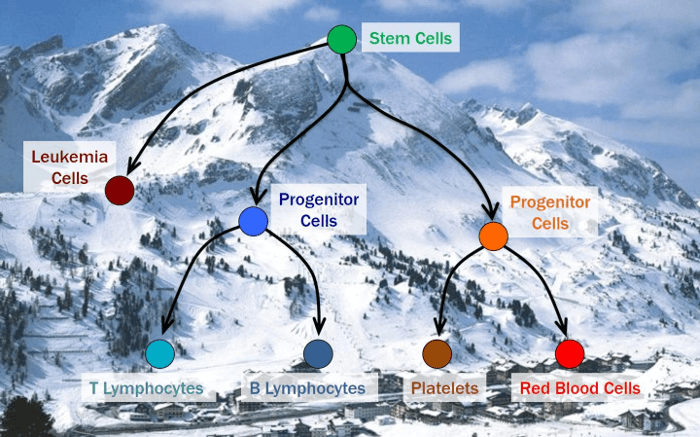

Scientists have established comprehensive maps of the human epigenome, shedding light on how the body regulates which genes are active in which cells.

Advanced Sustainable Systems is a new international journal for interdisciplinary research on sustainability in all scientific disciplines.
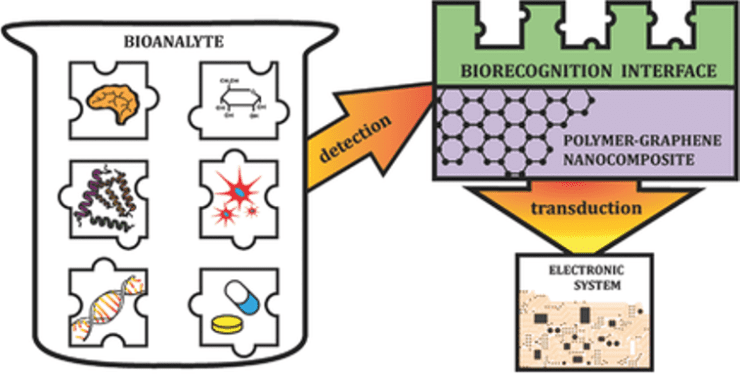
So-called “biosensors” are sensors that detect or quantify biomolecules, such as glucose, proteins, or DNA.

Max Planck researchers have developed self-propelled tiny ‘microbots’ that can remove lead or organic pollutions from contaminated water.

4D ultra-fast electron microscopy can peer into and peel away the most subtle details and beauty of photocatalysis, providing a new sharp focus realism of human-made nano machinery for the solar powered fixation of CO2 to fuels and chemical feedstocks.
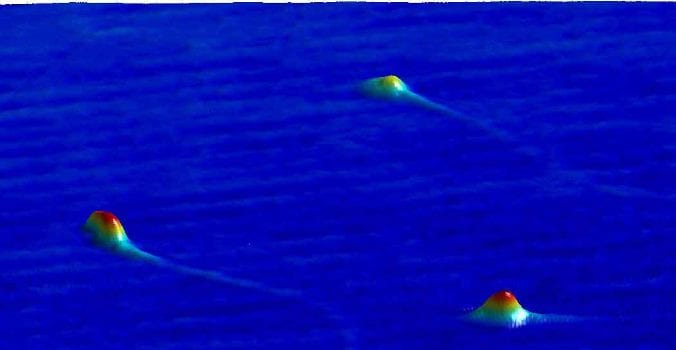
Holographic imaging reveals details about morphology, motility, and the concentration of sperm in semen analysis.
Over 6,000 participants followed the call of the MRS to their traditional annual post-Thanksgiving science and technology summit in Boston from November 30-December 4, 2015.
AIChE and Society for Biological Engineering join forces with Wiley to launch Bioengineering & Translational Medicine, with Samir Mitragotri of the University of California, Santa Barbara, as editor-in-chief.

Could we be living without fossil fuels in just 30 years time? Professor Geoff Ozin looks at the likelihood of such a Utopian vision of the future.
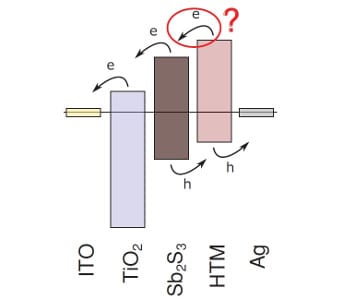
Research into solar cell materials has shown that stibnite synthesis is fast and cheap, and can be easily scaled up, critical for industrial applications.
 New theory suggests gravity is not a fundamental force
 Higgs boson may be driving the Universe’s expansion
 Water-powered gadgets may be on the horizon thanks to new evaporation-based energy device
 Scientists discover a new class of antibiotics
 Micron-sized hidden dimensions could solve two of physics’ deepest puzzles
 A new type of dark matter could explain mysterious radiation from the Milky Way’s core