Michael Grätzel et al. show excellent device stability for perovskite solar cells tested outdoors in the hot, humid climate of Jeddah, Saudi Arabia.
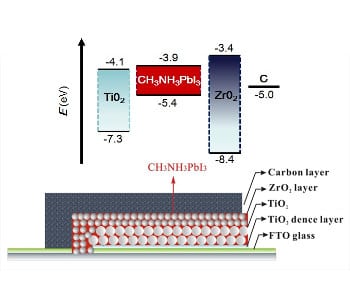

Michael Grätzel et al. show excellent device stability for perovskite solar cells tested outdoors in the hot, humid climate of Jeddah, Saudi Arabia.
A multiple core–shell 3D printing method has been developed to fabricate soft, stretchable, fibre-based, capacitive strain sensors. The sensors can be readily integrated into conventional clothing and used in gait monitoring.
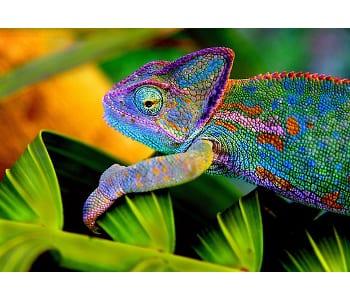
Professor Ozin explores the chameleon’s color-shifting ability, and how the same principles have been utilised in the lab and in manufacturing.

Huisheng Peng talks about how his research interests and career have developed and his role as an Editorial Board co-chair for the new journal ChemNanoMat.

Car manufacturer Nissan partners with inventor Hamish Scott to create paint that uses UV energy absorbed during daylight to glow at night.

A team of researchers from Hefei, China use bee pollens in the synthesis of carbon dots with applications in bioimaging and catalysis.
An outlook to the forthcoming MRS Spring Meeting, to be held from April 6-10, 2015 for the last time in San Francisco, California.
The first symposium in Australia dedicated to the subject of 2D nanomaterials research, 2D15, took place in Melbourne on the 10th-11th March, 2015.

Professor Ozin asks the question; do we want war or peace with CO2?
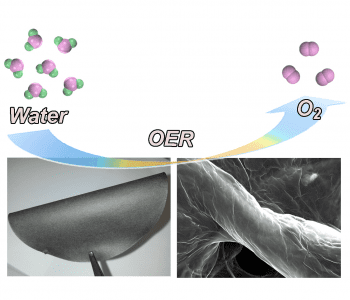
A novel electrocatalyst system with long-term stability, based on cellulose paper and graphene, has been developed by for the oxygen reduction reaction.

 Micron-sized hidden dimensions could solve two of physics’ deepest puzzles
 Turning Periods into Power: Menstrual Blood a Valuable Resource for Medical Diagnostics
 Surfactants Steer Supraparticle Structure
 Bone loss in obesity traced to gut microbiota
 Edible electronics realize safe, complex monitoring devices
 Fermilab Confirms Muon g-2 Measurements