Electronic components built from graphene could pave the way for smaller, faster and more green and sustainable electronic devices.


Electronic components built from graphene could pave the way for smaller, faster and more green and sustainable electronic devices.
Harvesting waste heat from power stations and even vehicle exhaust pipes could soon provide a valuable supply of electricity.
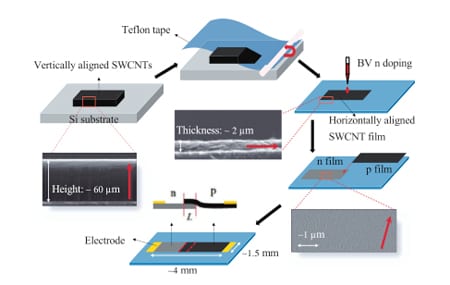
Rice, Sandia team uses carbon nanotubes for polarized-light detection.
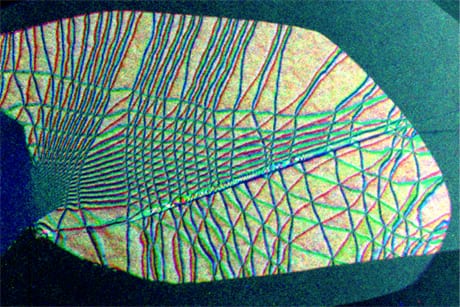
Cornell researchers show that imperfect graphene sheets can display “electrical highways”.

Mechanical and industrial engineering assistant professor Marilyn Minus has developed a superstrong fiber that rivals the best in the industry.
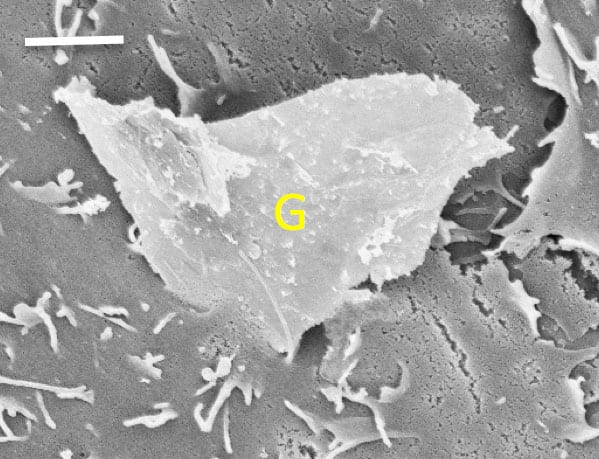
New research adds to knowledge of potential toxicity of nanomaterials.

DNA-sequencing microchip functions after exposure to radiation doses similar to those that might be expected during a robotic expedition to Mars.

Micro-computed X-ray tomography and microfluidic-based electrochemical analysis give new insights into into electrode structure-performance relationships.

Bubble wrap is lighter, stronger and more flexible than sheet metal and more heat- and chemical-resistant than plastic or other polymer-based bubble wraps.

Biosensor nanomaterials, edited by Songjun Li, Jagdish Singh, He Li, and Ipsita A. Banerjee, reviewed by Professor Luisa Torsi from the University of Bari.

 Micron-sized hidden dimensions could solve two of physics’ deepest puzzles
 Turning Periods into Power: Menstrual Blood a Valuable Resource for Medical Diagnostics
 Surfactants Steer Supraparticle Structure
 Bone loss in obesity traced to gut microbiota
 Edible electronics realize safe, complex monitoring devices
 Fermilab Confirms Muon g-2 Measurements