A modular concept is developed to tune the electronic structure in organic self-assembled monolayers and their interfaces.
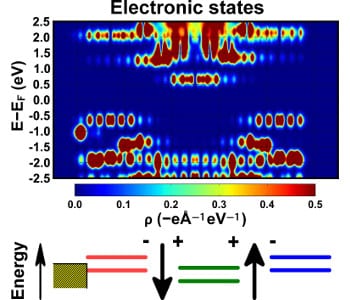

A modular concept is developed to tune the electronic structure in organic self-assembled monolayers and their interfaces.
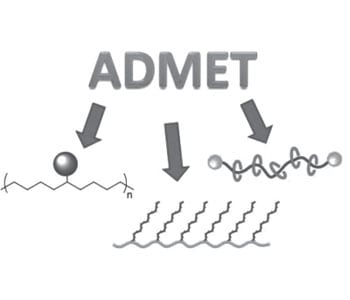
Acyclic diene metathesis (ADMET) polymerization is a unique strategy for achieving polymers with precise control over the primary structure.
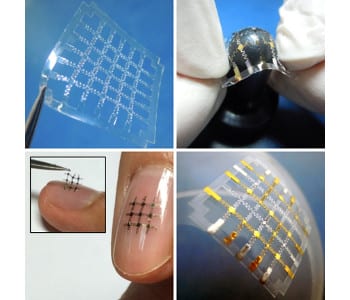
A Korean research team led by Prof. Soonmin Seo report a new method for preparing highly flexible, stretchable, and patchable organic electronic devices.
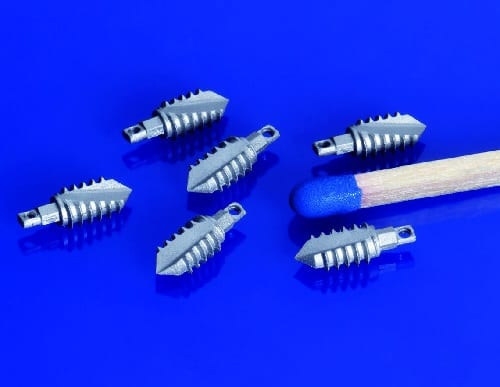
Fraunhofer researchers have developed load bearing, biodegradable implants that are completely degraded in the body.
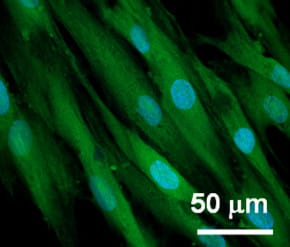
Researchers have successfully fabricated titanium surfaces chemically functionalized with the flavonoids taxifolin and quercitrin.
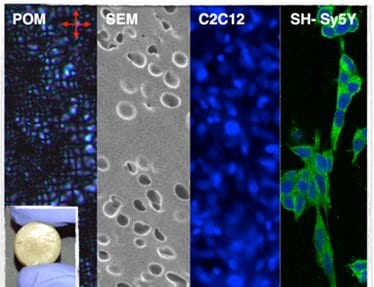
Biocompatible, biodegradable and porous LC elastomers were used as viable, soft scaffolds for cell growth and proliferation in a spatial (3D) fashion.
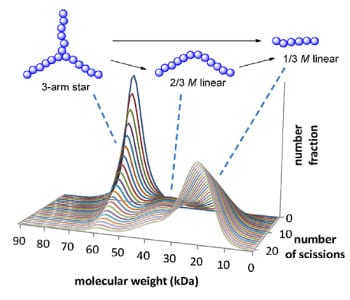
Researchers have developed a model for predicting the molecular weight distributions of star polymers undergoing mechanochemical degradation.
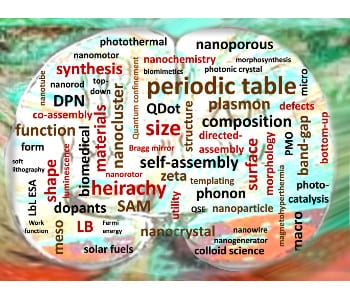
Professor Geoff Ozin and co-workers aim to categorise and organise the multifaceted properties and behaviours of nanomaterials.
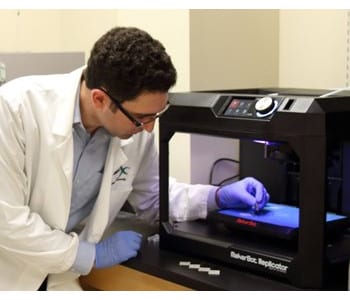
Researchers develop an innovative method for using affordable, consumer-grade 3D printers and materials to fabricate custom medical implants.

Professor Robert Brown of UCL’s Tissue Repair and Engineering Centre reviews Standardisation in Cell and Tissue Engineering from Elsevier.
 New theory suggests gravity is not a fundamental force
 Higgs boson may be driving the Universe’s expansion
 Water-powered gadgets may be on the horizon thanks to new evaporation-based energy device
 Scientists discover a new class of antibiotics
 Micron-sized hidden dimensions could solve two of physics’ deepest puzzles
 A new type of dark matter could explain mysterious radiation from the Milky Way’s core