Glycerol polymers represent a major opportunity for replacing or complementing the current polymers used in the biomedical market.
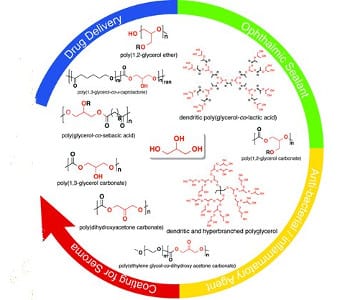

Glycerol polymers represent a major opportunity for replacing or complementing the current polymers used in the biomedical market.
An international group develops a new three-component surface coating to reduce the number of infections caused by catheters.

A Harvard research team has used a layer-by-layer technique to assemble a nanostructured surface coating infused with a fluorocarbon-based lubricant.
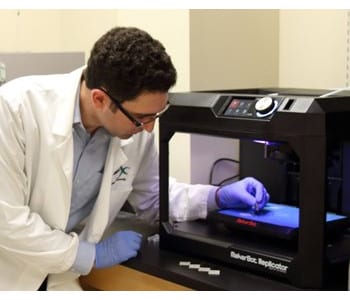
Researchers develop an innovative method for using affordable, consumer-grade 3D printers and materials to fabricate custom medical implants.

A new class of iron oxide nanocarrier activates the immune system and serves as a contrast agent for multiple imaging techniques.
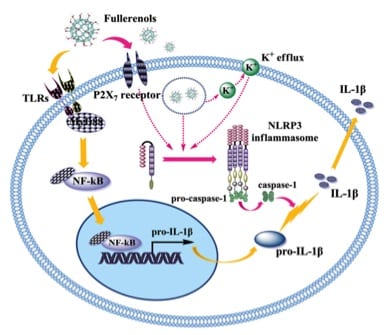
Prof. Chunying Chen and her colleagues from the National Center for Nanoscience and Technology, China demonstrate that polyhydroxylated metallofullerenol can activate primary mouse macrophages to produce pro-inflammatory cytokines.

Professor Masami Okmoto of the Toyota Technological Institute reviews the first edition of Environmentally Friendly Polymer Nanocomposites.
American researchers design organic battery intended for deployment in power stations.
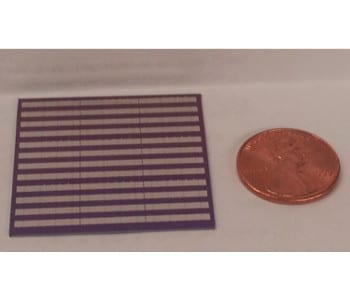
Researchers create an artificial chemical sensor based on one of the human body’s most important receptors.
Liquid crystal/Bacillus subtilis mix may have interesting applications for new material design and fabrication.
 New theory suggests gravity is not a fundamental force
 Higgs boson may be driving the Universe’s expansion
 Water-powered gadgets may be on the horizon thanks to new evaporation-based energy device
 Scientists discover a new class of antibiotics
 Micron-sized hidden dimensions could solve two of physics’ deepest puzzles
 A new type of dark matter could explain mysterious radiation from the Milky Way’s core