Lienkamp and coworkers propose polymer surfaces with antimicrobial and antifouling functionalities designed to fight biofilm formation in medical devices.
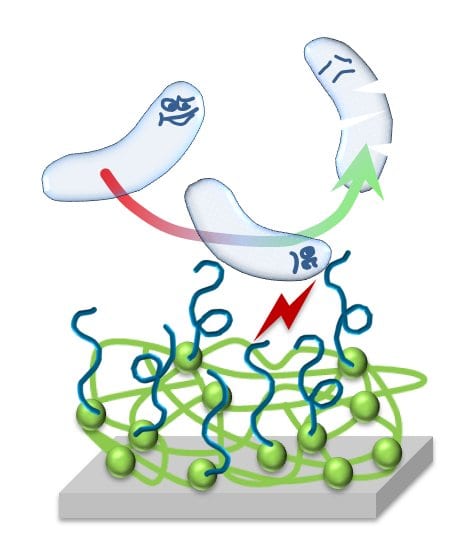

Lienkamp and coworkers propose polymer surfaces with antimicrobial and antifouling functionalities designed to fight biofilm formation in medical devices.
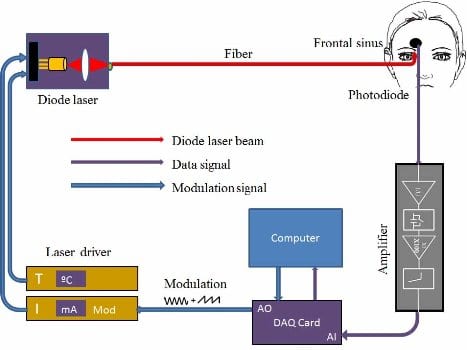
A non-intrusive optical technique called GASMAS shows potential of being developed into a realtime and cost-effective diagnostic tool for human sinuses.
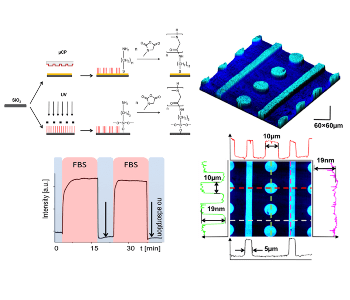
Two new methods – microcontact printing and photolithography – to obtain structured polypeptoid brushes with excellent non-fouling properties are presented.
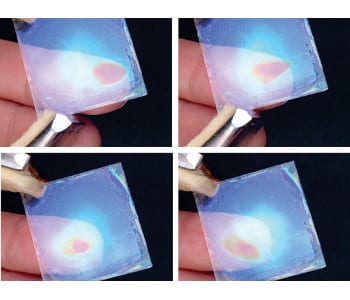
A new sensor technology could enable touchless displays that respond to moisture emitted by the human body.
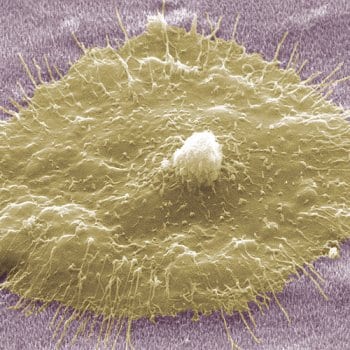
The hybrid titanium surface presented here may lead to the development of new classes of implant materials.
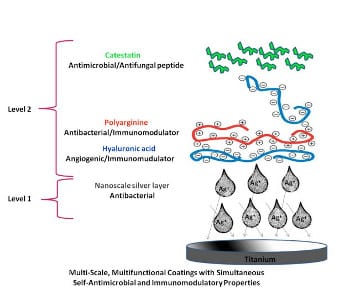
Rejection or diminished functionability of implants are frequent problems. A new type of coating could limit associated infections and inflammations.
The 35th APS took place on the Gold Coast, Queensland, from the 12th – 15th of July: three and a half days of talks from numerous areas of polymer science.
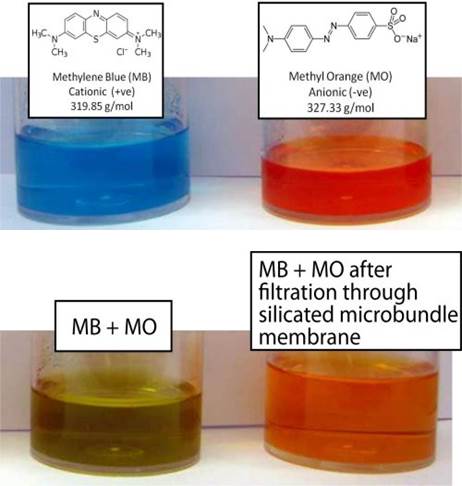
Two ionic dyes of similar molecular size but opposite charge have been separated using a hybrid membrane as an example for controlled fine scale filtration.
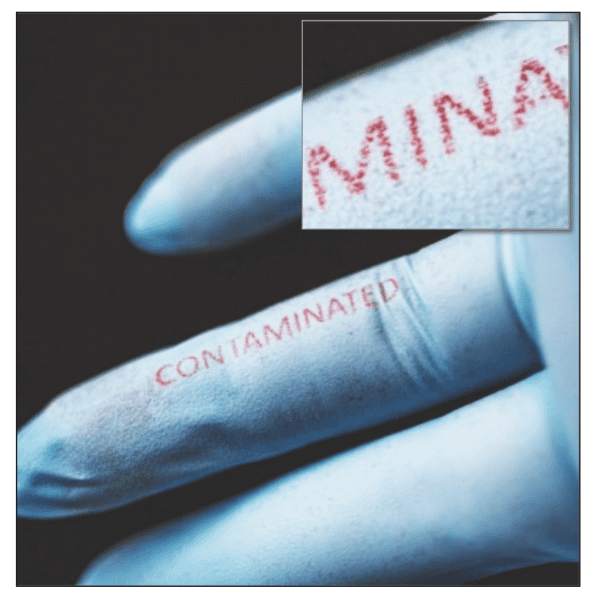
A new silk ink formulation provides a “bottom-up” approach to customized multifunction biomaterials.
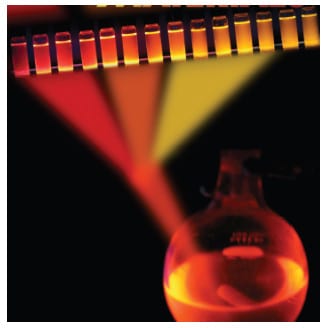
Professor Geoff Ozin has received an RSC Centenary Award – we asked for his thoughts on the research that brought him here.
 New theory suggests gravity is not a fundamental force
 Higgs boson may be driving the Universe’s expansion
 Water-powered gadgets may be on the horizon thanks to new evaporation-based energy device
 Scientists discover a new class of antibiotics
 Micron-sized hidden dimensions could solve two of physics’ deepest puzzles
 A new type of dark matter could explain mysterious radiation from the Milky Way’s core