Dr. Ming Qiu Zhang of Zhongshan University, author of “Self-Healing Polymers and Polymer Composites,” talks to MaterialsViews about self-healing and other scientific challenges.


Dr. Ming Qiu Zhang of Zhongshan University, author of “Self-Healing Polymers and Polymer Composites,” talks to MaterialsViews about self-healing and other scientific challenges.
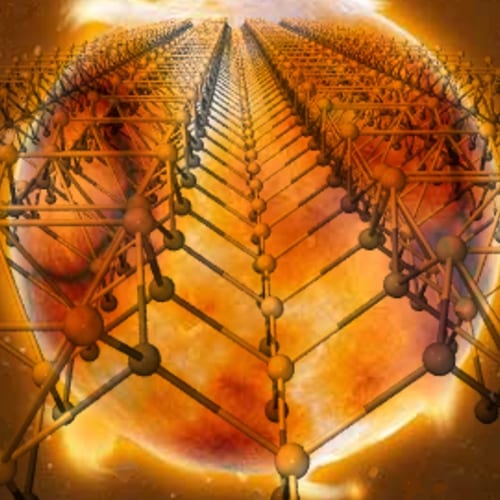
Molecular dynamics methods are wedded to tight-binding density functional theory to produce FIREBALL: a powerful computer code which allows for efficient, predictive simulations of the dynamics of mesoscale systems.

Ion-sensitive field-effect transistors meet scalable CMOS technology to yield low-cost, high throughput DNA sequencing modules.
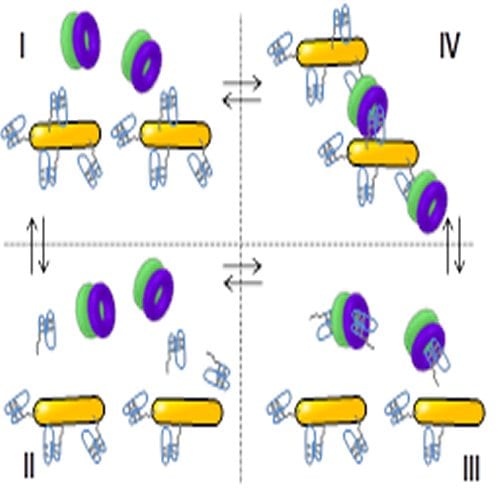
The possibility to obtain work from nanomachines is a step closer to reality as scientists provide a quantitative framework describing interfacial interactions in a nanobiomolecular system.

New publication brings together theory and experimental results in molecular electronics – can we go beyond Moore’s law? Emanuele Orgiu & Paolo Samorì of ISIS tell us more
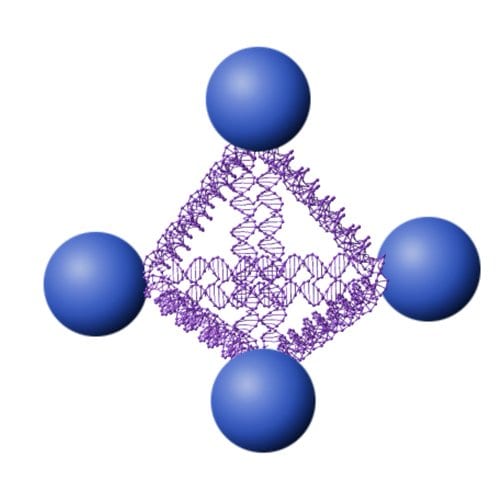
Tetrahedral constructs of DNA are a new way to support proteins on functional nanostructures, according to work by U.S. scientists.
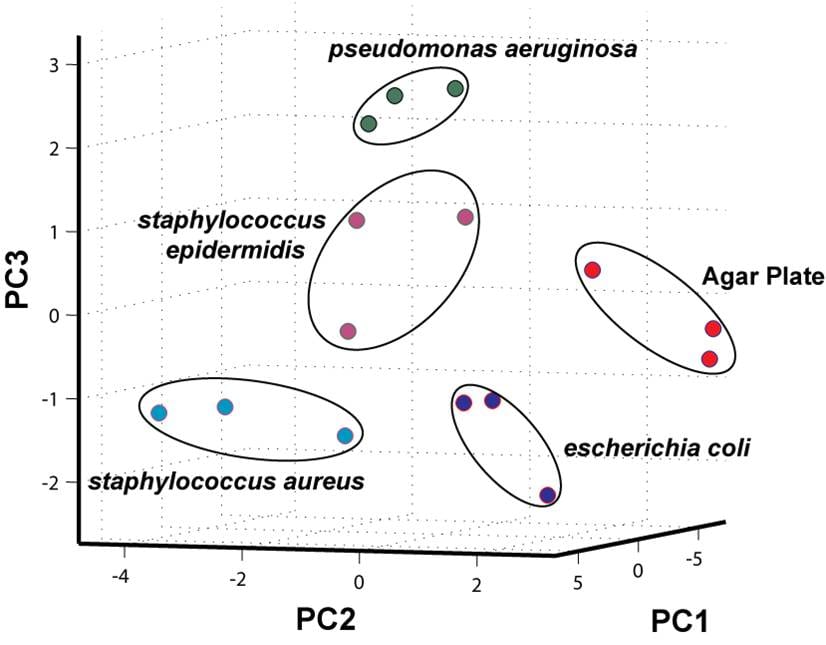
So what is next for nanochemical and biochemical sensor research? Shouldn’t we be trying to find the next glass pH electrode, rather than trying to squeeze that extra fraction of a percent out of our tried and tested materials?
Professor Geoffrey Ozin gives us his thoughts on nanochemistry and photonic metamaterials.
Prof. Andrey Rogach, Prof. Dmitri Talapin and Dr. Elena Shevchenko look back on 10 exciting years of nanocrystal superstructures.
Scientists from the University of Linz engage in developing electronics that can simply be thrown onto the compost heap or, if in a pinch, could even be eaten!
 New theory suggests gravity is not a fundamental force
 Higgs boson may be driving the Universe’s expansion
 Water-powered gadgets may be on the horizon thanks to new evaporation-based energy device
 Scientists discover a new class of antibiotics
 Micron-sized hidden dimensions could solve two of physics’ deepest puzzles
 A new type of dark matter could explain mysterious radiation from the Milky Way’s core