Researchers at Melbourne University have developed a versatile method to quickly and easily load a diverse range of functional and therapeutic cargo into polymer capsules.
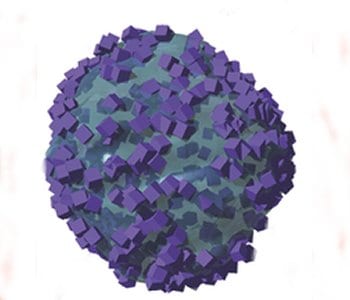

Researchers at Melbourne University have developed a versatile method to quickly and easily load a diverse range of functional and therapeutic cargo into polymer capsules.
Toward identification and characterization of molecular interactions in living cells: Quantifying molecular colocalization in live cell fluorescence microscopy.
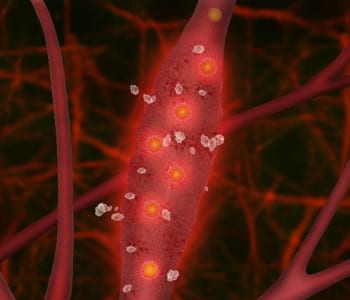
Researchers highlight the potential and current biological and biomedical applications of micro- and nanoparticle research.

David Tai Leong answers some questions about his world of nanobiology and new biomaterials.

2014 Karl Heinz Beckurts Award goes to Prof. Dr. Andreas Marx.
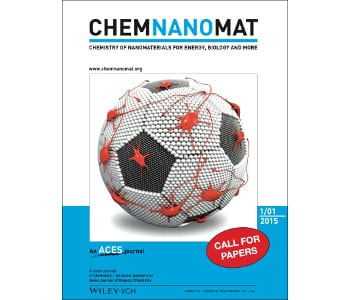
ChemNanoMat is the latest journal to be launched by Wiley-VCH and opened for submissions at the beginning of November.
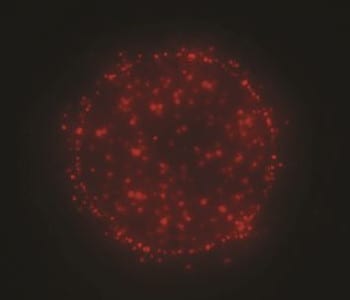
Detection of nanoparticles and DNA biomarkers at clinically relevant low levels can be achieved by combining epifluorescent microscopy with dielectrophoretic microarrays.
Short engineered protein sequences have been used to initiate the simultaneous synthesis of two inorganic species in desired locations with nanoscale accuracy.
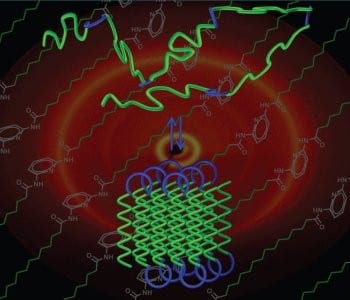
Macromolecular Chemistry and Physics presents new and exciting developments in the synthesis and properties of precision polymers, guest-edited by Michael R. Buchmeiser.
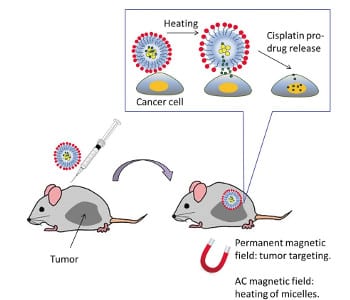
Cisplatin pro-drug delivery via thermosensitive magnetomicelles is visualized at the interface between nanomaterials and living systems with sub-100 nm resolution
 New theory suggests gravity is not a fundamental force
 Higgs boson may be driving the Universe’s expansion
 Water-powered gadgets may be on the horizon thanks to new evaporation-based energy device
 Scientists discover a new class of antibiotics
 Micron-sized hidden dimensions could solve two of physics’ deepest puzzles
 A new type of dark matter could explain mysterious radiation from the Milky Way’s core