Barner-Kowollik (KIT) and his research group investigate possible kinetic trends and family-type behavior within a series of branched acrylates
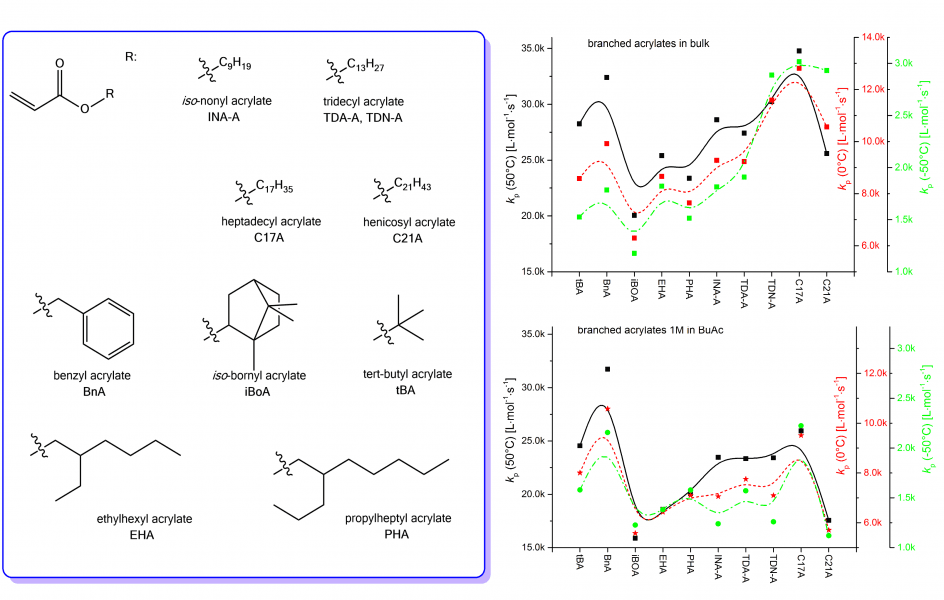

Barner-Kowollik (KIT) and his research group investigate possible kinetic trends and family-type behavior within a series of branched acrylates
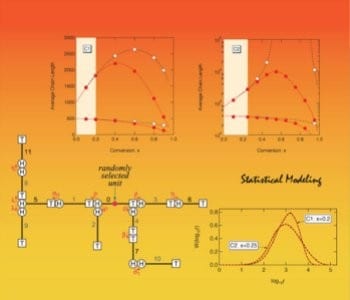
Macromolecular Reaction Engineering presents recent mathematical tools and approaches for polymerization reaction engineering, guest-edited by Jose Carlos Pinto.
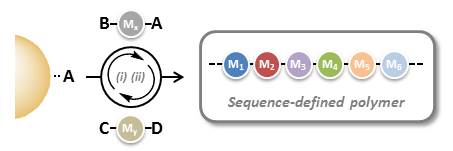
Solid-phase chemistry is a powerful tool for the synthesis of monodisperse sequence-defined polymers. Lutz and coworkers discuss pros and cons.
Interfacial miniemulsion polymerization is a facile route for the synthesis of nanoparticles for applications ranging from therapeutics to coatings.
Researches from Pittsburgh present their latest advances towards the characterizations of three-dimensionally ordered macroporous hydrogels.
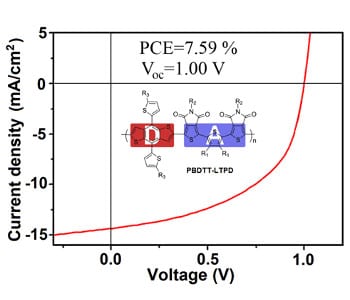
Enhanced performance in polymer solar cells is achieved using a linked-acceptor type conjugated polymer.
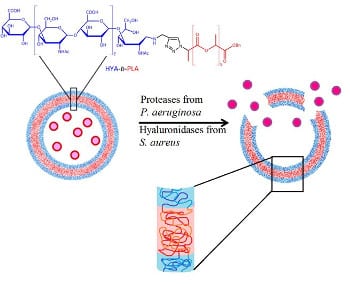
German researchers have developed dual enzyme-responsive polymeric capsules for bacterial enzyme sensing.
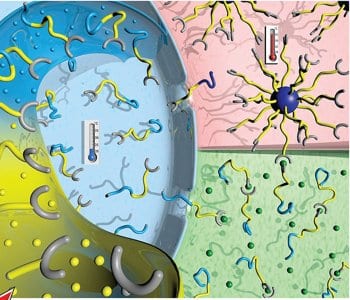
A recent issue in Macromolecular Rapid Communications is dedicated to this ever growing field of material science.
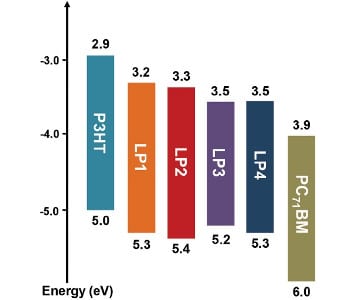
Enhanced light harvesting for polymer solar cells via ladder-type polymer donors.
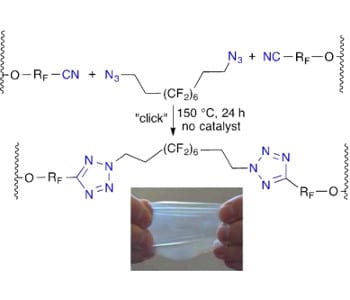
Azide–nitrile cycloaddition is used to make stronger crosslinked fluoroelastomers.
 New theory suggests gravity is not a fundamental force
 Higgs boson may be driving the Universe’s expansion
 Water-powered gadgets may be on the horizon thanks to new evaporation-based energy device
 Scientists discover a new class of antibiotics
 Micron-sized hidden dimensions could solve two of physics’ deepest puzzles
 A new type of dark matter could explain mysterious radiation from the Milky Way’s core