A steel mesh with a porous hydrogel layer is both superoleophobic and superhydrophilic, allowing water to drain while retaining oil.
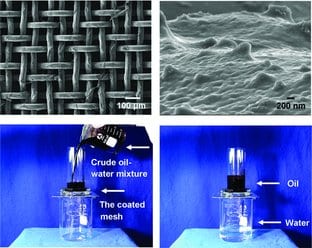


A steel mesh with a porous hydrogel layer is both superoleophobic and superhydrophilic, allowing water to drain while retaining oil.

MIT professor Mildred Dresselhaus takes a look at the latest work in fullerene chemistry.
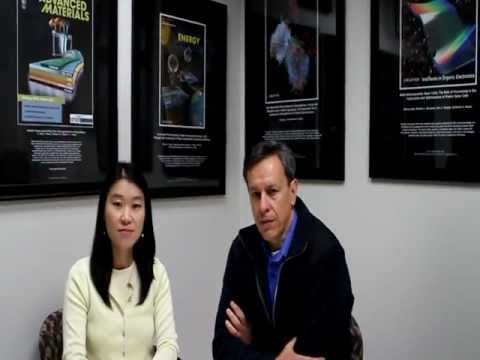
Jung Hwa Seo and Gui Bazan describe solution-processed Organic Light-Emitting Transistors (OLETs).

Jeffrey Moore and Scott White talk us through their newest publication, “Three-Dimensional Microvascular Fiber-Reinforced Composites”.

New publication brings together theory and experimental results in molecular electronics – can we go beyond Moore’s law? Emanuele Orgiu & Paolo Samorì of ISIS tell us more
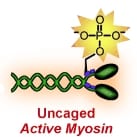
Light-triggered myosin allows real-time study of cells
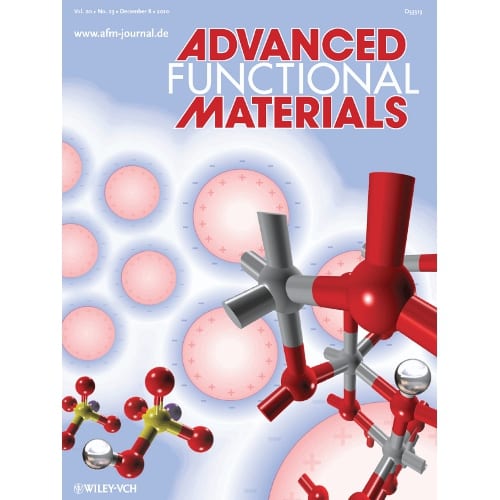
The addition of extremely small crystals to solid electrolyte material has potential to raise the efficiency of fuel cells. Researchers at TU Delft were the first to document this accurately.
Professor Sanjay Mathur of the University of Cologne reviews Nanotechnology for the Energy Challenge, a new text covering areas of energy research where nanomaterials could make a big difference.
Professor Martin Pumera shares his thoughts on the accurate identification of graphene and its related structures in research.
A new polymer-based microfluidic device capable of producing tiny polymer-based capsules continuously without clogging.