Two research teams synthesize highly ordered carbonaceous structures, such as graphene, using unusual but everyday raw materials, and even waste.


Two research teams synthesize highly ordered carbonaceous structures, such as graphene, using unusual but everyday raw materials, and even waste.
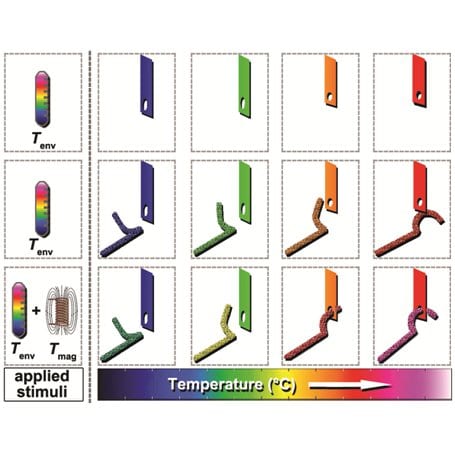
The development of materials with magnetically adjustable properties has been presented by a German research team from the Helmholtz-Zentrum Geesthacht (HZG) Centre for Biomaterial Development in Teltow.
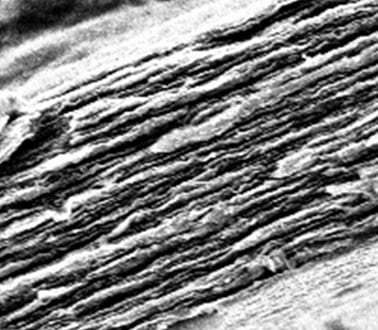
Researchers demonstrate electrochemical actuation using graphene-based paper.

Microbarcodes embedded with rare earth nanocrystals show promise for disease detection and biomedicine.
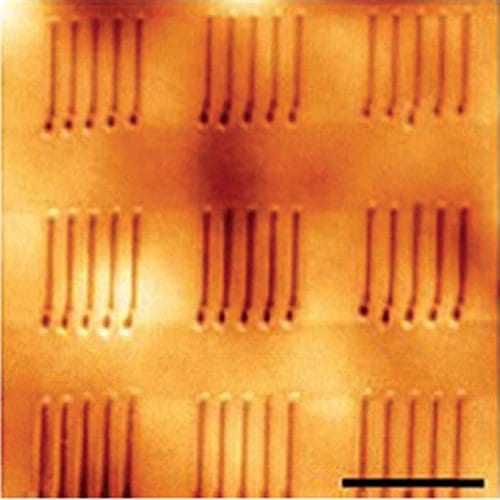
A new method of making ferroelectrics that uses a heated probe tip means they can be produced directly on virtually any substrate and in any shape.
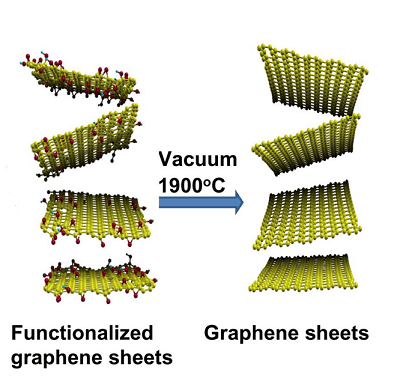
A new method to produce purer, more conductive graphene sheets has been developed by a Korean research team
French researchers have coupled the excellent mechanical properties of zirconium and silicon carbide, in the first step to a high performance ceramic resistant to high temperatures in an oxidizing atmosphere.
Preceramic paper offers a novel approach for manufacturing of lightweight ceramic structures applying versatile paper shaping technologies.
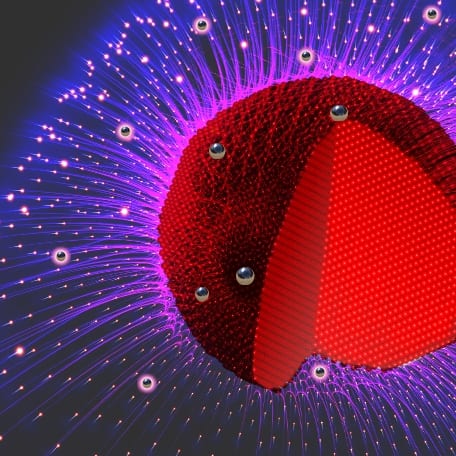
Dr. Stijn Mertens, Belgium, talks about his group’s recent achievements in forming nanoparticles that consist of a core of pure gold surrounded by a solid solution of gold and mercury.
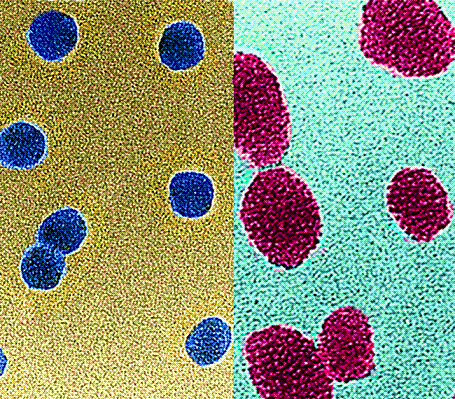
Ultrabright Fluorescent Mesoporous Silica Nanoparticles

 Micron-sized hidden dimensions could solve two of physics’ deepest puzzles
 Turning Periods into Power: Menstrual Blood a Valuable Resource for Medical Diagnostics
 Surfactants Steer Supraparticle Structure
 Bone loss in obesity traced to gut microbiota
 Edible electronics realize safe, complex monitoring devices
 Fermilab Confirms Muon g-2 Measurements