Researchers from MIT present an approach to make artificial muscles with nylon that bend, controllably, in any direction.
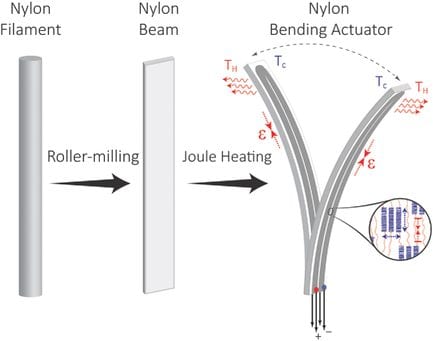

Researchers from MIT present an approach to make artificial muscles with nylon that bend, controllably, in any direction.
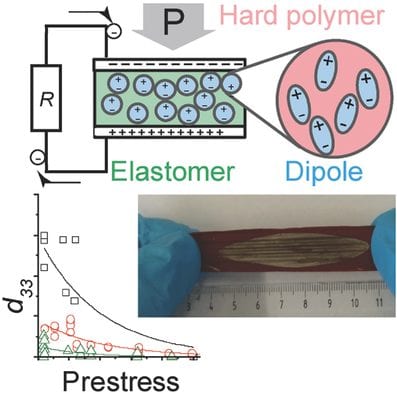
An all organic elastic electret is prepared with a piezoelectric coefficient comparable to the gold standard – poly(vinylidene fluoride.
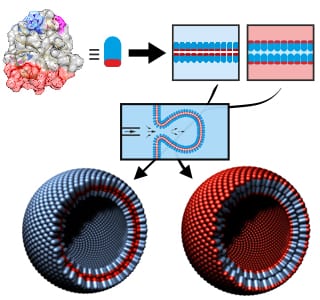
Professor Seemann and his colleagues discovered how bilayers made purely from hydrophobins were created using a microfluidic technique.
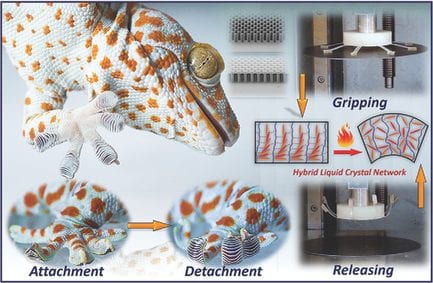
Cross-linked networks of liquid crystal polymers (LCNs) are used to regulate adhesion through stimuli responsive back-scrolling and self-peeling, to design a multi-legged gecko gripper.
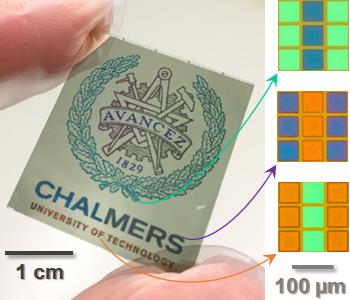
Researchers from Chalmers University of Technology have shown that so called plasmonic metasurfaces, ultrathin nanostructured solid materials, can be used for reflective color displays if functionalized with conductive polymers.
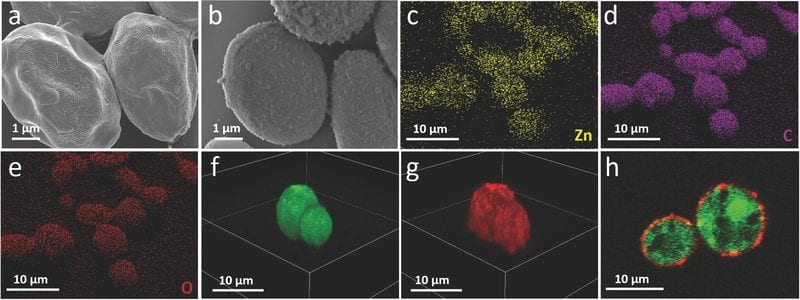
K. Liang and co-workers demonstrate a zeolitic imidazolate framework-8 (ZIF-8) for preserving the cell life of Saccharomyces cerevisiae (baker’s yeast) and Micrococcus luteus in the presence of cytotoxic and antifungal agents.

Scientists at TU Munich have discovered an inorganic substance whose elements are arranged in the form of a double helix.
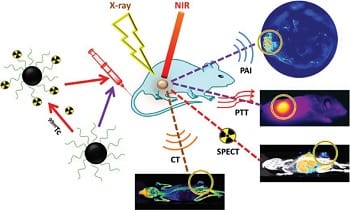
At Soochow University they have successfully prepared ultrasmall anionic-deficient WO3-x nanotheranostic probes
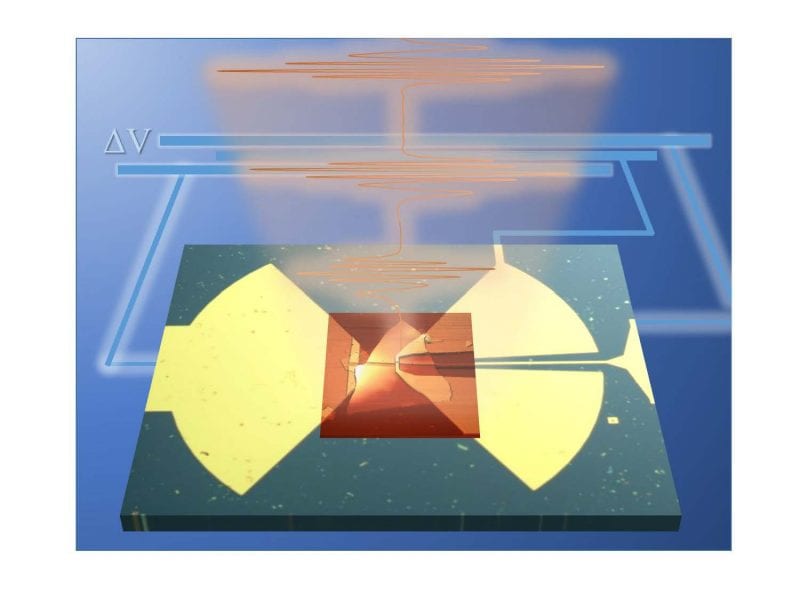
An international collaboration has built THz photon sensors that operate over the 0.3-0.65 THz range, at low temperatures, with excellent signal to noise ratio values.
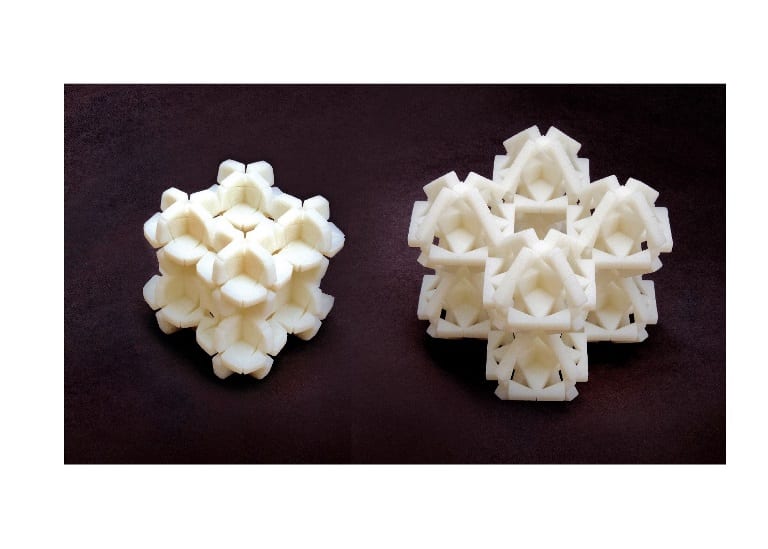
Researchers propose an architected material that can be constructed from virtually any base material.
 New theory suggests gravity is not a fundamental force
 Higgs boson may be driving the Universe’s expansion
 Water-powered gadgets may be on the horizon thanks to new evaporation-based energy device
 Scientists discover a new class of antibiotics
 Micron-sized hidden dimensions could solve two of physics’ deepest puzzles
 A new type of dark matter could explain mysterious radiation from the Milky Way’s core