A litmus-type sensor system for the detection of volatile organic compounds is developed using a common office inkjet printer.
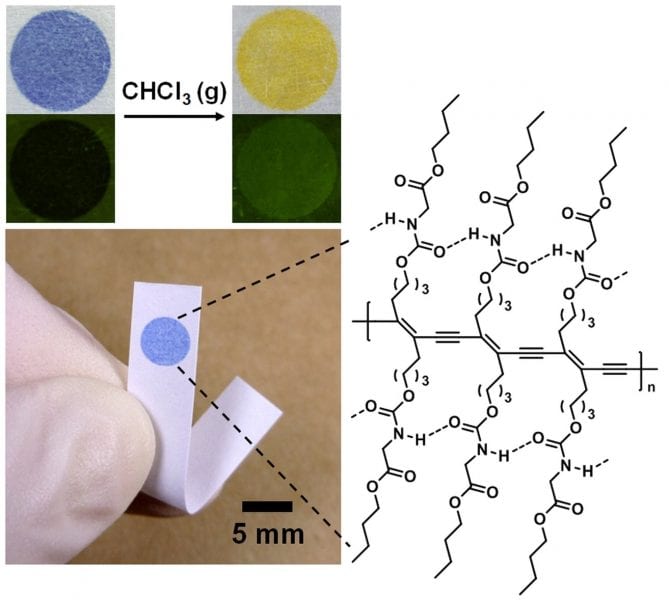

A litmus-type sensor system for the detection of volatile organic compounds is developed using a common office inkjet printer.

Scientists have developed autonomous catalytic microrobots that swim towards a specified target with a speed of 20 body length per second.
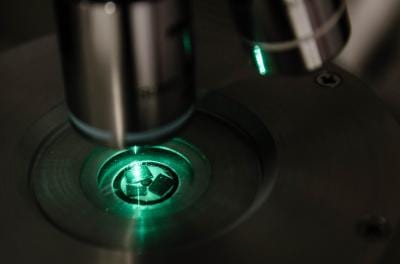
Nanyang researchers take group II-VI semiconductor cadmium sulfide from 20 to -20 degrees C in major breakthrough.
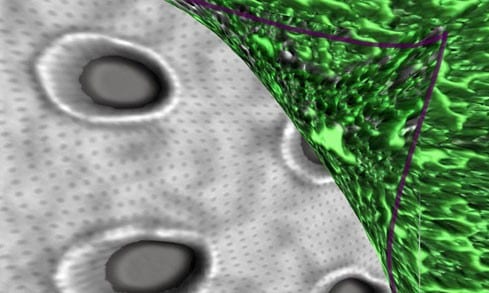
Duke University engineers have developed a material that can be applied like paint to the hull of a ship and dislodge bacteria from the ship’s surface.
Flagship aims to take graphene and related layered materials from academic laboratories to society.
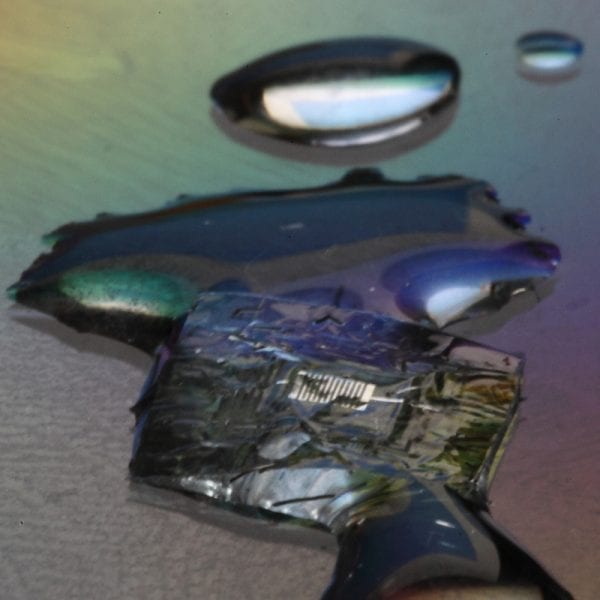
Project seeks to develop electronics that will melt on command – proposer’s day has been announced.

Researchers from Coimbra (Portugal), Wuppertal (Germany), and Santa Barbara (USA) present a cationic fluorene-thiophene diblock copolymer for ratiometric sensing of both halide ions and DNA.
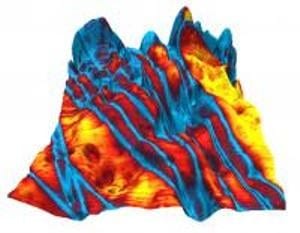
Researchers have discovered a molecule that shows promise as an organic alternative to today’s silicon-based semiconductors.
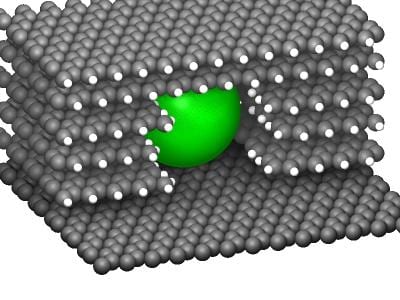
Tiny metal balls used to etch graphite tunnels with diameters of only one-thousandth that of a human hair.

Researchers develop method for moving nanoparticles using an electron beam, in step towards complex nanomachinery.
 New theory suggests gravity is not a fundamental force
 Higgs boson may be driving the Universe’s expansion
 Water-powered gadgets may be on the horizon thanks to new evaporation-based energy device
 Scientists discover a new class of antibiotics
 Micron-sized hidden dimensions could solve two of physics’ deepest puzzles
 A new type of dark matter could explain mysterious radiation from the Milky Way’s core