Materials science meets Mills and Boon.


Materials science meets Mills and Boon.
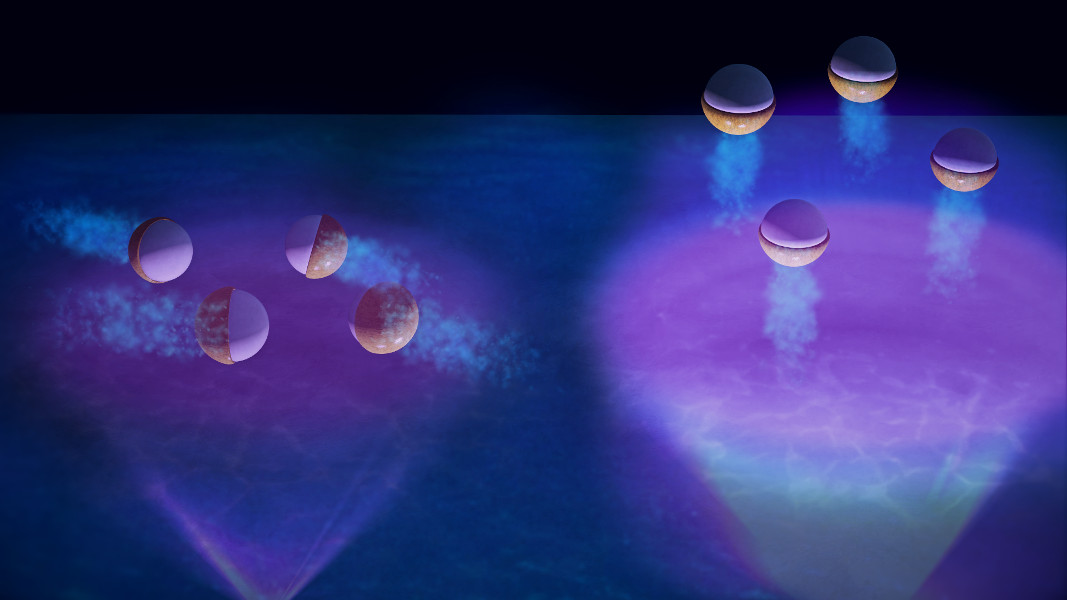
Artificial photochemically-active microswimmers, with 2D or 3D swimming behavior, can also swim against gravity.

DNA origami nanobiosensor: The binding of the bioanalyte (left) with the ssDNA-associated bioreceptor (center) on the surface of the DNA origami is transduced as a measurable change in properties (right) that can be recognized and quantified by a detector.

The design of a new bionic skin that is sensitive to incredibly small changes in pressure and vibration is reported.
Strain-sensitive ‘smart’ materials that can monitor their own strain and internal damage state.
![3D e-Whiskers for Complex Sensing Applications [Video]](https://www.advancedsciencenews.com/wp-content/uploads/2018/03/adma201706733_ASN_image.png)
A scalable method for fabricating electronic whiskers (e-whiskers)—a class of electronic skin—for sensing a variety of external stimuli, including proximity, texture mapping, surface roughness, material stiffness, force, and temperature.

This month’s Advanced Engineering Materials covers and top papers!
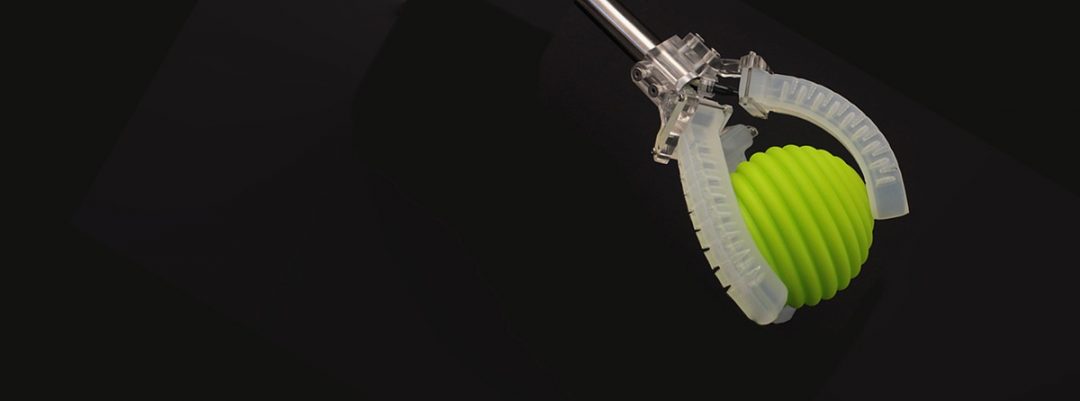
Researchers create soft robots that can sense touch, pressure, movement and temperature.

An interplay between two realms is the subject of the Focussed Session: Geometry- and Topology-Controlled Nanoarchitectures at the Joint Meeting of DPG (Deutsche Physikalische Gesellschaft) and EPS (European Physical Society) Condensed Matter Divisions on March 13, 2018 at the TU Berlin.

Metamorphic and stretchable electronics applications were developed by researchers from the Technical University of Ilmenau, which enable new 3D shapes and new form factors for electronics applications.

 Micron-sized hidden dimensions could solve two of physics’ deepest puzzles
 Turning Periods into Power: Menstrual Blood a Valuable Resource for Medical Diagnostics
 Surfactants Steer Supraparticle Structure
 Bone loss in obesity traced to gut microbiota
 Edible electronics realize safe, complex monitoring devices
 Fermilab Confirms Muon g-2 Measurements