Azopolymer material allows light-assisted imprinting of nanostructures for structurally colored surfaces.


Azopolymer material allows light-assisted imprinting of nanostructures for structurally colored surfaces.

Tiny ‘xenobots’ assembled from cells promise advances from drug delivery to toxic waste clean-up.

Chemists have found a new use for the waste product of nuclear power.
![How to Bend Electronic Devices without Breaking Them [Video]](https://www.advancedsciencenews.com/wp-content/uploads/2019/12/Feature-image-2.png)
Electronics can be transformed into a variety of complex shapes using a thermal plasticization process.

A new eco-friendly vodka, created for the first time using the hydrogenation of carbon dioxide to make ethanol.

Researchers removed metals and organic impurities from water using magenetic nanoparticles that contain an ionic liquid phase.

Researchers develop sustainable source materials for 3D printing. such as single-polymer composites that reinforce themselves and materials derived from waste based plastics.
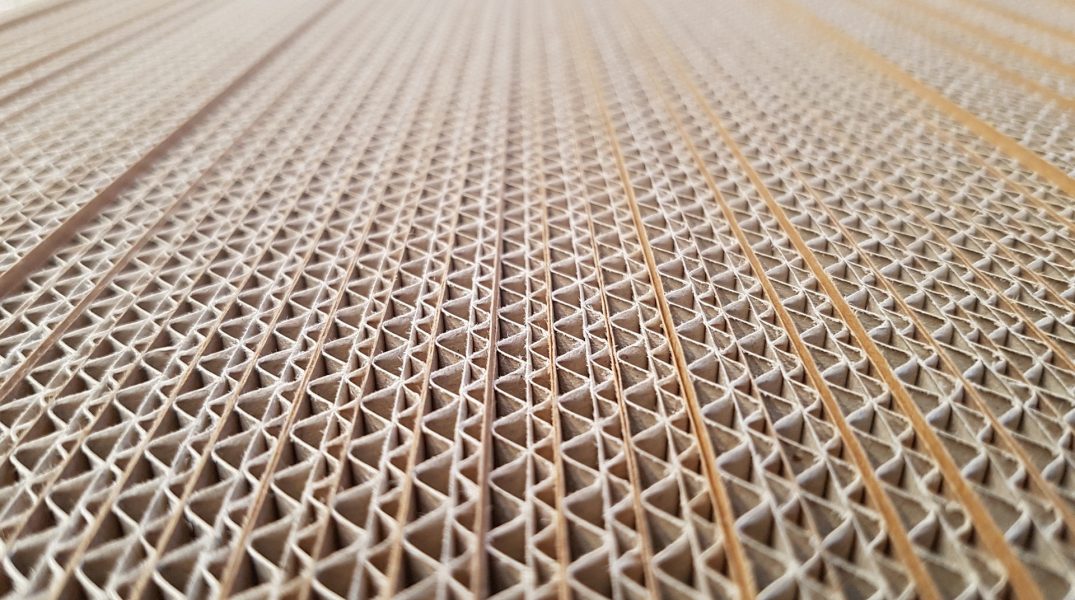
A team of researchers from the University of Washington have created programmable cellular structures.
![Magnetically Controlled Microparticles for Soft Robotics [Video]](https://www.advancedsciencenews.com/wp-content/uploads/2019/11/feature-image-1.png)
Liquid crystalline elastomer microparticles can be magnetically controlled and used as transport systems.

Skin-friendly epidermal electronic devices fabricated using flexible, stretchable, and degradable protein-based substrates could offer a viable solution to real-time health and fitness monitoring.
 New theory suggests gravity is not a fundamental force
 Higgs boson may be driving the Universe’s expansion
 Water-powered gadgets may be on the horizon thanks to new evaporation-based energy device
 Scientists discover a new class of antibiotics
 Micron-sized hidden dimensions could solve two of physics’ deepest puzzles
 Turning Periods into Power: Menstrual Blood a Valuable Resource for Medical Diagnostics