Lanthanide(III) complexes have steadily found increasing use in both biosensing and bioimaging due to their advantageous emission properties.
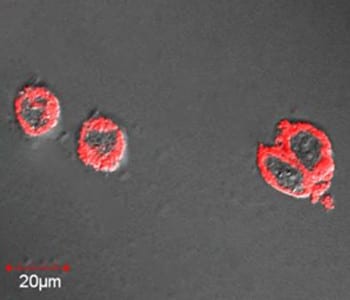

Lanthanide(III) complexes have steadily found increasing use in both biosensing and bioimaging due to their advantageous emission properties.
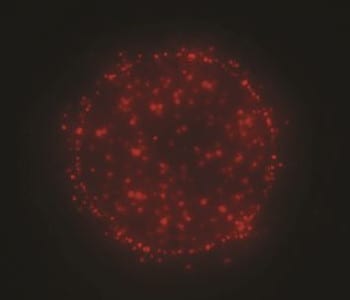
Detection of nanoparticles and DNA biomarkers at clinically relevant low levels can be achieved by combining epifluorescent microscopy with dielectrophoretic microarrays.
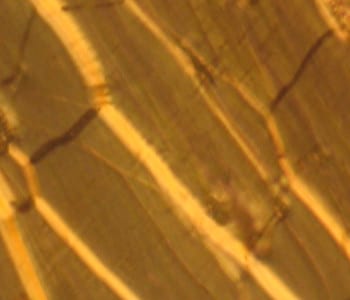
Researchers have demonstrated a method to prepare hybrid organic-inorganic multifunctional liquid crystal composites with high quantum dot content.
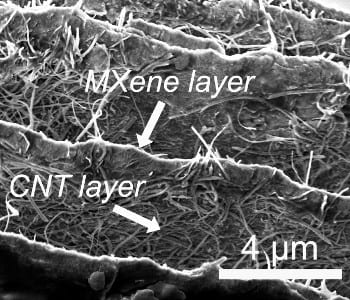
Flexible MXene/carbon composite electrodes composed of alternating layers of titanium carbide-based MXene and carbon nanotubes have been fabricated.
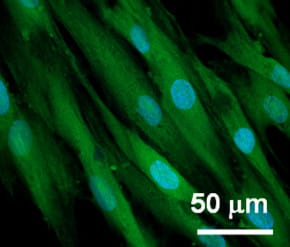
Researchers have successfully fabricated titanium surfaces chemically functionalized with the flavonoids taxifolin and quercitrin.
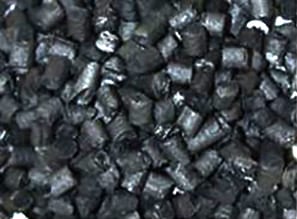
The NanoMaster Project is reporting exciting results related to graphene and expanded graphite production and the development of novel nanocomposite intermediates.
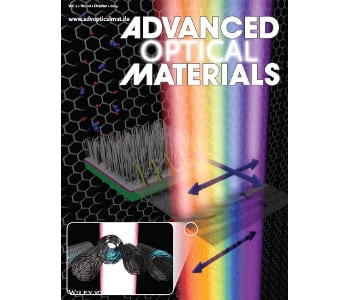
Check out the articles highlighted on the covers of the latest issue of Advanced Optical Materials.
Researchers show how a unique nano-alloy composed of palladium nano-islands embedded in tungsten nanoparticles creates a new type of catalyst.
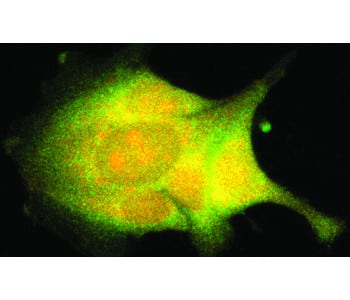
Researchers have described composite nanorods that consist of long iron segments and short gold tips and can be functionalized with biomolecules of interest.
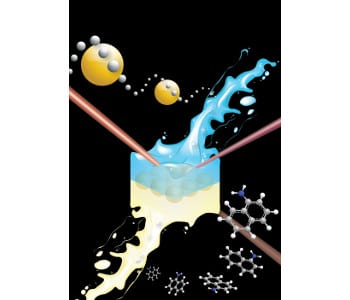
A liquid interface has the unique capability to provide a common meeting point for hydrophobic, hydrophilic and airborne species, allowing them all to interact.

 Micron-sized hidden dimensions could solve two of physics’ deepest puzzles
 Turning Periods into Power: Menstrual Blood a Valuable Resource for Medical Diagnostics
 Surfactants Steer Supraparticle Structure
 Bone loss in obesity traced to gut microbiota
 Edible electronics realize safe, complex monitoring devices
 Fermilab Confirms Muon g-2 Measurements