New method allows researchers to directly measure nanoparticle degradation in real time within biological environments.
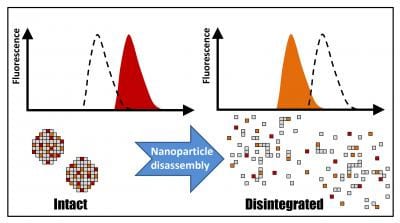

New method allows researchers to directly measure nanoparticle degradation in real time within biological environments.
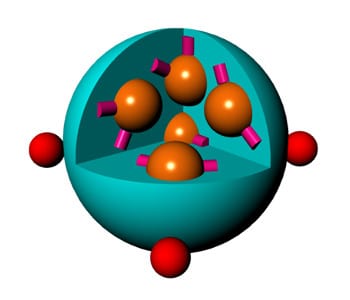
Korean scientists have developed a tumor-targeted, bioreducible nanoparticle system that can deliver cytotoxic anticancer drugs to tumor tissues.

Recent research into the use of polymer-coated nanoparticles for enhanced oil recovery is reviewed in the Journal of Applied Polymer Science.
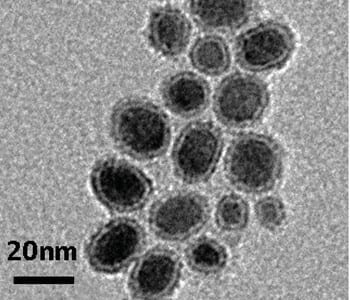
New core/shell structure nanoparticles have been reported by a team led by Peking University researchers.
Drugs used to treat blindness-causing disorders could be successfully administered by eye drops rather than unpleasant and expensive eye injections.

EU research project NanoHouse ends – suggests nanoparticles in the paint used on building façades do not represent a particular health risk.
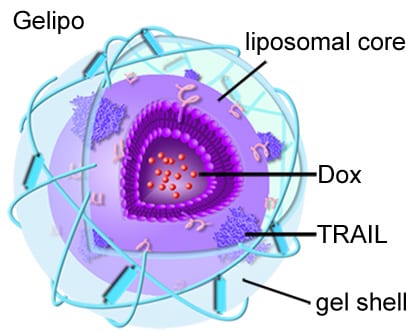
Nanoparticles can carry two different anti-cancer drugs and deliver them to separate parts of the cancer cell where they will be most effective.
Researchers develop polymer-based mucus-penetrating particles (MPP) loaded with paclitaxel, a frontline chemo drug.
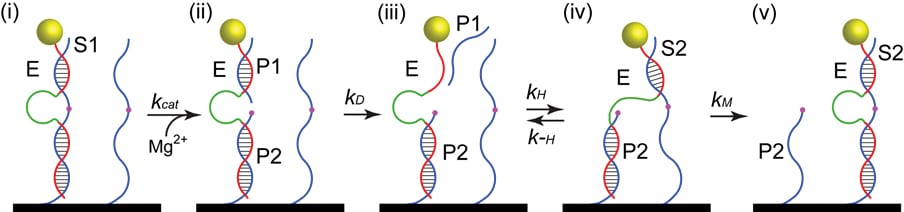
Researchers have created a new type of molecular motor made of DNA and used it it to transport a nanoparticle along the length of a carbon nanotube.
Subwavelength metal nanoparticles with separation on the order of one wavelength can form a plasmonic mode that enhances absorption and scattering of light.

 Micron-sized hidden dimensions could solve two of physics’ deepest puzzles
 Turning Periods into Power: Menstrual Blood a Valuable Resource for Medical Diagnostics
 Bone loss in obesity traced to gut microbiota
 Surfactants Steer Supraparticle Structure
 Edible electronics realize safe, complex monitoring devices
 Fermilab Confirms Muon g-2 Measurements