2D nanostructured materials as promising gas-sensing materials for advanced sensors.


2D nanostructured materials as promising gas-sensing materials for advanced sensors.

Superior performance of plasma treated water as an anodizing electrolyte for producing nanoporous titanium dioxide nanotubes.

The argument for making synthetic fuel from CO2 using renewable electricity in an increasingly electrified world is by now a familiar one. It hinges on the unlikely scenario that lithium ion batteries will never power the massive fleet of large-volume transportation...
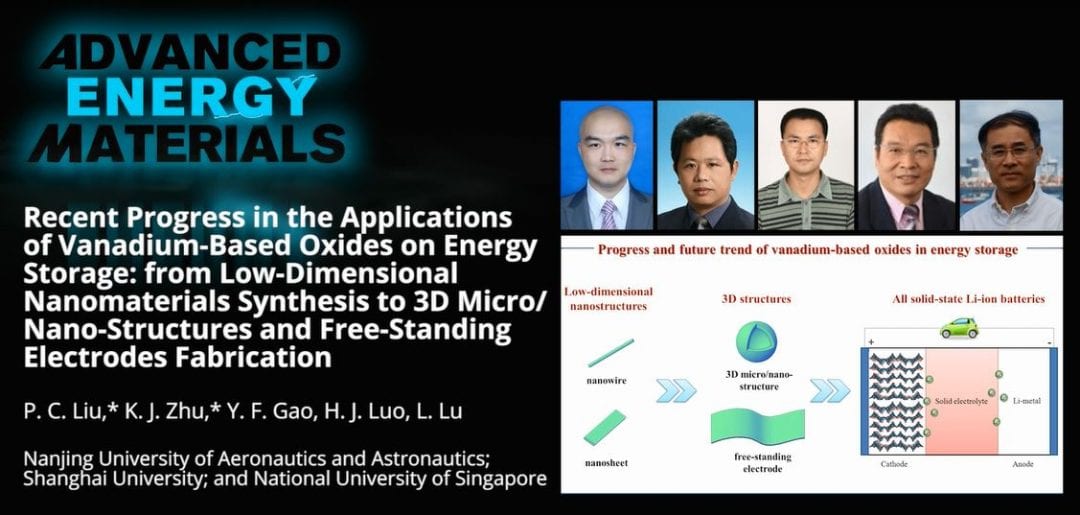
Researchers from Nanjing University of Aeronautics and Astronautics review the current developments and future opportunities for the application of vanadium-based oxides in Li- and Na-ion batteries.

While the electronic and structural properties of 2D materials make them appealing, their chemical stability—especially in ambient conditions—is not favorable.

Using an innovative method, super-flexible graphene films are synthesized while maintaining their ultra-high thermal conductivity. (Image credit: Artbox/Shutterstock)

Cancer is a disease that is responsible for an overwhelming number of deaths worldwide. The conventional therapeutic approaches used for treatment can be ineffective. inducing prominent side effects.
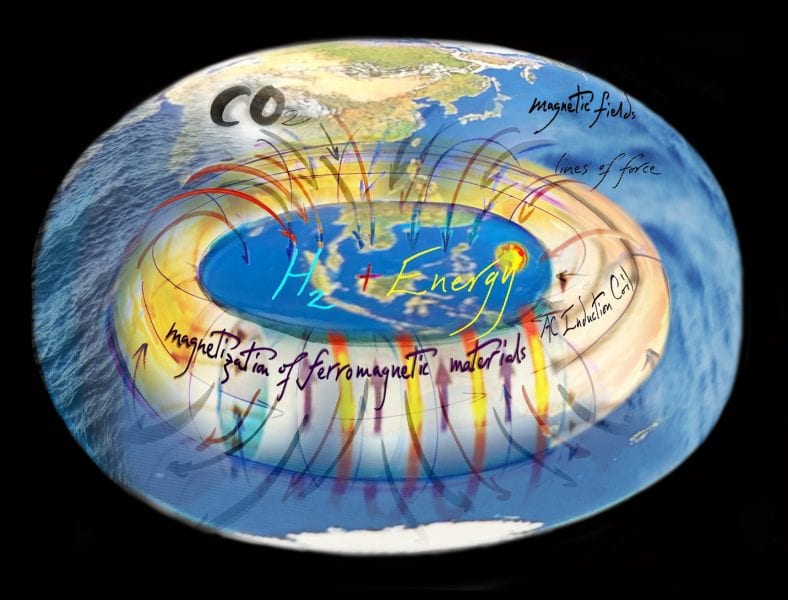
A chemistry and engineering nano-solution that aims to safeguard Earth against climate change can be imagined metaphorically as a “Life Raft” that will sustain renewable energy systems and living systems “thriving and buoyant” over the next thousand years when fully deployed around the globe.

A diverse range of nanomaterials with different physicochemical characteristics have been developed to stimulate the immune system and battle cancer.

March’s Advanced Healthcare Materials covers
 New theory suggests gravity is not a fundamental force
 Higgs boson may be driving the Universe’s expansion
 Water-powered gadgets may be on the horizon thanks to new evaporation-based energy device
 Scientists discover a new class of antibiotics
 Micron-sized hidden dimensions could solve two of physics’ deepest puzzles
 A new type of dark matter could explain mysterious radiation from the Milky Way’s core