EU research project NanoHouse ends – suggests nanoparticles in the paint used on building façades do not represent a particular health risk.


EU research project NanoHouse ends – suggests nanoparticles in the paint used on building façades do not represent a particular health risk.
Scientists have found an efficient way to deliver nanoparticles containing a wide range of biomolecules without using endocytosis, for faster drug delivery.
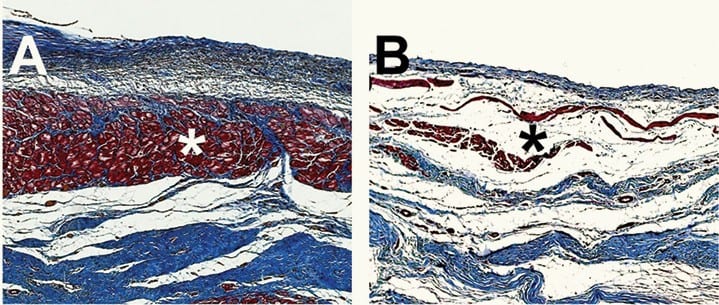
Team investigate the ability of the body to accept stretchable electronic devices for long-term use.
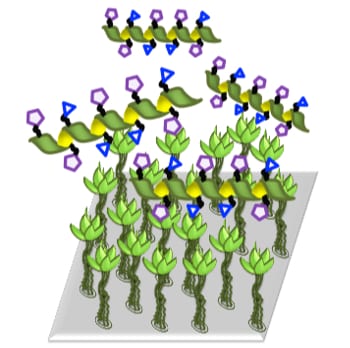
A precisely designed macromolecule that mimics the binding of HIV to immune system cells could be used to stop the virus from physically entering the body.
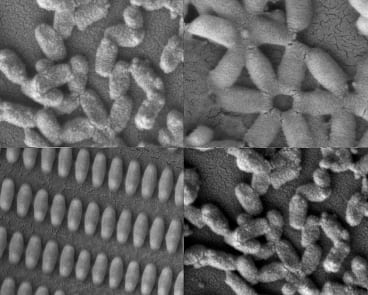
New research enables high-speed customization of novel nanoparticles for drug delivery and other uses.
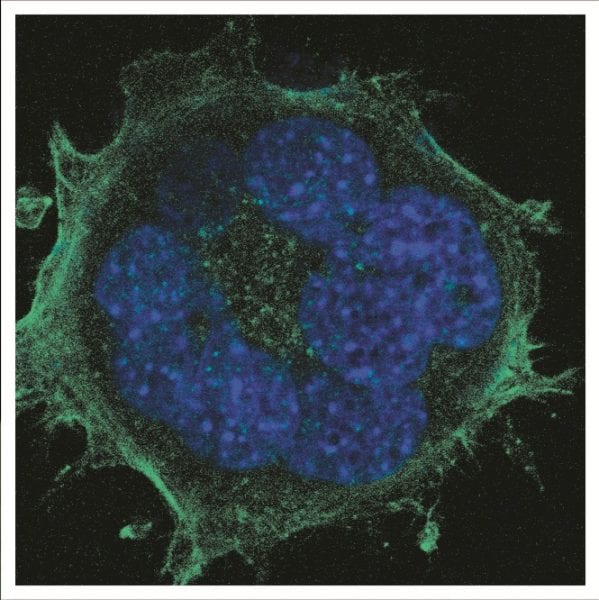
Bigger is not necessarily better: when it comes to culturing fibroblasts on nanowire substrates, there are several reasons to reconsider the use of long nanowires.
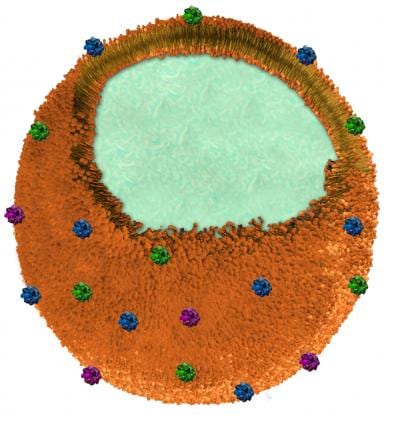
Absorbent nanostructures can neutralize pore-forming toxins and remove a broad class of dangerous toxins.
New particles give potential approach to treating atherosclerosis and other chronic inflammatory diseases.
University of California, San Diego bioengineers have demonstrated in a study in pigs that a new injectable hydrogel can repair damage from heart attacks.

The future of nano and micromaterials for healthcare, described by Ali Khademhosseini and Nicholas Peppas as part of an Advanced Healthcare Materials special issue.
 New theory suggests gravity is not a fundamental force
 Higgs boson may be driving the Universe’s expansion
 Water-powered gadgets may be on the horizon thanks to new evaporation-based energy device
 Scientists discover a new class of antibiotics
 Micron-sized hidden dimensions could solve two of physics’ deepest puzzles
 A new type of dark matter could explain mysterious radiation from the Milky Way’s core