Image-based computational fluid dynamics (CFD) predicts airflow in the lungs, providing more sensitive biomarkers of how well your lungs are working.


Image-based computational fluid dynamics (CFD) predicts airflow in the lungs, providing more sensitive biomarkers of how well your lungs are working.

An overview of the viability of different molecular simulation methods and interface force fields, the recent advances in the simulation of protein-surface interactions, and the challenges posed by the current simulation methods to reproduce the exact phenomenon.
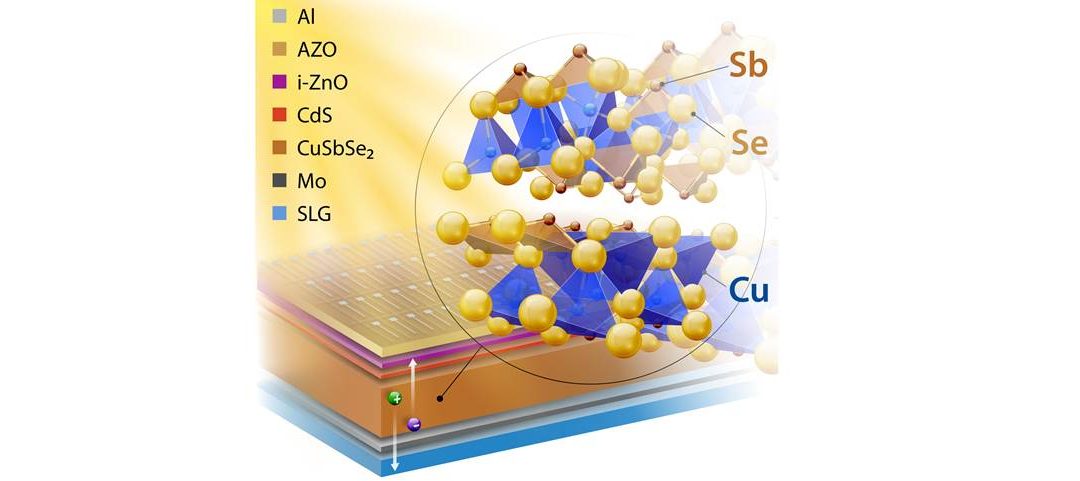
High-throughput combinatorial experiments reveal current/voltage trade-offs in chalcostibite thin film solar cells.
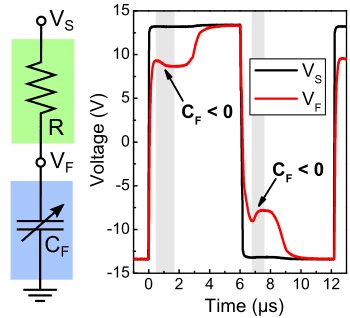
Recently, negative capacitance was first demonstrated in epitaxial ferroelectric lead zirconate titanate, proving that a direct measurement of the phenomenon is possible.
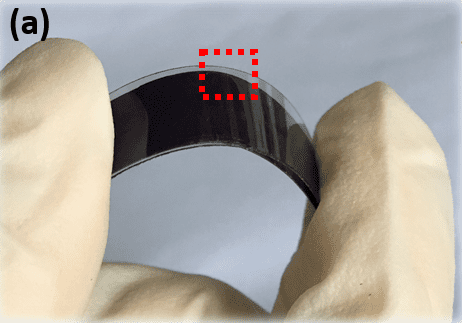
Scientists from Singapore and China have developed flexible titanium dioxide photoanodes with a multilayered structure.
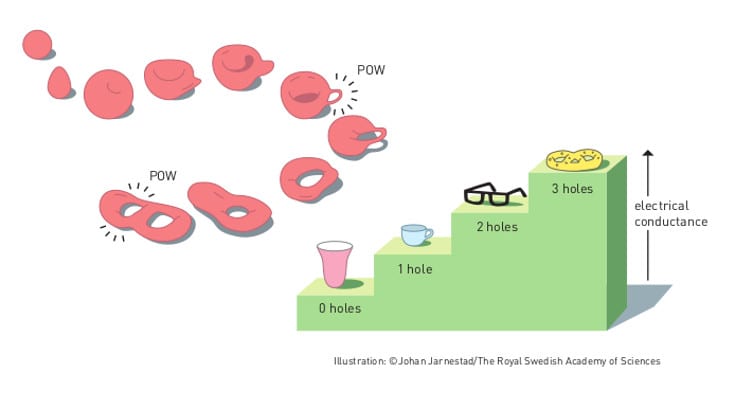
The Royal Swedish Academy of Sciences has decided to award the Nobel Prize in Physics 2016 with one half to David J. Thouless and the other half to F. Duncan M. Haldane and J. Michael Kosterlitz for theoretical discoveries of topological phase transitions and topological phases of matter.

The state-of-the-art of flexible and stretchable devices is highlighted in this special issue of Advanced Materials.

The ACS Division of Computers in Chemistry presented poster awards at the 251st American Chemical Society National Meeting & Exposition.

Michael Bojdys introduces a new class of two-dimensional polymeric materials for semiconductors.
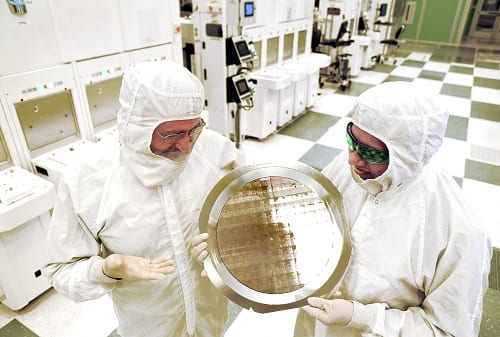
A development alliance produced the semiconductor industry’s first 7nm node test chips with functioning transistors.
 New theory suggests gravity is not a fundamental force
 Higgs boson may be driving the Universe’s expansion
 Water-powered gadgets may be on the horizon thanks to new evaporation-based energy device
 Scientists discover a new class of antibiotics
 Micron-sized hidden dimensions could solve two of physics’ deepest puzzles
 A new type of dark matter could explain mysterious radiation from the Milky Way’s core