In a new piece, Prof. Geoffrey Ozin makes his case for a new kind of combinatorial strategy for nanomaterials based on the idea of nanochemistry DNA.
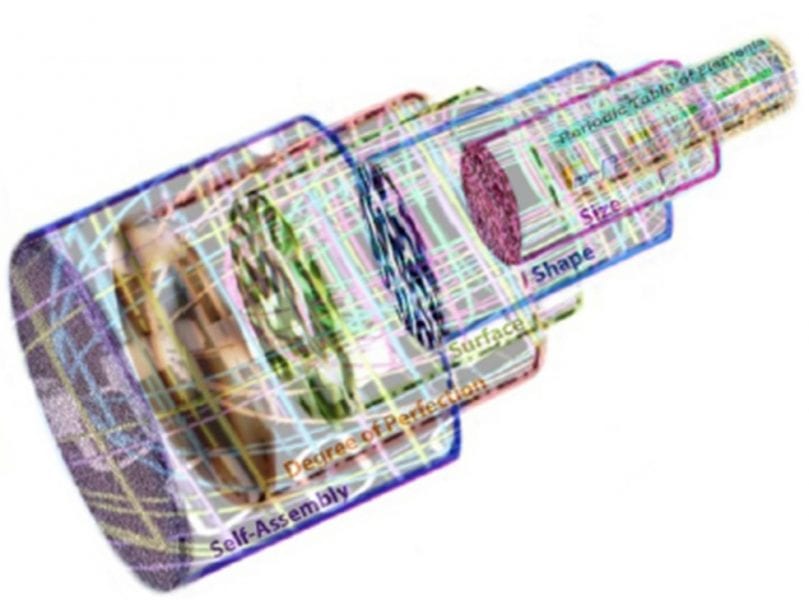

In a new piece, Prof. Geoffrey Ozin makes his case for a new kind of combinatorial strategy for nanomaterials based on the idea of nanochemistry DNA.
“Nanobrick wall” blocks oxygen and carbon dioxide transmission, and has high hydrogen selectivity.
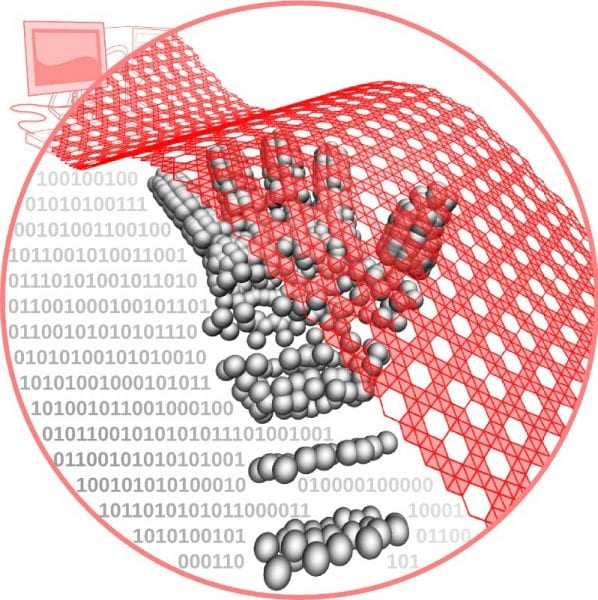
Rice University researchers have calculated what it would take to make new two-dimensional material.
We present the most downloaded papers from the pss family of journals in December.
Researchers have discovered a molecule that shows promise as an organic alternative to today’s silicon-based semiconductors.
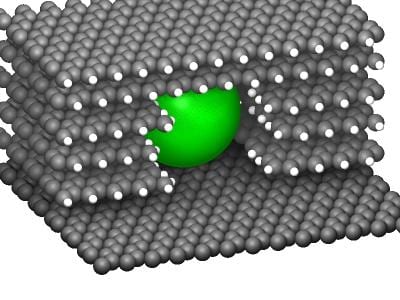
Tiny metal balls used to etch graphite tunnels with diameters of only one-thousandth that of a human hair.
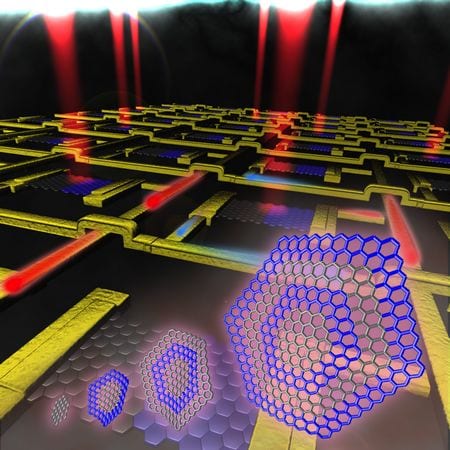
Peking University researchers establish a scalable technique for the synthesis of high quality graphene p-n junctions.
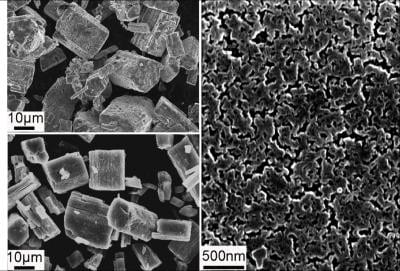
Solid nanoporous electolyte developed at ORNL could solve many of the safety concerns associated with current lithium-ion technology.
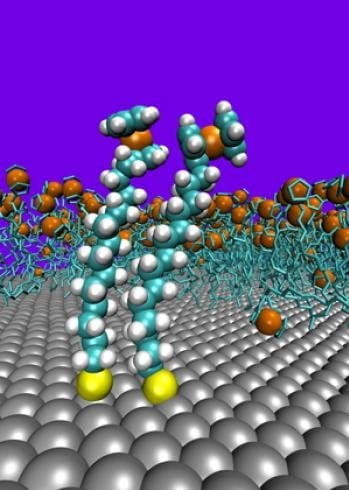
A team of scientists have designed and fabricated nanoscale devices for energy-efficient electronics.

Many efficient polymer solar cells include ITO. Yet this material is not well-suited for large-scale production.

 Micron-sized hidden dimensions could solve two of physics’ deepest puzzles
 Turning Periods into Power: Menstrual Blood a Valuable Resource for Medical Diagnostics
 Surfactants Steer Supraparticle Structure
 Bone loss in obesity traced to gut microbiota
 Edible electronics realize safe, complex monitoring devices
 Fermilab Confirms Muon g-2 Measurements