Check out the articles highlighted on the covers of the latest issue of Advanced Optical Materials.


Check out the articles highlighted on the covers of the latest issue of Advanced Optical Materials.
American researchers design organic battery intended for deployment in power stations.
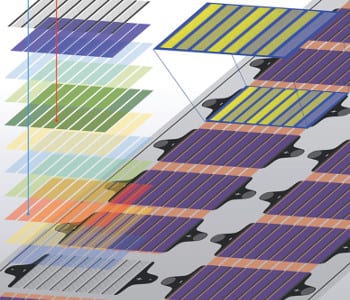
A new contactless and rapid light beam-induced current method can be used to identify defects in complex organic multilayer films.
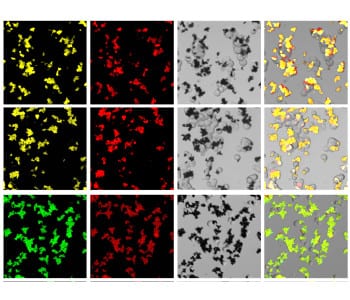
Researchers have reported a new method for detecting cancer cells, using SERS and fluorescence dual-encoded magnetic nanoprobes.
Researchers at Nankai University report the design and engineering of a recombinant protein that can be used for drug-delivering hydrogels.
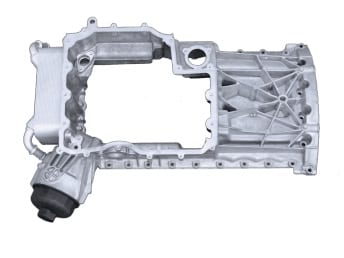
GF Automotive gets the Lightweight Award for their magnesium high-pressure die-casting oil conduct module.
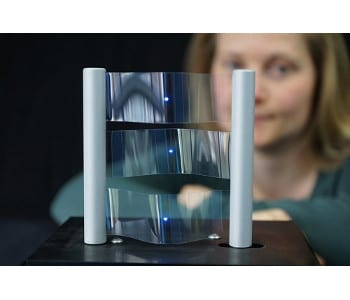
Researchers adapt mobile phones and smart phones to the carrying habits of their users.
Xuesi Chen and co-workers from the Changchun Institute of Applied Chemistry explore the potential of combining chemotherapy with antiangiogenic therapy.
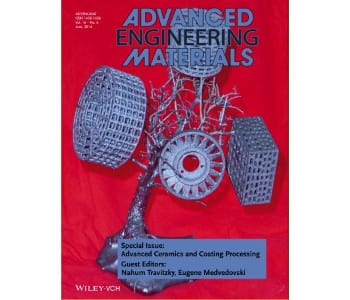
This themed issue of Advanced Engineering Materials focusses on novel processing of advanced ceramics, composites, and coatings.

A method has been developed to produce crystalline fine-grained composites of basis tungsten carbide metal starting from amorphous sol-gel masses.
 New theory suggests gravity is not a fundamental force
 Higgs boson may be driving the Universe’s expansion
 Water-powered gadgets may be on the horizon thanks to new evaporation-based energy device
 Scientists discover a new class of antibiotics
 Micron-sized hidden dimensions could solve two of physics’ deepest puzzles
 A new type of dark matter could explain mysterious radiation from the Milky Way’s core