The radiative emission rate of poly(3-hexylthiophene) could be greatly enhanced by integrating it into a plasmonic split-dipole nanoantenna.
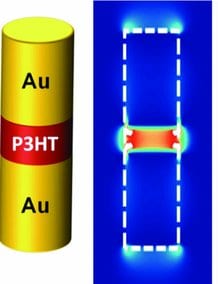

The radiative emission rate of poly(3-hexylthiophene) could be greatly enhanced by integrating it into a plasmonic split-dipole nanoantenna.
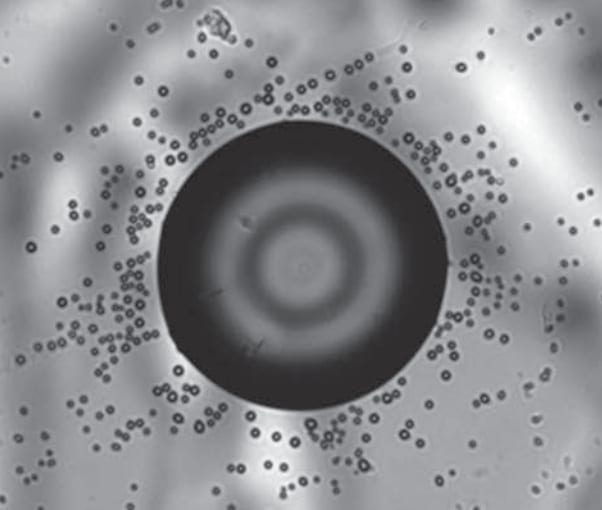
Reversible fragmentation and self-assembling of nematic liquid crystal droplets on functionalized pyroelectric substrates
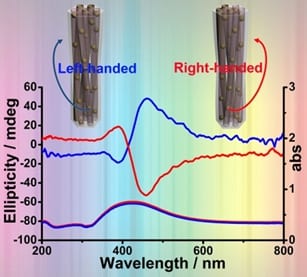
A new chiral material demonstrates a highly efficient optical response.
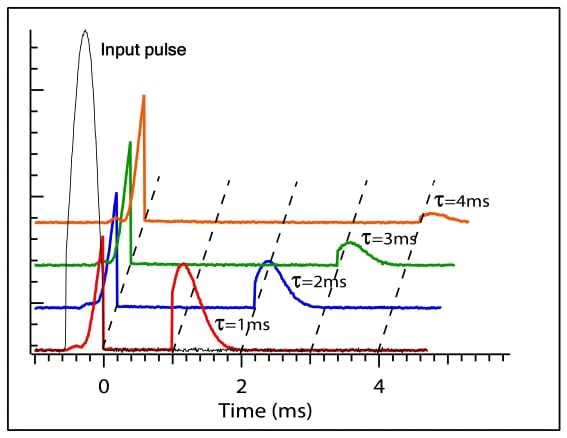
One of the exciting potential applications of electromagnetically induced transparency and slow and stored light is for practical realization of quantum memory, and, ultimately, quantum computing. Recent advances using ensembles of warm atoms in vapor cells have been made.
Coherent Raman scattering methods have one key advantage over spontaneous Raman microscopy: speed. The (sub-)microsecond pixel dwell times offered by narrowband CRS imaging methods have initiated a new era of chemical imaging applications in biology and biomedicine.
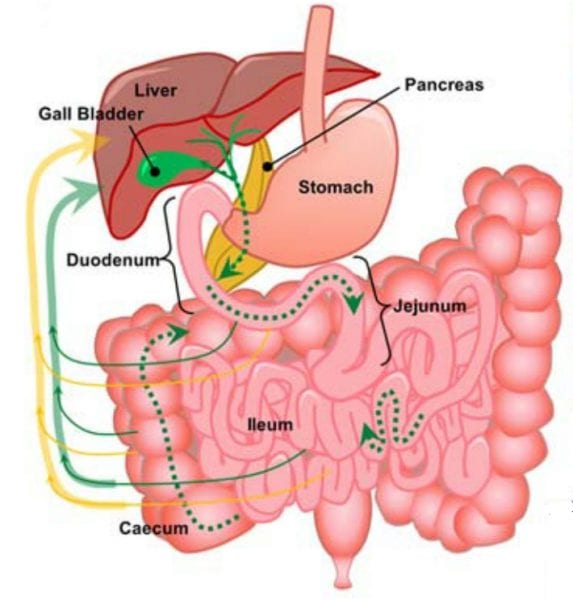
Which pathways do nanomedicines take after they have been swallowed? Scientists find a recirculation pathway of polymeric micelles using multimodal nonlinear optical microscopy.
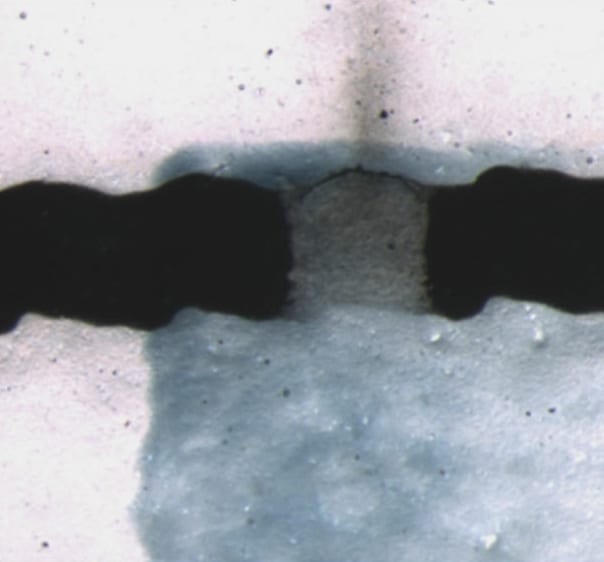
A European research team has made a breakthrough in the printing of organic electronics.

Dr. Dieter Kurz elected as new Chairman, effective immediately.
Density Functional Theory (DFT) is a versatile and powerful quantum mechanical modeling technique.
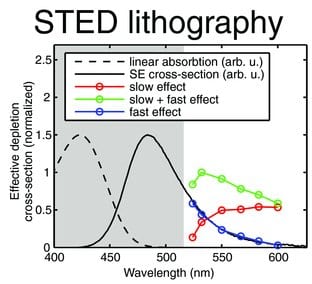
The depletion mechanism in a stimulated emission depletion (STED) inspired photoresist for 3D nanolithography has been identified.
 New theory suggests gravity is not a fundamental force
 Higgs boson may be driving the Universe’s expansion
 Water-powered gadgets may be on the horizon thanks to new evaporation-based energy device
 Scientists discover a new class of antibiotics
 Micron-sized hidden dimensions could solve two of physics’ deepest puzzles
 Turning Periods into Power: Menstrual Blood a Valuable Resource for Medical Diagnostics