New material consists of many identical piece of grossly warped graphene, each containing exactly 80 carbon atoms joined together in a network of 26 rings.
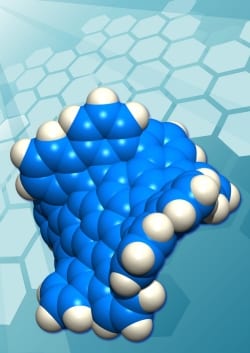

New material consists of many identical piece of grossly warped graphene, each containing exactly 80 carbon atoms joined together in a network of 26 rings.
Micro and Nano Technologies (MNT) for space applications will be the theme of next year’s meeting.
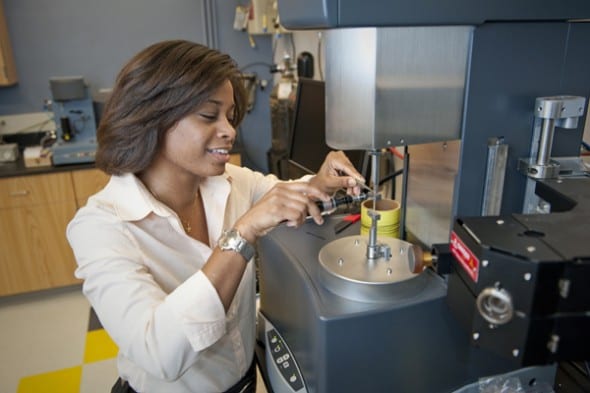
Mechanical and industrial engineering assistant professor Marilyn Minus has developed a superstrong fiber that rivals the best in the industry.
University of Adelaide researchers have developed a new nanomaterial that could help reduce carbon dioxide emissions from coal-fired power stations.
Scientists have, for the first time, experimentally demonstrated the recording and retrieval processes of 5D digital data by femtosecond laser writing.
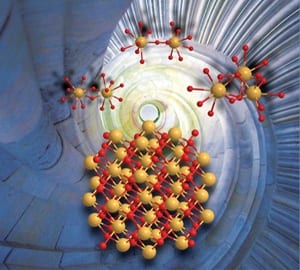
Simplified technique to fabricate cerium dioxide nanocystals, with wide-ranging technological and industrial applications, demonstrated by a UNSW chemist.
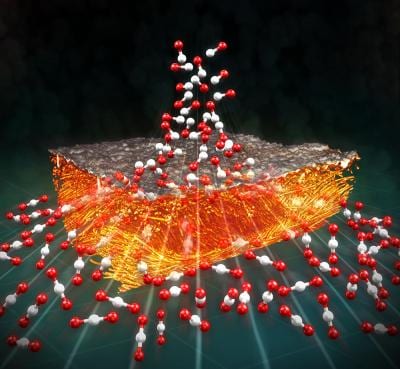
Micro-computed X-ray tomography and microfluidic-based electrochemical analysis give new insights into into electrode structure-performance relationships.
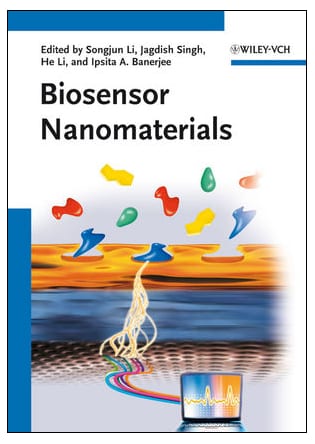
Biosensor nanomaterials, edited by Songjun Li, Jagdish Singh, He Li, and Ipsita A. Banerjee, reviewed by Professor Luisa Torsi from the University of Bari.
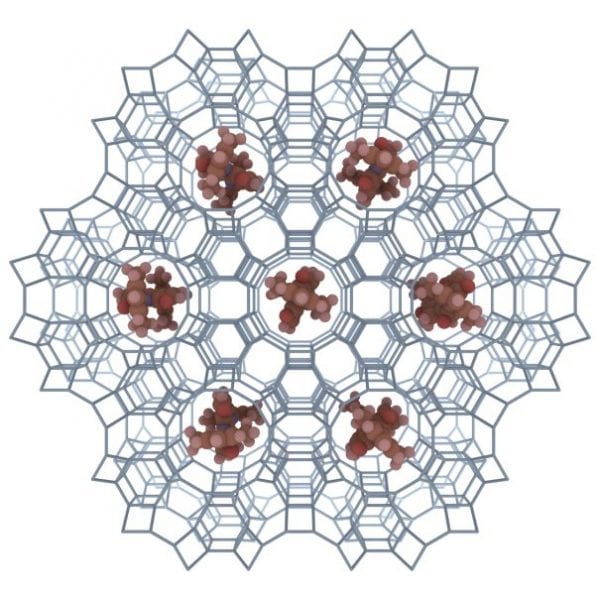
Researchers create perfect one-dimensional molecular wires in which the electrical conductivity can almost entirely be suppressed by a weak magnetic field
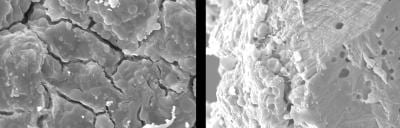
Unique nano-structures on guillemot eggshells eggs enable them to survive precarious habitats, on exposed cliffs with no nest.
 New theory suggests gravity is not a fundamental force
 Higgs boson may be driving the Universe’s expansion
 Water-powered gadgets may be on the horizon thanks to new evaporation-based energy device
 Scientists discover a new class of antibiotics
 Micron-sized hidden dimensions could solve two of physics’ deepest puzzles
 A new type of dark matter could explain mysterious radiation from the Milky Way’s core