
Carbon nanotube-enzyme composite electrodes are applied in glucose biofuel cells.
Earth and environment
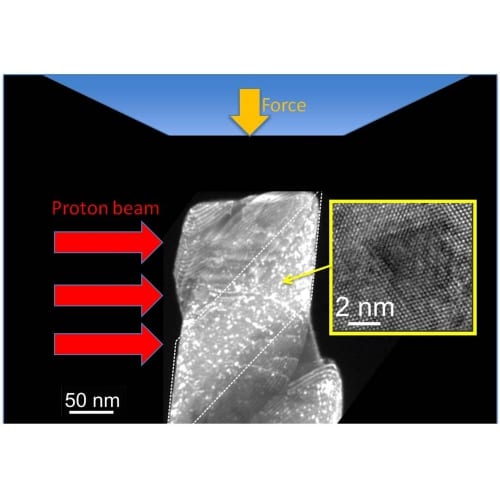
The Power of Nuclear: Testing Irradiated Materials on the Nanoscale
A new method for testing irradiated materials on the nanoscale could reduce the risk of a repeat of the recent events in Fukushima
Heavy Metal Free Environment with Plasma-Modified Carbon Nanotubes
Scientists at Institute of Plasma Physics, CAS, have developed a way to modify multiwalled carbon nanotubes to enhance their dispersion properties and adsorption capacities
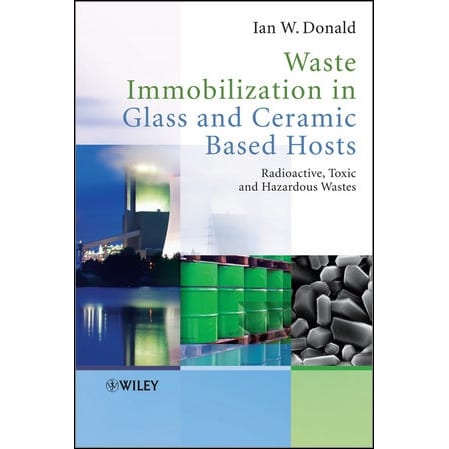
Book Review: Waste Immobilisation in Glass and Ceramic Based Hosts
Dr. Michael Ojovan of NTEC reviews Dr. Ian Donald’s new book on managing nuclear waste with glass and ceramics
TU Delft Identifies Huge Potential of Nanocrystals in Fuel Cells
The addition of extremely small crystals to solid electrolyte material has potential to raise the efficiency of fuel cells. Researchers at TU Delft were the first to document this accurately.
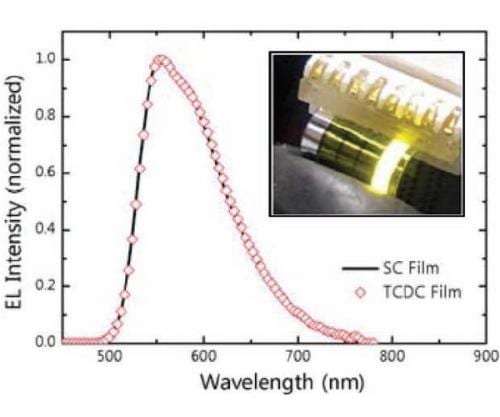
A Little Added Time for Chain Organization: Organic Electrodes for Electronics
A novel polymer processing methodology to prepare thin films allows for increased crystallinity giving rise to improved properties.
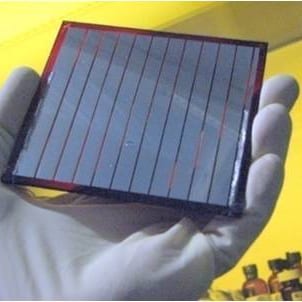
Nanotechnology for Energy: Structure Your Solar Cells
What is the ideal nano-morphology for organic and hybrid solar cells? A progress report from a German research group sheds light on recent developments.
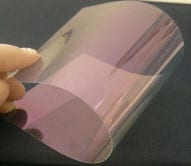
Organic Electronics: What Lies Beneath
A comprehensive study of plastic substrates can help you choose the right one for your device.
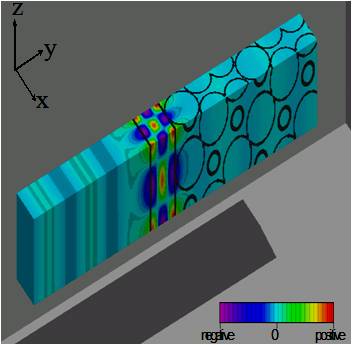
Nanospheres and Solar Cells – On a Roll
“It seems like the whole world is working on solar cells; trying to make them better, cheaper and safer to cope with the looming global energy drought.” Professor Geoffrey Ozin talks about the current state of solar cell research.

Carbon Nanotubes for Better Li-Ion Cells
A coating of single-walled carbon nanotubes improves the performance of li-ion cell cathodes: They show longer lifetimes and stable capacities even at very high rates.
Popular
-
 Micron-sized hidden dimensions could solve two of physics’ deepest puzzles
-
 Turning Periods into Power: Menstrual Blood a Valuable Resource for Medical Diagnostics
-
 Surfactants Steer Supraparticle Structure
-
 Bone loss in obesity traced to gut microbiota
-
 Edible electronics realize safe, complex monitoring devices
-
 Quantum Anomalies in Condensed Matter: From Theoretical Peculiarities to Tangible Science