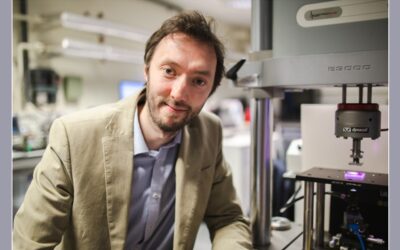
While reaching net-zero carbon dioxide (CO₂) emissions by 2050 is a global goal, Columbia University professor Jingguang Chen and his team aim to go a step further by sequestering more CO₂ than is emitted — potentially moving into net-negative territory.
Their method, which uses electricity and heat to convert CO₂ into carbon nanofibers—valuable materials used in applications ranging from sensors to concrete reinforcement—could help decarbonize the chemical industry, a major source of greenhouse gas emissions.
“This sector is difficult to abate, not only because of the large energy demand needed to drive high-temperature and high-pressure reactions, but also because of the heavy reliance on fossil fuel-derived feedstocks,” the researchers wrote in their recent paper.
Storing CO₂ in solid form offers a longer-term solution than converting it into fuels or chemicals, which can be consumed quickly and release CO₂ right back into the atmosphere.
A smarter, two-step pathway
Because converting CO₂ directly into carbon nanofibers requires large amounts of energy, the researchers developed a two-step approach.
“Thermodynamically, it is difficult to convert CO₂ directly into carbon nanofibers,” explains Chen, who also holds a joint appointment at Brookhaven National Laboratory. “It is easier to convert carbon monoxide into carbon nanofibers.”
In the first step, CO₂ and water are fed into an electrolyzer, where electricity drives a reaction that converts them into carbon monoxide (CO) and hydrogen (H₂), a mixture known as syngas. This gas is then passed into a thermochemical reactor, where CO and H₂ are transformed into solid carbon nanofibers at ambient pressure and a relatively low temperature of 450 °C.
Catalysts play a crucial role in each step of the process. In the first step, a palladium–copper alloy helps convert CO₂ and water into syngas. This combination is important for two reasons: it reduces costs, as palladium is expensive, and it allows the ratio of CO to H2 to be more precisely controlled. Palladium can absorb hydrogen to form palladium hydride, a phase that influences the balance between CO and H₂ production; by adding copper, the researchers suppress hydride formation and steer the reaction toward CO, which is essential for the second step.
In the second step, a different catalyst—an iron–cobalt alloy—guides these gases into forming carbon nanofibers. The success of this stage depends on the balance of CO and H₂ produced upstream: if too little CO is formed, not enough carbon is available to grow the fibers.
Quality over quantity
The quantity of the carbon nanofibers is not the only consideration. Quality also matters.
“For applications in the electronics industry, it is important to produce pure, highly crystalline materials,” says Chen.
The two-step process produces high-quality carbon nanofibers with high crystallinity and around 97% purity, comparable to commercial standards.
This level of quality is critical because well-ordered carbon structures are more durable, conductive, and valuable for real-world applications.
Control over both the chemical inputs and the growth conditions allowed the carbon nanofibers to form with fewer defects and a more uniform structure, demonstrating that the system can produce not just carbon, but a useful and stable form of it.
From lab to industry
A remaining challenge is the recovery and reuse of the catalyst after nanofiber growth.
“The iron–cobalt catalysts need to be separated from the carbon nanofibers and reused for further reactions,” says Chen.
Because catalyst particles can become attached to the fibers during growth, separating them is challenging. Efficient recovery and recycling will be essential for scaling the process, both to reduce costs and minimize material waste.
Developing strategies to extract the metals without damaging the nanofibers—or designing catalysts that can be more easily separated—will be an important next step in translating this approach from the lab to industry. At scale, the process would use CO₂ from industrial waste streams and be powered by renewable electricity.
Reference: William J. Wei et al., Co-Electrolysis of CO2 and H2O to Syngas on Bimetallic PdxCu1-x Catalysts for Tandem Thermochemical Conversion to Carbon Nanofibers. Advanced Energy Materials (2026). DOI: 10.1002/aenm.202506784
Featured image credit: Kanenori via Pixabay