Often derided as kitchen pests, fruit flies are helping researchers document ecosystem degradation in urban areas. By tracking how different species of fruit flies spread across Vienna’s urban core and surrounding countryside, an Austrian team uncovered how human-altered landscapes and a warming climate are reshaping biodiversity.
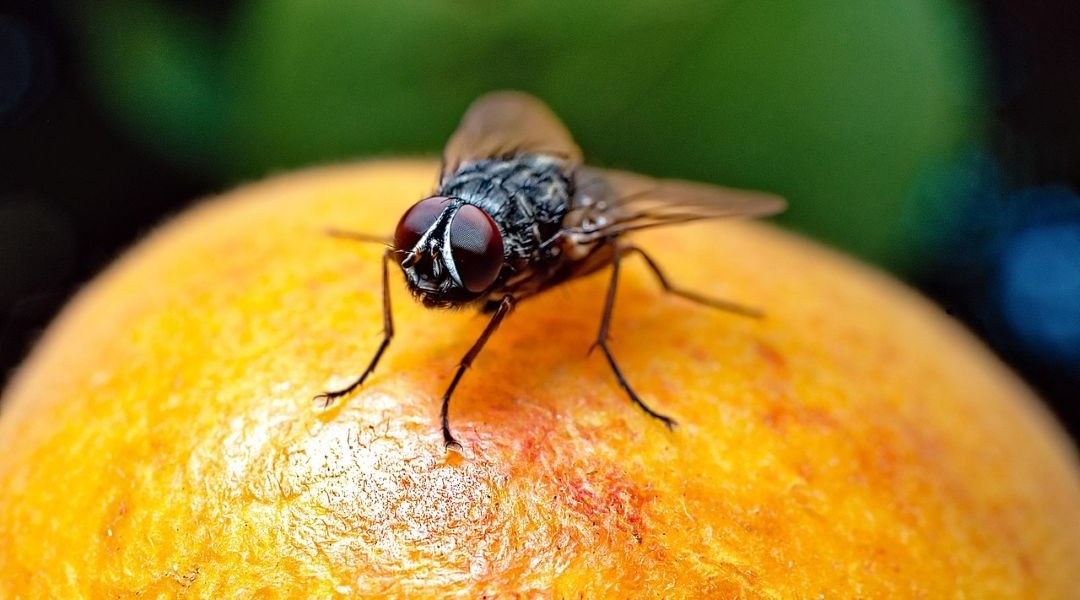
Colloquially known as fruit flies, though more accurately as vinegar flies, the genus Drosophila inhabits a variety of environments, from parks and gardens to cityscapes. While some choose to feast on assorted foods across varied habitats, others have more specific dietary needs. For instance, a species closely linked to human civilizations, Drosophila melanogaster, originally native to sub-Saharan Africa is now found on all continents, except Antarctica.
Researchers Martin Kapun and Elisabeth Haring of the Naturhistorisches Museum Wien, and their colleagues set out to understand what shifts in fruit fly populations across cities and surrounding landscapes might reveal about ecosystem degradation driven by human activity. Because these tiny flies are so sensitive to temperature and humidity, they also provide a window into the impacts of climate change.
With the help of social media and in-house events at the Museum, the team publicized and launched a citizen science campaign, called Vienna City Fly, in the city of Vienna, Austria, and surrounding villages. “Fruit flies are familiar to most people – however, mostly as nuisance factors in the kitchen – and thus we aimed to recruit potential citizen scientists to help us with collecting flies,” writes Kapun in an email to Advanced Science News.
Some 160 citizen scientists used traps, baited with banana or apple slices, to catch more than 18,000 fruit flies from kitchens indoors and/or gardens outdoors. “After species identification based on morphological traits and (if necessary) DNA barcoding, we were able to link species community data from all the traps with climatic and land use data based on the sampling coordinates and dates,” adds Kapun. “This allowed us to test for potential links between species occurrence and environmental conditions.”
The captured flies belonged to 13 different species of Drosophila, including two species D. virilis and D. mercatorum, not previously found in Austria. By using the environmental data, the researchers were able to find varying compositions of vinegar flies in densely-populated urban areas compared to rural collection sites. Surprisingly, the team found that D. mercatorum was the primary species, favoring the inner city, where rainwater cannot soak through asphalt-covered ground and temperatures run higher. Originally found in the dry, hot regions of the Americas, this species is likely well-suited to the concrete jungles of large cities. On the other hand, the invasive Asian fruit pest D. suzukii stayed out of houses, proliferating instead in rural suburban spaces.
Besides climate and geographical data, the researchers accessed a study on vinegar flies in Vienna from 34 years ago. Comparisons between these old findings and their own helped the team analyze changes in fruit fly compositions in the city. “By comparing our data to a previous study conducted 30 years ago, we found an overall loss in biodiversity and a specific shift in species composition, which may – at least partially – be the result of ecological changes, e.g. due to global warming,” writes Haring.
Previously the most abundant species, D. subobscura was the least commonly identified in the study, with citizen scientists trapping only five members. Being a food specialist, this fruit fly was likely driven away by more generalist, adaptable members of the genus. “Among the 50% of Drosophila species that have vanished are particularly ecological specialists which indicates that the human perturbation has favored generalist species that cope better with rapidly changing conditions.” This doesn’t necessarily rule out other factors, such as economic trade that promotes the introduction of competitive, invasive species, or the use of certain insecticides. The researchers also caution that the 1994 study included a great many more green spaces in its canvassing, which may play into these distinctions.
In order to rule out any sampling biases both in the demographic and trapping sites, the researchers are repeating their study with a new cohort of citizen scientists, with only some overlap with the previous group. “We plan to extend this approach to other cities to test the generality of these patterns and to evaluate whether Drosophila community composition – readily assessed using the methods developed here – can serve as a reliable proxy for ecosystem disturbance,” writes Kapun.
The team is also exploring whether urbanization shapes genetic diversity within species: Do flies that favor urbanized areas carry specific genetic markers? “This could indicate that urban flies genetically adapt to cope with heat islands, high degrees of imperviousness and other urban conditions,” adds Kapun. With DNA now isolated from many samples, the researchers will turn next to whole-genome sequencing to address these questions.
Reference: Martin Kapun et al., Ecology and Diversity of Urban Drosophila Species Communities as Potential Indicators of Biodiversity Decline, Ecology and Evolution (2026). DOI: https://doi.org/10.1002/ece3.72826