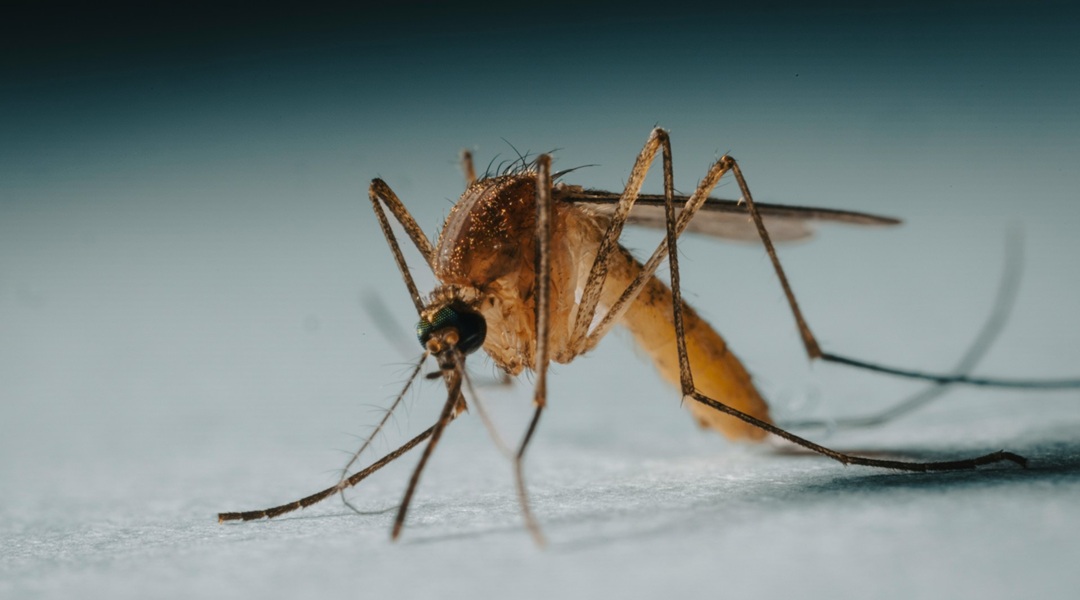
For the first time, researchers have successfully frozen and revived larvae of Anopheles gambiae, the mosquito responsible for the vast majority of the world’s malaria cases. While early, these findings are a promising step toward a future where genetically engineered mosquito strains can be stored indefinitely rather than kept alive in costly, fragile colonies. The technique, called vitrification, suspends the larvae in a glassy, ice-free state, pausing biological time until they are needed.
According to the WHO, there were an estimated 282 million malaria cases and 610 000 malaria deaths in 80 countries in 2024. Caused by the parasite Plasmodium falciparum, malaria is carried by the vector mosquito Anopheles gambiae and spread through its bites. About 95% of worldwide malaria cases are concentrated in Africa, with An. gambiae being the dominant, responsible mosquito species.
Tamping down on malaria spread predominantly relies on vector control, particularly through genetically engineered strains that are sterile or otherwise unable to transmit malaria. The maintenance of these modified strains requires large, live mosquito colonies, which demand significant financial and labor resources while remaining vulnerable to cross-contamination, genetic changes, and unexpected losses.
And malaria is not the only disease spread by mosquitoes; these insects aid in the spread of a number of diseases, including filaria, dengue and Zika.
Attempts to cryopreserve mosquito embryos and larvae have been made several times over the last few decades, with some recent success with preserving embryos of a different species, Anopheles stephensi. Rebecca Sandlin, a researcher at Massachusetts General Hospital, Boston, and colleagues sought to cryopreserve the first larval stage, right after An. gambiae mosquito eggs hatch. “Cryopreservation is essentially an insurance policy where you can place specimens under cryogenic storage and revive them when and where you need them,” writes Sandlin in an email to Advanced Science News. “Under cryogenic conditions, molecular activity slows to the extent that biological time essentially stops, creating a state of suspended animation that may enable indefinite storage of biological specimens.”
Vitrification: pausing biological time
Freezing an entire living organism and bringing it back is no small feat. To do it, researchers must use cryoprotective agents, chemical compounds that shield fragile tissues from the destructive formation of ice crystals. For their protocol, the team turned to glycerol, carefully cooling the larvae down before ultimately coaxing them back to life through thawing. Preserving biological functions is essential to calling the process a success.
The goal wasn’t simply to freeze the larvae: it was to vitrify them. Rather than passing through a damaging crystalline ice phase, the larvae would instead be plunged into a glassy, suspended state. Ice crystals can be ruthless, tearing through delicate cell membranes and destroying tissue; vitrification sidesteps this entirely. The catch, however, is that achieving it typically demands high concentrations of cryoprotective agents, which can be toxic to the organism.
Vitrification has been successful in other organisms, like the embryos of Drosophila. “So the overall concept is broadly applicable, but takes considerable optimization to complete for each individual organism, as there is no one-size fits all vitrification protocol,” adds Sandlin.
Cryopreserving An. gambiae larvae, however, presents its own distinct challenges. With their hardening exoskeleton, the larvae are unable to simply absorb the glycerol and, instead, must feed on it for the cryoprotectant to take effect. As a first step, the team tested a range of glycerol concentrations to find one that killed fewer specimens while still being an effective cryoprotectant. Once the right concentration was identified, the larvae were quickly dipped in liquid nitrogen for rapid cooling.
Looking through the lens of a microscope, the researchers saw milky white, opaque bodies: evidence of ice formation throughout the larvae. With vitrification, not ice crystallization, as the target, the researchers set about tweaking variables to land on the right combination of conditions. When they upped the glycerol concentration, the larval bodies turned transparent in liquid nitrogen, indicative of vitrification, but ice stubbornly formed in the head. This high concentration was also too toxic for larval survival.
Perfecting the protocol
Cells regulate their internal concentrations of salts and other solutes by moving water in and out across their membranes. When suddenly exposed to a highly concentrated glycerol solution, water can rush out, causing shrinkage. Introducing and later removing the cryoprotectant gradually was essential to avoiding this stress. When drawing the glycerol back out after thawing, the researchers swapped plain water for a saline solution, giving the cells a gentler, more controlled return to equilibrium.
Besides these workarounds, the researchers also added a dehydration step. Stripping away water first, the intracellular concentration of protective agents rose high enough to finally tip the balance toward full vitrification.
With all of these modifications, the team arrived at the final sequence of steps needed to successfully vitrify the mosquito larvae.
First, they added glycerol loaded in stages, dehydrated the larvae, then froze them rapidly using liquid or slush nitrogen. To reanimate the cryopreserved larvae, they warmed them gently in a water bath. The first signs of life appeared within an hour: wriggling, head movements and mouth brushes stirring back into motion. Around 80% of larvae showed initial reanimation, and 15% to 20% recovered what appeared to be full swimming and feeding behavior. But beyond 24 hours, survival was limited, with only a few larvae persisting to 72 hours later. Cooling using slushy nitrogen had better outcomes, with swimming behavior returning in more larvae compared with those cooled using liquid nitrogen.
“We believe limited survival occurs because there is biological damage, perhaps from crystallization of very small ice crystals, happening during the cooling or more likely the rewarming process,” writes Sandlin. “While the damage is not sufficient to kill the larvae immediately after thawing, it eventually leads to mortality.”
“While long term survival to adulthood was not achieved in this study, the initial survival of larvae that resume feeding, swimming, etc., gives us hope that this is a puzzle we will ultimately solve,” says Sandlin. The research team is working on further optimizing the protocol to achieve survival to adulthood and reproduction, while retaining the genetic integrity of mosquito populations.
Reference: Purva Joshi et al., Cryopreservation of Anopheles gambiae Larvae, Advanced Biology (2026). DOI: https://doi.org/10.1002/adbi.202500633
Featured Image Credit: Rapha Wilde via Unsplash