A terahertz laser developed at the Paul Scherrer Institute makes it possible to control a material’s magnetisation at a timescale of picoseconds.
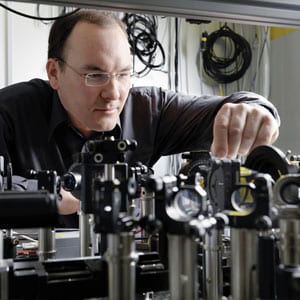


A terahertz laser developed at the Paul Scherrer Institute makes it possible to control a material’s magnetisation at a timescale of picoseconds.
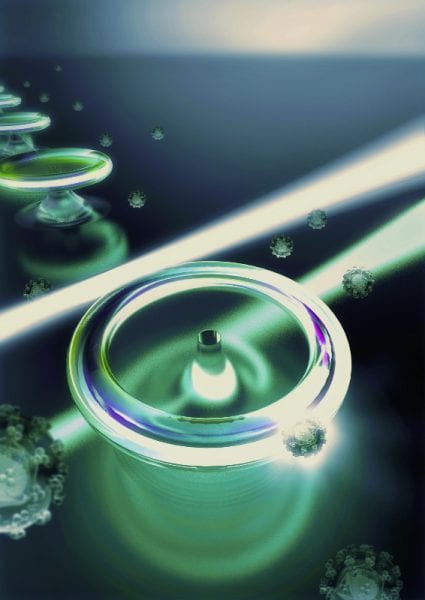
Special polydimethylsiloxane-coated deformed microcavity acts as an optical “whispering gallery”.
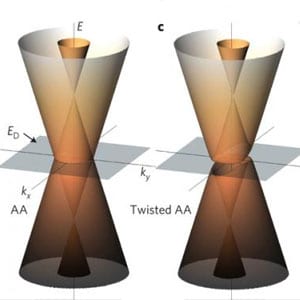
Researchers from Germany the US and Spain have discovered why graphene’s electron conduction can’t be completely stopped.
New work describes a strategy to produced hydrogels of precise stiffness for the organization of blood vessel cells into vascular structures.
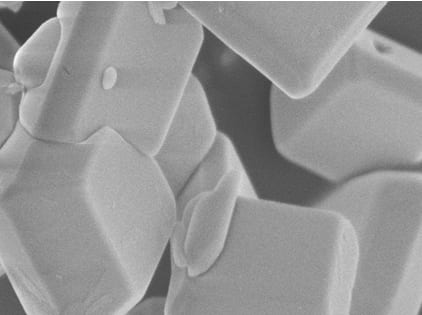
Chinese group show semiconductors can improve efficiency of photocatalysis, with potential in turn for better solar cells.
Researchers from Bordeaux have prepared SiC/C composite foams from concentrated emulsions for thermal applications.
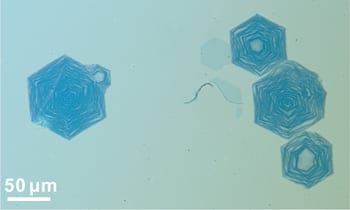
Concentric hexagons of graphene grown in a furnace are first synthesis of graphene nanoribbons on metal from the bottom up — atom by atom.
Gold nanofibers in engineered heart tissue can enhance electrical signalling, Tel Aviv University researchers find.
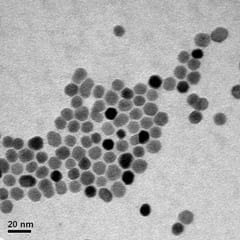
Physicists from the University of York have carried out new research into how the heating effect of an experimental cancer treatment works.
Approximately €6.5 Million over the next three years for research on biomolecules under pressure, energy conversion and oxide surfaces.