Device monitors microcystin-LR, a cyanobacterial toxin, in sources of drinking water supplies using carbon nanotube arrays.
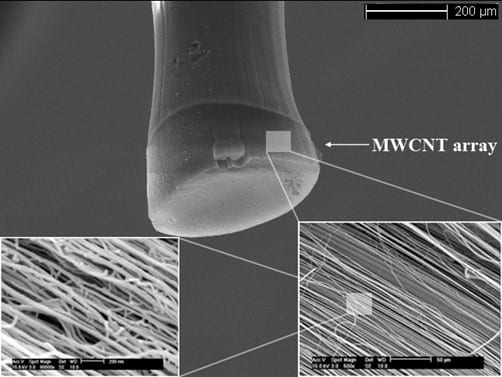

Device monitors microcystin-LR, a cyanobacterial toxin, in sources of drinking water supplies using carbon nanotube arrays.
University of Wollogong researchers have printed materials which can actuate and strain gauge.

What would it take for you to replace your old-fashioned candles with modern LEDs this Christmas time?
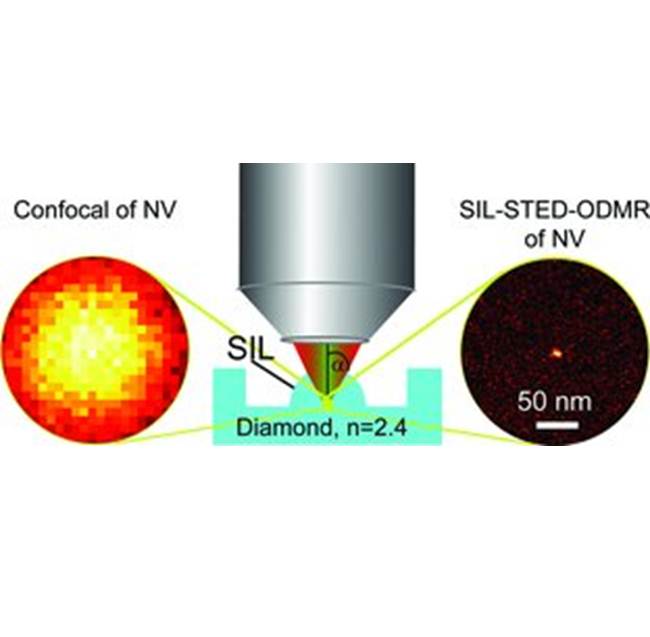
Stefan Hell and co-workers have achieved maximum spatial resolution in far-field optical imaging by applying solid immersion lenses to stimulated emission depletion microscopy.
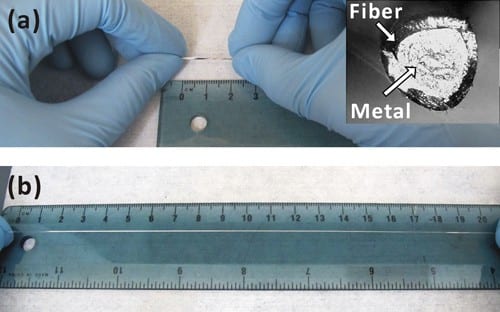
Researchers from North Carolina State University have created conductive wires that can be stretched up to eight times their original length while still functioning.

A research team from KAUST in Saudia Arabia have fabricated all-polymer nonvolatile bistable memory devices with potential for use in flexible and transparent electronics.

Insight into the properties of fullerene is set to open the door to better and cheaper organic solar cells.
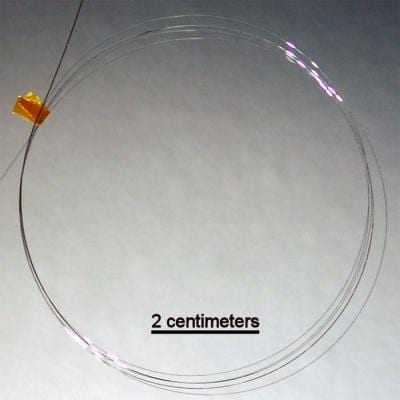
Researchers make a fiber out of crystalline silicon semiconductor materials that can function as a solar cell.
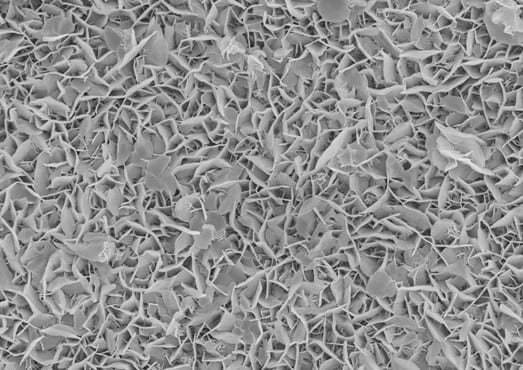
Professor X. W. Lou and co-workers report a new method to grow nanosheets on conductive substrates as a conductive agent-free electrode for supercapacitors.
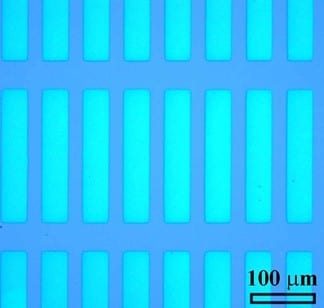
Chinese scientists have shown how to integrate highly stable graphene-based multilayered film via a novel covalent-based protocol.

 Micron-sized hidden dimensions could solve two of physics’ deepest puzzles
 Turning Periods into Power: Menstrual Blood a Valuable Resource for Medical Diagnostics
 Surfactants Steer Supraparticle Structure
 Bone loss in obesity traced to gut microbiota
 Edible electronics realize safe, complex monitoring devices
 Fermilab Confirms Muon g-2 Measurements