Complex 3D nanoscale architectures based on DNA self-assembly can conduct electricity without resistance and may provide a platform for fabricating quantum computing and sensing devices.

Complex 3D nanoscale architectures based on DNA self-assembly can conduct electricity without resistance and may provide a platform for fabricating quantum computing and sensing devices.
New hybrid optical fibers contain 2D materials that enhance light-matter interactions and open doors for a range of new technological advancements.
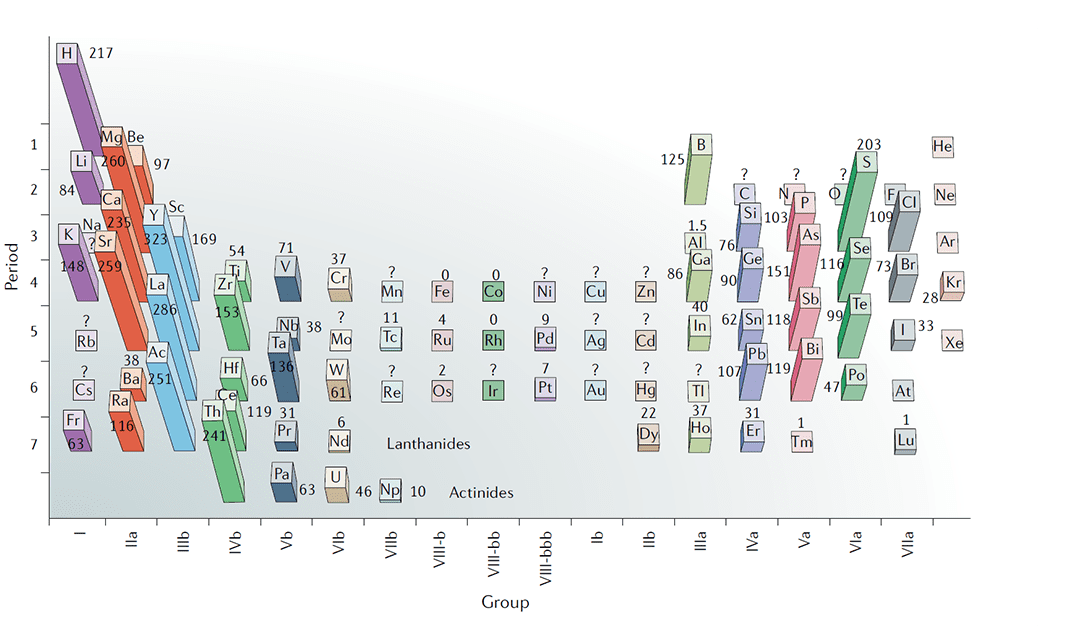
While superconductors are not considered an energy material, the energy savings arising from resistance-free transmission and distribution of electricity are potentially massive when considered on a global scale.

Using the principles of quantum mechanics, scientists are unlocking incredible computing powers one experiment at a time.

Scientists have developed a method for precise, fast, and high-quality laser processing of halide perovskites, promising light-emitting materials for solar energy, optical electronics, and metamaterials.

Scientists developed cryogenic memory cells that could be orders of magnitude faster than existing memories while consuming very little power.
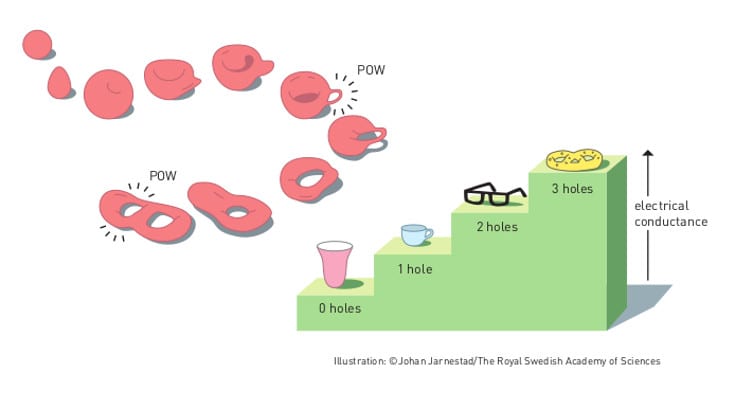
The Royal Swedish Academy of Sciences has decided to award the Nobel Prize in Physics 2016 with one half to David J. Thouless and the other half to F. Duncan M. Haldane and J. Michael Kosterlitz for theoretical discoveries of topological phase transitions and topological phases of matter.
A roundup of the latest materials science research from the past week.

Researchers describe the experimental realization of an optical switch controlled by a single photon, allowing light to govern the transmission of light.
Researchers at NIST have reported the first observation of the “spin Hall effect” in a Bose-Einstein condensate.
 New theory suggests gravity is not a fundamental force
 Higgs boson may be driving the Universe’s expansion
 Water-powered gadgets may be on the horizon thanks to new evaporation-based energy device
 Scientists discover a new class of antibiotics
 Micron-sized hidden dimensions could solve two of physics’ deepest puzzles
 A new type of dark matter could explain mysterious radiation from the Milky Way’s core