
A group at the University of Adelaide have developed an intracellular GSH-responsive drug delivery system with enhanced cellular uptake capability.
Results for "nanoparticles"
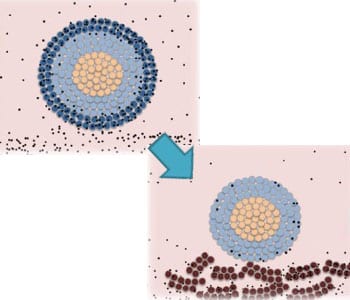
The Missing Dimension of Nanotoxicology
Nanotoxicology results differ depending on the dimensionality of the platform used. While 2D cell cultures are standard, they may not tell the right story.
Light-sensitive polymers for controlled gene silencing
New research describes the use of polymers that can bind siRNAs into nanoscale assemblies that do not disassemble until they are irradiated with UV light.
Targeted killing of tumor cells with cancer nanotherapeutics
Paolo Netti and co-workers have designed and characterized model tumor activated polystyrene nanoparticles (TAP-NPs) that release cytotoxic drugs.
Theranostics from a single nanoparticle platform
Researcers construct a multifunctional theranostic nanoplatform that gathers five diagnostic and therapeutic functions into one single nanocomposite.
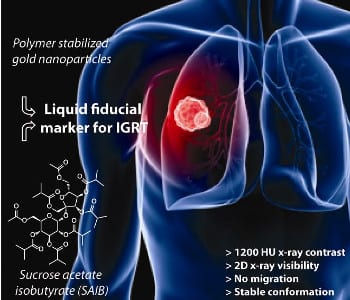
Liquid gold nanogels enhance radiation therapy
Gold nanoparticles embedded in biocompatible nanogels are used as markers for improved image-guided radiotherapy.
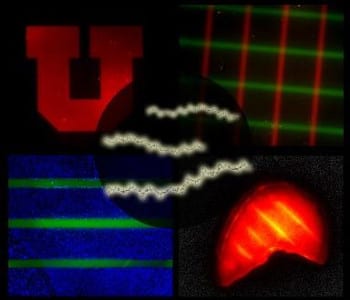
Peptide-based materials for nanomedicine
The first issue in Macromolecular Bioscience is a special issue on “Peptide-based Materials for Nanomedicine” guest-edited by Neil Cameron and Tim Deming.
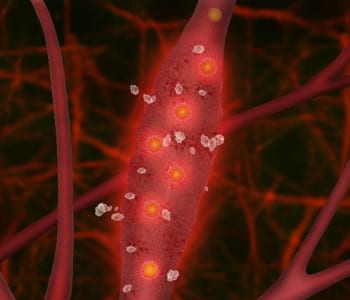
Particles for Healthcare Applications
Researchers highlight the potential and current biological and biomedical applications of micro- and nanoparticle research.

From Stem Cells to Nanotoxicology: Welcome to the World of Dr. David Tai Leong
David Tai Leong answers some questions about his world of nanobiology and new biomaterials.
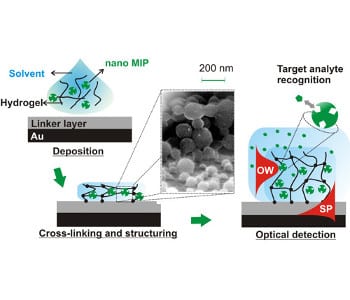
MIP sensors for direct optical detection
Researchers from Austria, Czech Republic, Germany, Greece, and Singapore jointly developed a new type of MIP-based material for optical sensors.
Popular
-
 New theory suggests gravity is not a fundamental force
-
 Higgs boson may be driving the Universe’s expansion
-
 Water-powered gadgets may be on the horizon thanks to new evaporation-based energy device
-
 Scientists discover a new class of antibiotics
-
 Micron-sized hidden dimensions could solve two of physics’ deepest puzzles
-
 A new type of dark matter could explain mysterious radiation from the Milky Way’s core