A special issue in Macromolecular Rapid Communications highlights recent advances related to the synthesis, characterization, and applications of polymeric materials for fluorescence sensor applications.
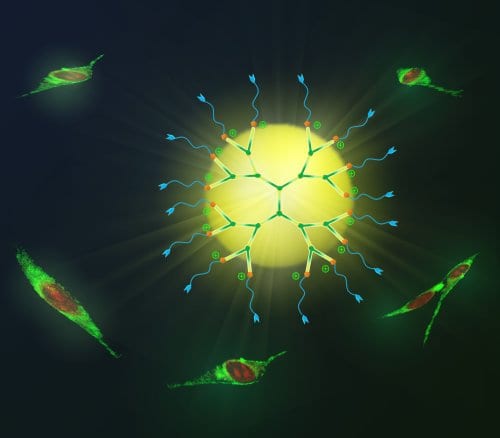

A special issue in Macromolecular Rapid Communications highlights recent advances related to the synthesis, characterization, and applications of polymeric materials for fluorescence sensor applications.

Swiss researchers show that nanosilver is quickly transformed into less problematic substances on its way to the wastewater treatment plant.
Both patents are related to their copper inks, which have the potential to replace existing silver inks that are commonplace in the marketplace.
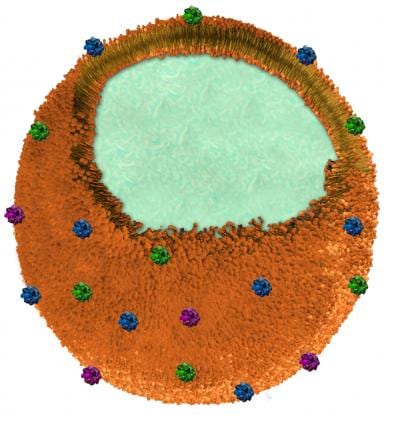
Absorbent nanostructures can neutralize pore-forming toxins and remove a broad class of dangerous toxins.
Researchers at Rensselaer Polytechnic Institute develop new method to kill pathogenic bacteria without antiobiotics or chemicals.
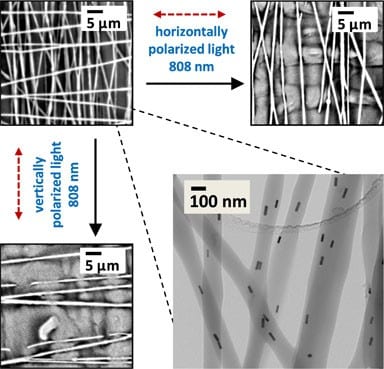
Researchers from North Carolina State University have developed a way to melt or “weld” specific portions of polymers by embedding aligned nanoparticles within the materials.
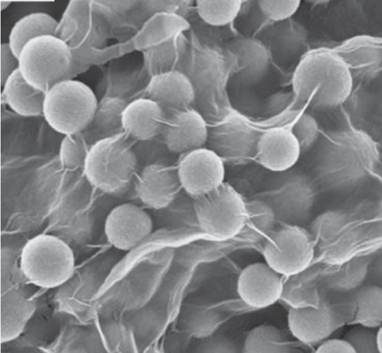
A new route to fabricate graphene-wrapped nanoparticles of controlled morphology has been reported.
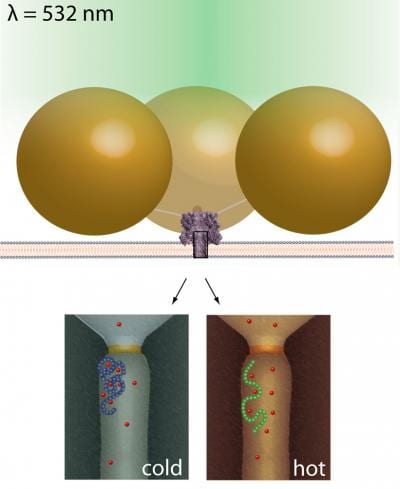
Chambers can be used for the detection and identification of a wide range of molecules, including DNA.
A new technique developed by U of T Engineering Professor Ted Sargent and his research group could lead to significantly more efficient solar cells.

Molecular self-assembly of multifunctional nanoparticle composites with arbitrary shapes and functions

 Micron-sized hidden dimensions could solve two of physics’ deepest puzzles
 Turning Periods into Power: Menstrual Blood a Valuable Resource for Medical Diagnostics
 Surfactants Steer Supraparticle Structure
 Bone loss in obesity traced to gut microbiota
 Edible electronics realize safe, complex monitoring devices
 Fermilab Confirms Muon g-2 Measurements