So what is next for nanochemical and biochemical sensor research? Shouldn’t we be trying to find the next glass pH electrode, rather than trying to squeeze that extra fraction of a percent out of our tried and tested materials?
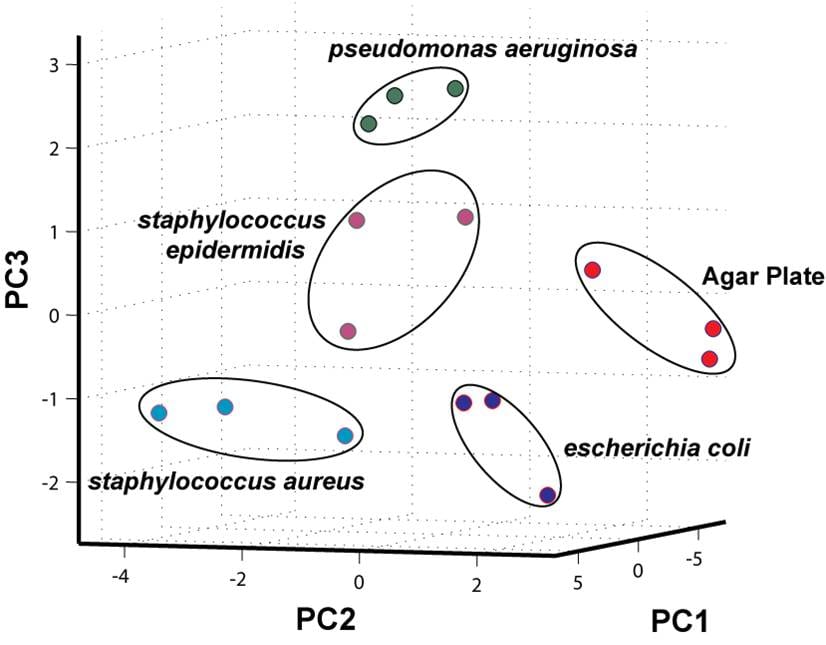

So what is next for nanochemical and biochemical sensor research? Shouldn’t we be trying to find the next glass pH electrode, rather than trying to squeeze that extra fraction of a percent out of our tried and tested materials?
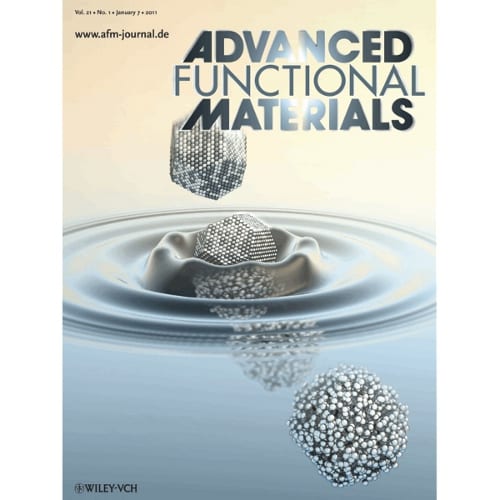
Systematic insights into well-defined platinum-alloy nanoparticles promise cheaper and more-efficient fuel cells.
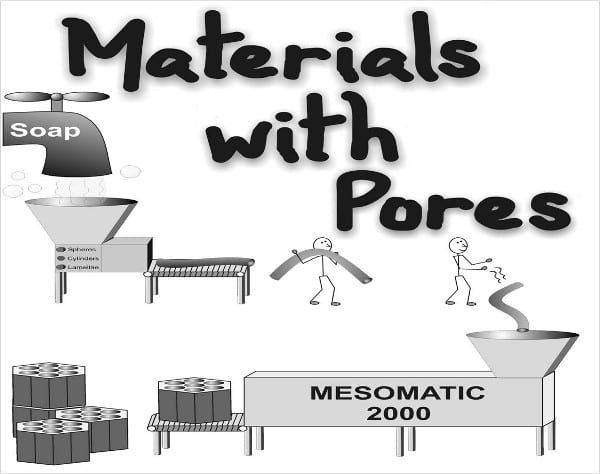
Professor Geoffrey Ozin from the University of Toronto reviews porous materials—how the research goals have varied over the years, where we are today, and what these materials may offer in the future.
A rigorous study by British and Irish scientists demonstrates a clear relationship between alignment and loading of nanotubes in nanocomposites and the nanocomposite mechanical properties.
Professor Geoffrey Ozin from the University of Toronto shares his thoughts along with those of Professor David Antonelli from the University of Glamorgan, regarding the role that nanochemistry can play in the current hydrogen storage challenge.
So who owns nanochemistry? Should “all” the credit be given to chemistry pioneers of the past 20-30 years or were the foundations of nanochemistry already laid in the field of colloid chemistry, the origin of which can be traced to a century earlier?
Welcome to one of our guest columns, where active researchers can share their views on topics relevant to materials science. Professor Geoffrey Ozin from the University of Toronto tells us what he thinks about nanoscale silicon and its future. One thing that has...

We speak to Andrey Rogach, nanocrystal expert and Professor at the Physics and Materials Science Department, City University of Hong Kong.
Prof. Andrey Rogach, Prof. Dmitri Talapin and Dr. Elena Shevchenko look back on 10 exciting years of nanocrystal superstructures.
The sample size of nanomaterials with functional properties has been limited to just a few millimeters. This fact has limited their commercial use, so far.
 New theory suggests gravity is not a fundamental force
 Higgs boson may be driving the Universe’s expansion
 Water-powered gadgets may be on the horizon thanks to new evaporation-based energy device
 Scientists discover a new class of antibiotics
 Micron-sized hidden dimensions could solve two of physics’ deepest puzzles
 A new type of dark matter could explain mysterious radiation from the Milky Way’s core