
Clearly structured, the introductory part of this first book on ALD provides a great insight into all aspects of the technique and processes, while the second part focuses on various aspects of nanomaterials and fields of application. [XXXVI, 436 Pages,...
Results for "nanomaterials"
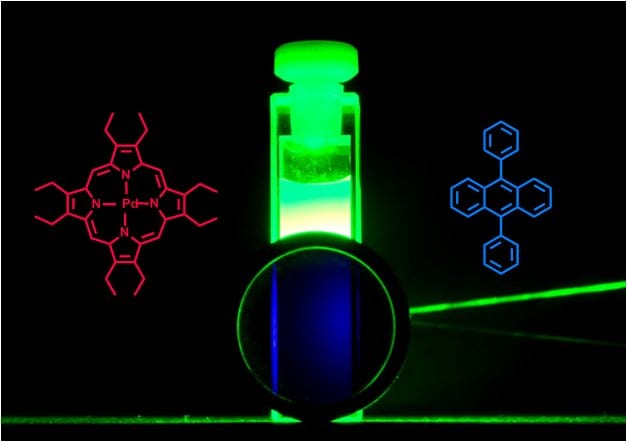
Low-Power Upconversion in Dye-Doped Polymer Nanoparticles
The fabrication of dye-doped cross-linked rubbery nanoparticles with light upconversion properties even at relatively low power densities has been reported by a Swiss/American research team.

Ravin Narain: Aiming for a Cancer Cure with Biomaterials and Nanotechnology
We speak to University of Alberta Professor Ravin Narain about his polymeric and nano-materials research, and what it might for the future of biomaterials and medicine.
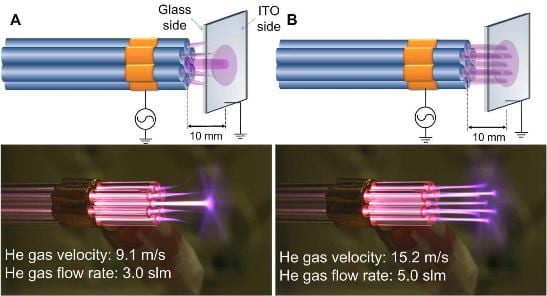
New Dimensions of Plasma Jets
New plasma jet-to-jet coupling opens new dimensions in the field of high-energetic plasma applications.
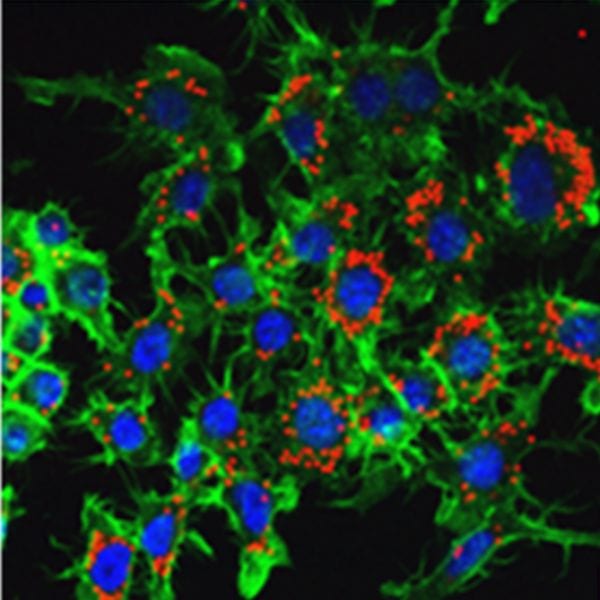
Defying Expectation – Cellular Uptake of Nanoparticles
Confocal microscopy and flow cytometry results suggest that nanoparticle uptake defies the expected size limits.

What Is My (Nano)Material Good For?
Whatever happened to curiosity-driven research aimed at the creation of fundamental knowledge without the need for immediate application?
2011 Albert Einstein World Science Award goes to Professor Geoffrey Ozin
Following on from his selection as the recipient of the 2011 RSC Barrer Award, Professor Geoffrey Ozin has been awarded the 2011 Albert Einstein World Award of Science.
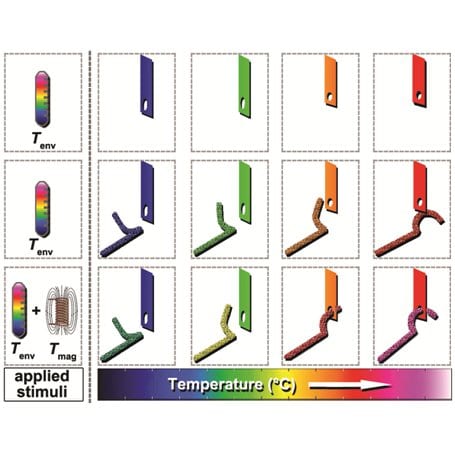
Taking Shape: Metamorphic Nanocomposites
The development of materials with magnetically adjustable properties has been presented by a German research team from the Helmholtz-Zentrum Geesthacht (HZG) Centre for Biomaterial Development in Teltow.
Nanophobic or Nanophilic?
Carbon nanotubes have the potential to unlock effective treatments for that most delicate of systems – the mammalian central nervous system. But conflicting studies and reports on potential toxicity underline the need for careful, standardized, and thorough research protocols.
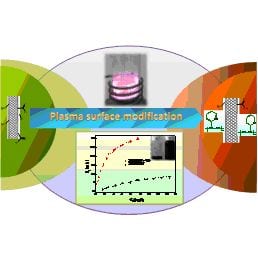
Heavy Metal Free Environment with Plasma-Modified Carbon Nanotubes
Scientists at Institute of Plasma Physics, CAS, have developed a way to modify multiwalled carbon nanotubes to enhance their dispersion properties and adsorption capacities
Popular
-
 New theory suggests gravity is not a fundamental force
-
 Higgs boson may be driving the Universe’s expansion
-
 Water-powered gadgets may be on the horizon thanks to new evaporation-based energy device
-
 Scientists discover a new class of antibiotics
-
 Micron-sized hidden dimensions could solve two of physics’ deepest puzzles
-
 A new type of dark matter could explain mysterious radiation from the Milky Way’s core