
Program is intended to meet the growing demand for workers who can keep pace with emerging nanotechnologies.
Results for "nanomaterials"
NanoGEM group releases nanotoxicity findings
19 research institutions and companies release results of three years worth of study on 16 different nanomaterials.
Nanomicelle dye for better cancer treatment
New organic PTT agent based on nano-micelles encapsulating a small non-fluorescent NIR-absorbing dye shows excellent tumor ablation without toxicity.
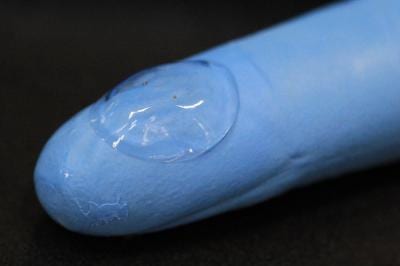
Stretchable, transparent graphene-metal nanowire electrode
A transparent and stretchable electrode could open the new way for flexible displays, solar cells, and electronic devices fitted on a curvature substrate.
Buffalo researchers to examine hydrogen fuel production
Two scientists have received a grant from the Research Corporation for Science Advancement to devise a new method for gleaning hydrogen fuel from water.

Solar Cells as Inexpensive as Paint?
Organic photovoltaic materials may lead to solar cells that produce more power and cost less.
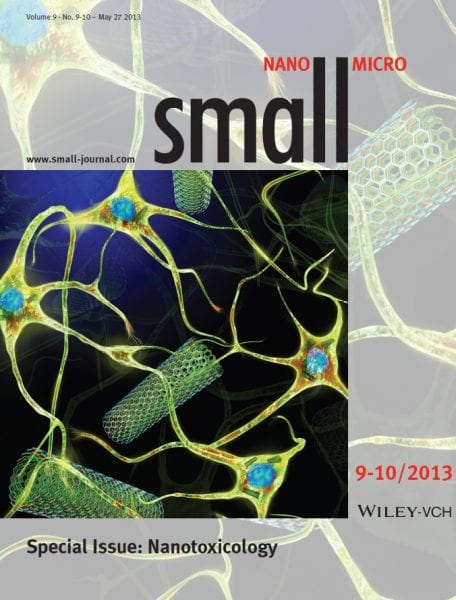
Nanotoxicology
Nanomaterials have so much to offer – the sooner we uncover their interactions with biological systems and the mechanisms behind them, the sooner we can apply nanomaterials to safe, effective, advanced technologies. That’s why this special issue on Nanotoxicology in Small was just too big to publish as a single issue…
X-ray techniques to peek into nanoparticle synthesis
The advantages and disadvantages of the available X-ray techniques for real-time testing of the colloidal nanoparticle synthesis are reviewed.
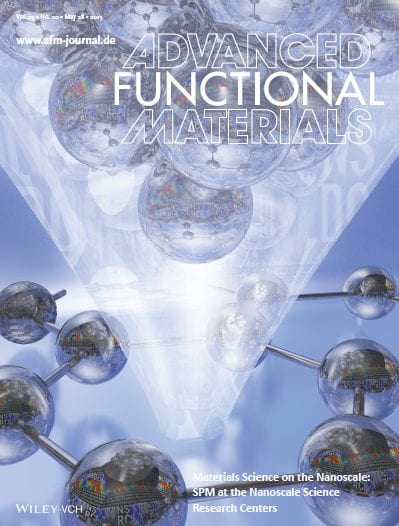
Thinking Big to Think Small: US Nanoscale Science Research Centres
Scanning probe microscopy in the US Department of Energy Nanoscale Research Centers: status, perspectives, and opportunities.
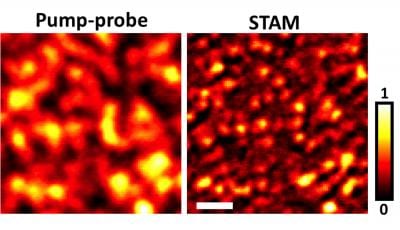
New super-resolution microscopy does not require dyes
Researchers have found a way to see synthetic nanostructures and molecules using a new type of optical microscopy that does not require fluorescent dyes.
Popular
-
 New theory suggests gravity is not a fundamental force
-
 Higgs boson may be driving the Universe’s expansion
-
 Water-powered gadgets may be on the horizon thanks to new evaporation-based energy device
-
 Scientists discover a new class of antibiotics
-
 Micron-sized hidden dimensions could solve two of physics’ deepest puzzles
-
 A new type of dark matter could explain mysterious radiation from the Milky Way’s core