Bruce Harmon, Kai-Ming Ho, and Cai-Zhuang Wang will identify promising compositions of new magnetic materials that do not contain rare earth elements.
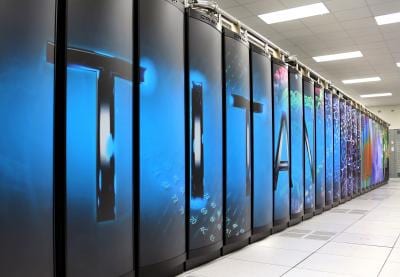

Bruce Harmon, Kai-Ming Ho, and Cai-Zhuang Wang will identify promising compositions of new magnetic materials that do not contain rare earth elements.
Gerhard Meyer, Leo Gross, and Jascha Repp win 2012 Feynman Prize for Experiment.
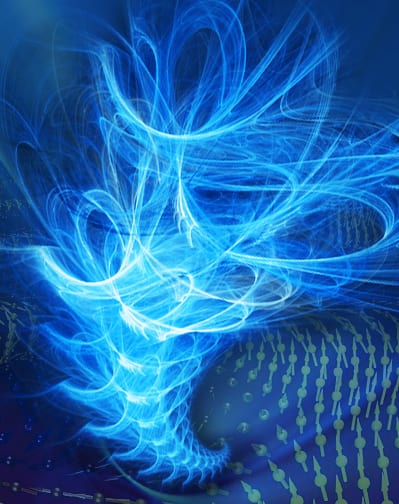
Scientists from Berkeley and TU Munich investigate magnons in a material that becomes helimagnetic below about 30 kelvin: iron silicide doped with cobalt.
IBM announced today a major advance in the ability to use light instead of electrical signals to transmit information for future computing.
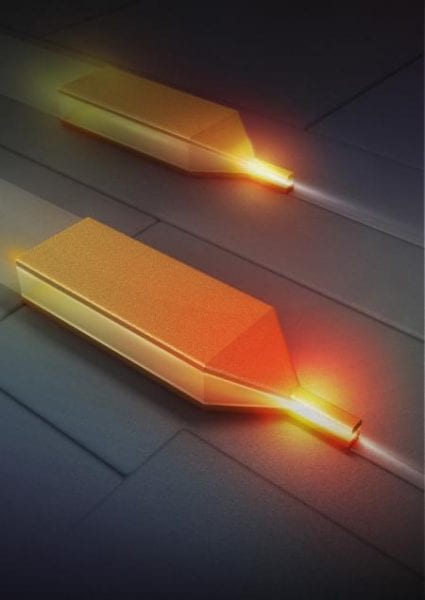
Engineers create a device that can focus light into a point of just a few nanometers, with applications in computing, communications, and imaging.
A state-of-the-art welding process refined for use in naval shipbuilding by the Office of Naval Research (ONR) has crossed over to the world of computing.
W. M. Keck Foundation funds David Mazziotti, Greg Engel, and Dmitri Talapin to research manipulate of nanocrystal properties.
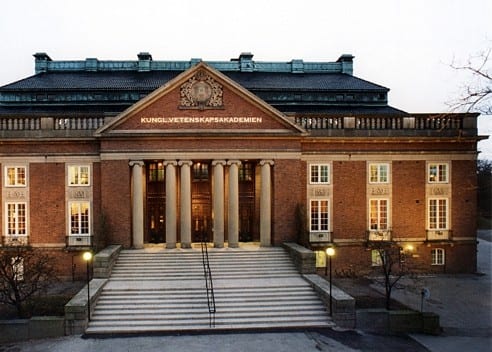
David Wineland and Serge Haroche win award from work on light-matter interaction.
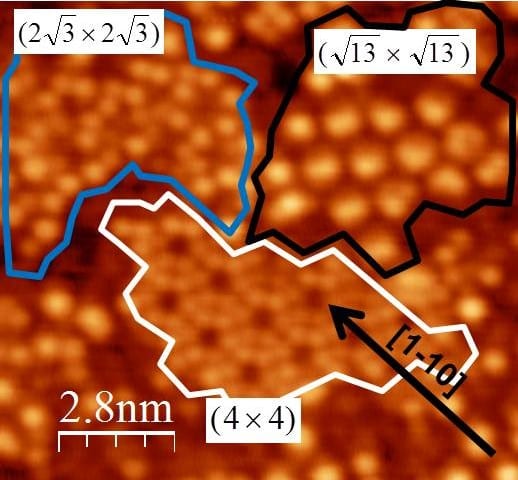
The next generation of computing could be performed with silicene, an atomically thin form of silicon which could revolutionize electronics.
Biomolecular computing systems and their applications represent a rapidly developing research area that is covered here with contributions from major researchers in the field. [XX, 358 Pages, Hardcover]Read More...
 New theory suggests gravity is not a fundamental force
 Higgs boson may be driving the Universe’s expansion
 Water-powered gadgets may be on the horizon thanks to new evaporation-based energy device
 Scientists discover a new class of antibiotics
 Micron-sized hidden dimensions could solve two of physics’ deepest puzzles
 A new type of dark matter could explain mysterious radiation from the Milky Way’s core