Blood capillary analogues have been developed in a biodegradable hydrogel as a promising platform for in vitro drug testing.
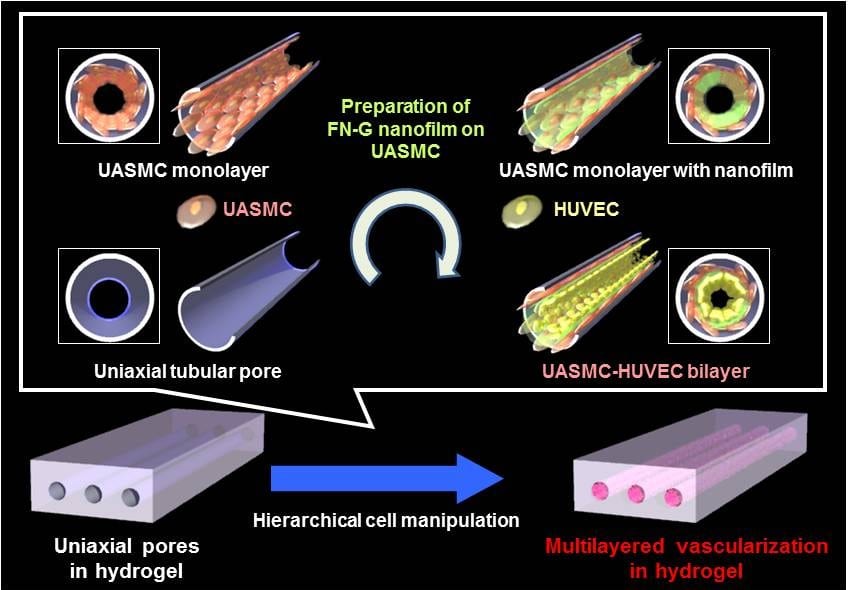

Blood capillary analogues have been developed in a biodegradable hydrogel as a promising platform for in vitro drug testing.
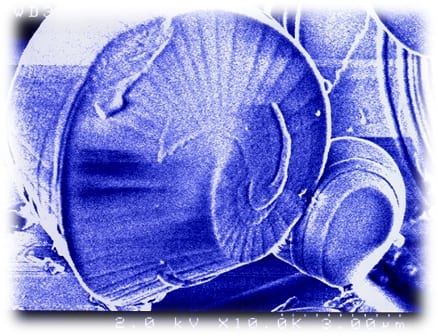
How much does materials science stand to gain from Nature? Professor Ozin gives his take on the progress of biomimetics.
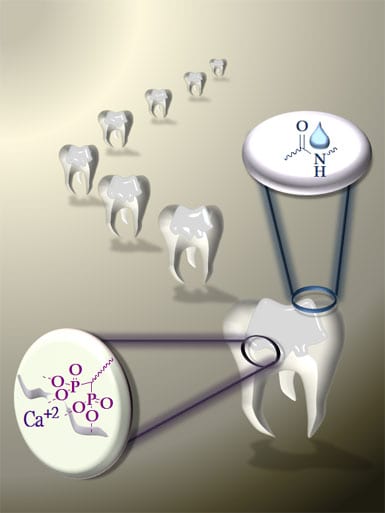
A new form of dental adhesives, containing bisphosphonate and bisphosponic acid, improves the ability to etch enamel and increases stability in water.
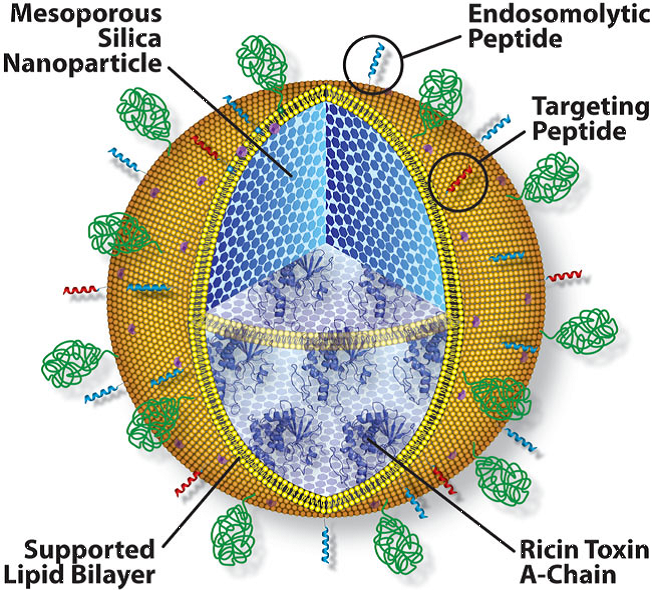
A new hybrid nanoarchitecture has been developed to allow the use of protein toxins such as ricin in cancer treatment.

The issue aims to provide a representative and comprehensive overview on the broad range of current biophotonics on-chip, spanning the full range from chip fabrication to applications in biomedical sensing and related fields.

Professor Ozin looks back at the predictions for the field of nanochemistry he made 20 years ago; where has nanotechnology gone since?

Prof. Mishra’s group at Banaras Hindu University, India has exhaustively studied two specific reactions of hydroxyl and perhydroxyl radicals.
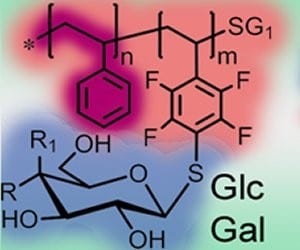
Researchers from the University of Jena (Germany) designed glycopolymeric materials with tailored properties to independently study the parameters that impact cellular uptake.

Work on the synthesis of Aerographite, a new type of ultra-lightweight material, moves up five places to number 1 in this week’s Advanced Materials top 40.
The first book dedicated to glasses and their variants that can be used as biomaterials to repair diseased and damaged tissues, this book covers all types of glasses: traditional glasses, bioactive glasses, sol-gel glasses, phosphate glasses, glass-ceramics,...
 New theory suggests gravity is not a fundamental force
 Higgs boson may be driving the Universe’s expansion
 Water-powered gadgets may be on the horizon thanks to new evaporation-based energy device
 Scientists discover a new class of antibiotics
 Micron-sized hidden dimensions could solve two of physics’ deepest puzzles
 A new type of dark matter could explain mysterious radiation from the Milky Way’s core