Whatever happened to curiosity-driven research aimed at the creation of fundamental knowledge without the need for immediate application?


Whatever happened to curiosity-driven research aimed at the creation of fundamental knowledge without the need for immediate application?

Macro Rolandi discusses his recent essay on the use of illustrations in scientific papers.
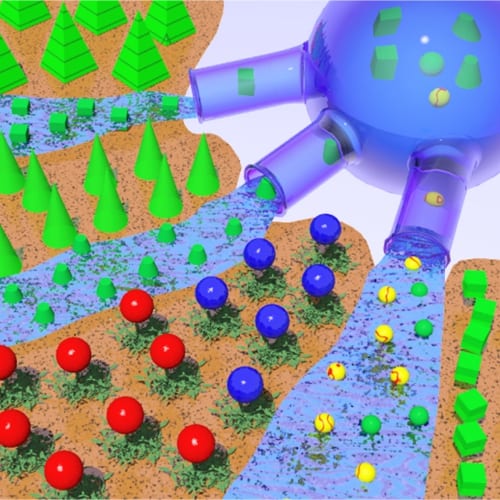
Professor Geoffrey Ozin discusses the safe and responsible development, production, use, transportation, and disposal of nanoparticles in existing or emerging nanotechnologies.

Researchers at the University of Basel have identified a peroxidase enzyme from the roots of the common horseradish plant which acts as a novel catalyst in atom transfer radical polymerization (ATRP).
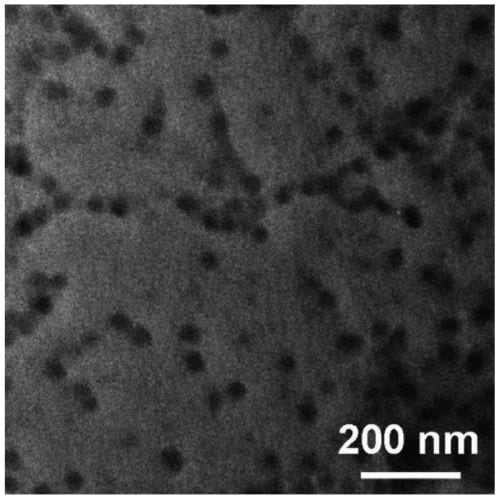
The self-assembly of block polymers raises this question, discussed in the latest Trend Article in Macromolecular Chemistry and Physics.
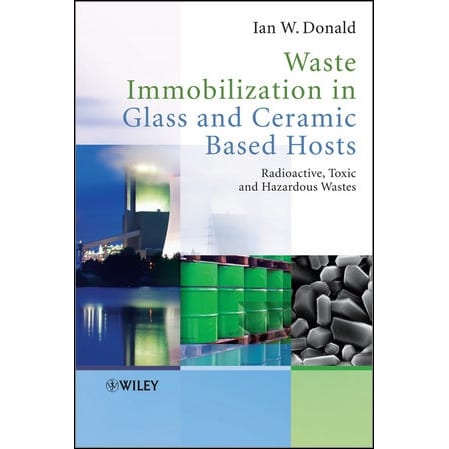
Dr. Michael Ojovan of NTEC reviews Dr. Ian Donald’s new book on managing nuclear waste with glass and ceramics
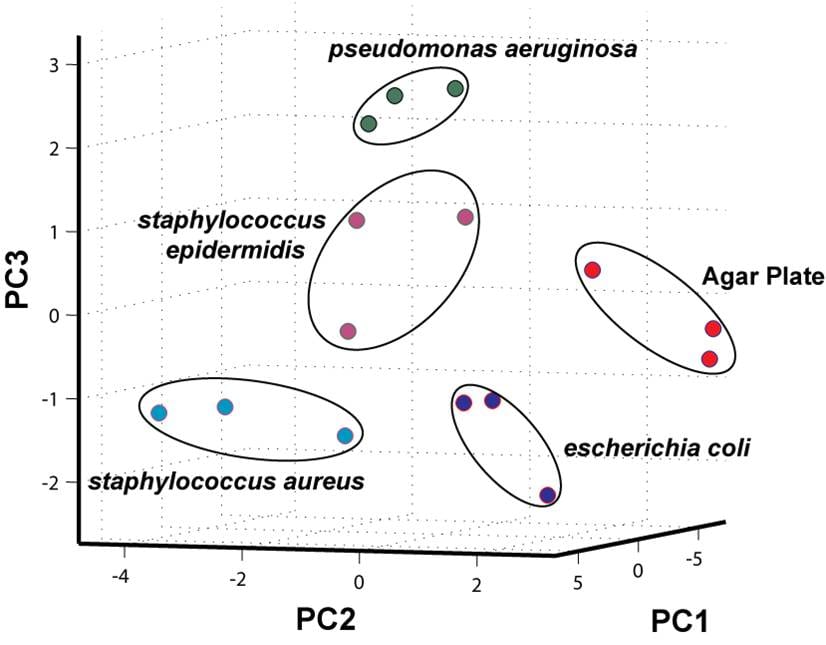
So what is next for nanochemical and biochemical sensor research? Shouldn’t we be trying to find the next glass pH electrode, rather than trying to squeeze that extra fraction of a percent out of our tried and tested materials?
The JMatPro software calculates a wide range of materials properties for metallic alloys. It is particularly aimed at multi-components alloys used in industrial practice.
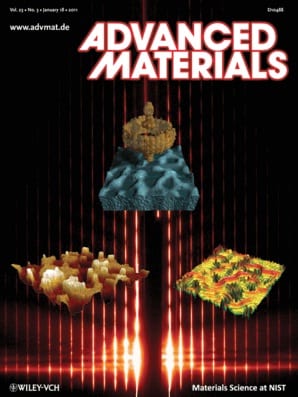
Established in 1962, the Polymers Division in the Material Measurement Laboratory of the National Institute of Standards and Technology (NIST) will soon celebrate its 50th year as a world leader in polymers research.
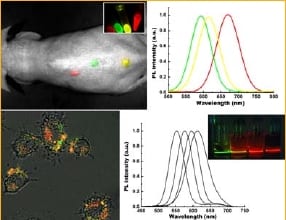
An international team of researchers review a useful tool for three dimensional multi-photon microscopy and imaging
 New theory suggests gravity is not a fundamental force
 Water-powered gadgets may be on the horizon thanks to new evaporation-based energy device
 Micron-sized hidden dimensions could solve two of physics’ deepest puzzles
 Turning Periods into Power: Menstrual Blood a Valuable Resource for Medical Diagnostics
 Solar panels made of lunar dust could power a future Moon base
 Organic materials bring probabilistic computing closer to reality