
BASF New Business GmbH has acquired all shares of the technology company Deutsche Nanoschicht GmbH.
Results for "aging"
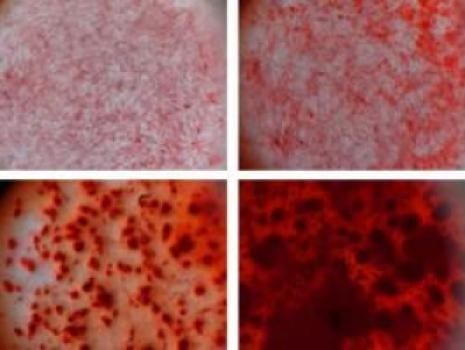
Using Clay to Grow Bone Cells
Synthetic silicate may stimulate stem cells to become bone cells.
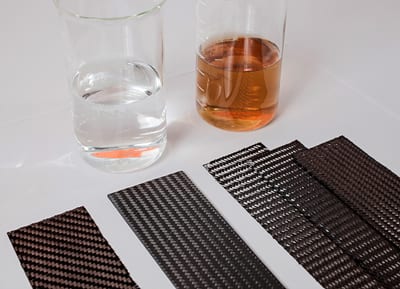
Recycling Carbon Fibers from Composites
New research on recycling carbon from composites ensures that the fibers retain their properties to the greatest extent possible.
Senior Scientific awarded nanomedicine patent
Cell detection patent will improve cancer detection technology.
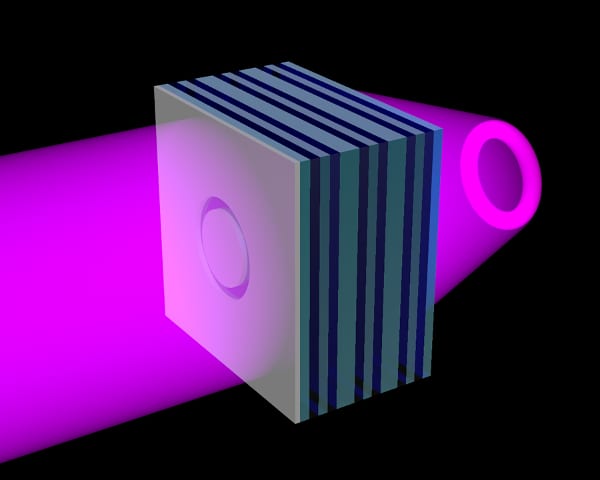
Metamaterial flat lens is recording breaking
New type of lens bends and focuses ultraviolet light in such an unusual way that it can create ghostly, 3D images of objects that float in free space.
A better look into cerebrospinal fluid
New setup for ex vivo detection reveals low concentrations of biomarkers such as circulating tumor cells, bacteria and nanoparticles in cerebrospinal fluid.
X-ray techniques to peek into nanoparticle synthesis
The advantages and disadvantages of the available X-ray techniques for real-time testing of the colloidal nanoparticle synthesis are reviewed.

Rigoberto Advincula wins Herman Mark prize in polymer science
Rigoberto Advincula wins polymer prize for his work in synthesis, polymer brushes, nanostructured surfaces and smart coatings.
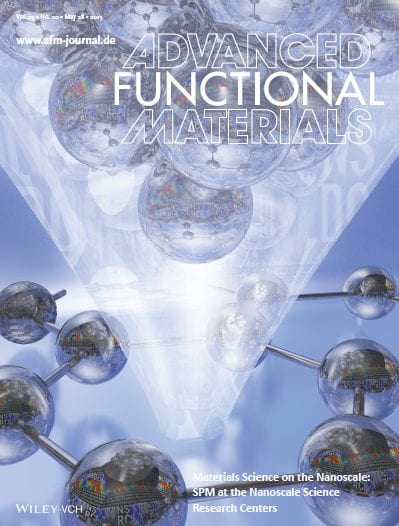
Thinking Big to Think Small: US Nanoscale Science Research Centres
Scanning probe microscopy in the US Department of Energy Nanoscale Research Centers: status, perspectives, and opportunities.
Dresden Center for Nanoanalysis opens at TU Dresden, Germany
The Technische Universität Dresden has celebrated the official opening of a new analytics center – the Dresden Center for Nanoanalysis.
Popular
-
 New theory suggests gravity is not a fundamental force
-
 Higgs boson may be driving the Universe’s expansion
-
 Water-powered gadgets may be on the horizon thanks to new evaporation-based energy device
-
 Scientists discover a new class of antibiotics
-
 Micron-sized hidden dimensions could solve two of physics’ deepest puzzles
-
 Turning Periods into Power: Menstrual Blood a Valuable Resource for Medical Diagnostics