Andreas Müller from the Technische Universität München and part of the Excellence Cluster Universe asks “Do we need fundamental research?” in the newest issue of the Journal of Unsolved Questions (JUnQ).

Andreas Müller from the Technische Universität München and part of the Excellence Cluster Universe asks “Do we need fundamental research?” in the newest issue of the Journal of Unsolved Questions (JUnQ).
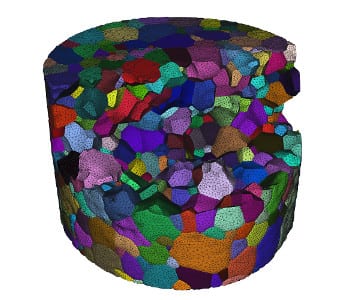
Researchers describe a methodology for coupling diffraction contrast tomography and the finite element method.
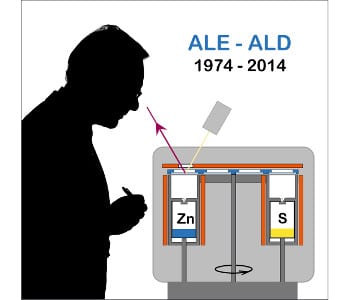
40 years ago, Tuomo Suntola and his group demonstrated the growth of ZnS thin films in alternating, saturating gas-solid reactions, paving the way for ALD.
Professor J. M. Brader of the University of Freiburg reviews Colloidal Suspension Rheology from Cambridge University Press.
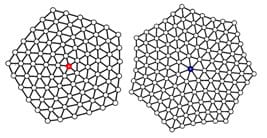
New study finds how defects affect two-dimensional crystalline structures, and the results hold information for designing new materials.

Wesley R. Browne and Anna K. H. Hirsch, Stratingh Institute for Chemistry report on the first Frontiers in Chemistry conference held in Yerevan, Armenia, earlier this year.
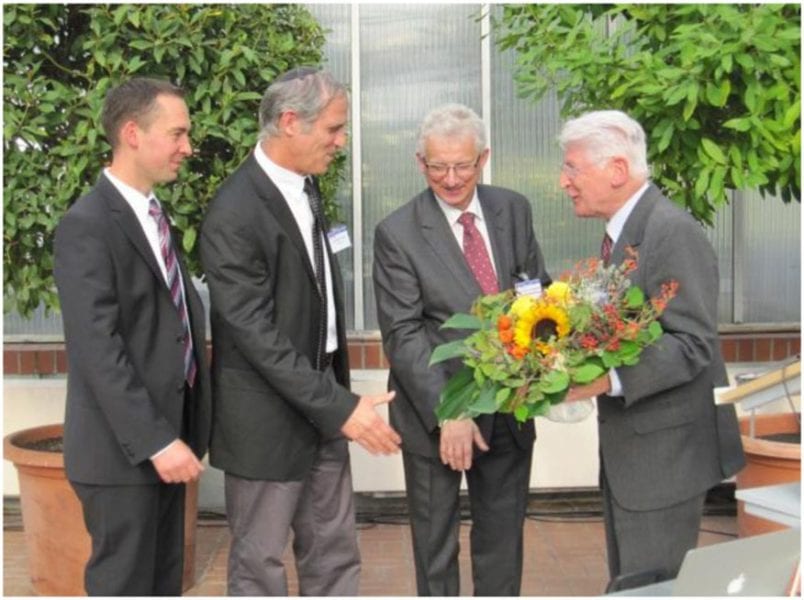
Professor Stansislaw Penczek of the Polish Academy of Sciences wins prize and endowment of $2,500 for work in polymerization kinetics and mechanisms.
The field of quantum simulations leads to the exciting adventure of describing and understanding the quantum world better than ever.

Martin Karplus, Michael Levitt and Arieh Warshel win this year’s Nobel Prize in Chemistry.
François Englert and Peter W. Higgs win the 2013 Nobel Prize in Physics.
 Micron-sized hidden dimensions could solve two of physics’ deepest puzzles
 Turning Periods into Power: Menstrual Blood a Valuable Resource for Medical Diagnostics
 Surfactants Steer Supraparticle Structure
 Bone loss in obesity traced to gut microbiota
 Edible electronics realize safe, complex monitoring devices
 Fermilab Confirms Muon g-2 Measurements