Today’s green chemistry technologies open the route to a broader and richer economy for lemons, well beyond the fresh fruit and fruit juice markets.


Today’s green chemistry technologies open the route to a broader and richer economy for lemons, well beyond the fresh fruit and fruit juice markets.

Researchers from Newcastle University and the James Hutton Institute explore how catchment systems engineering can be a holistic approach to solving some environmental problems.

York University researchers have discovered a way to make lithium-powered batteries more environmentally friendly while retaining performance, stability and storage capacity.

The study takes advantage of a quirk of hydrothermal chemistry to suggest that the surface of Earth was likely covered by a global ocean 3.2 billion years ago.

Researchers say people’s lives are shortened by an average of nearly three years from different sources of air pollution

Researchers find an efficient way to convert nitrogen found in sewage into valuable ammonia.
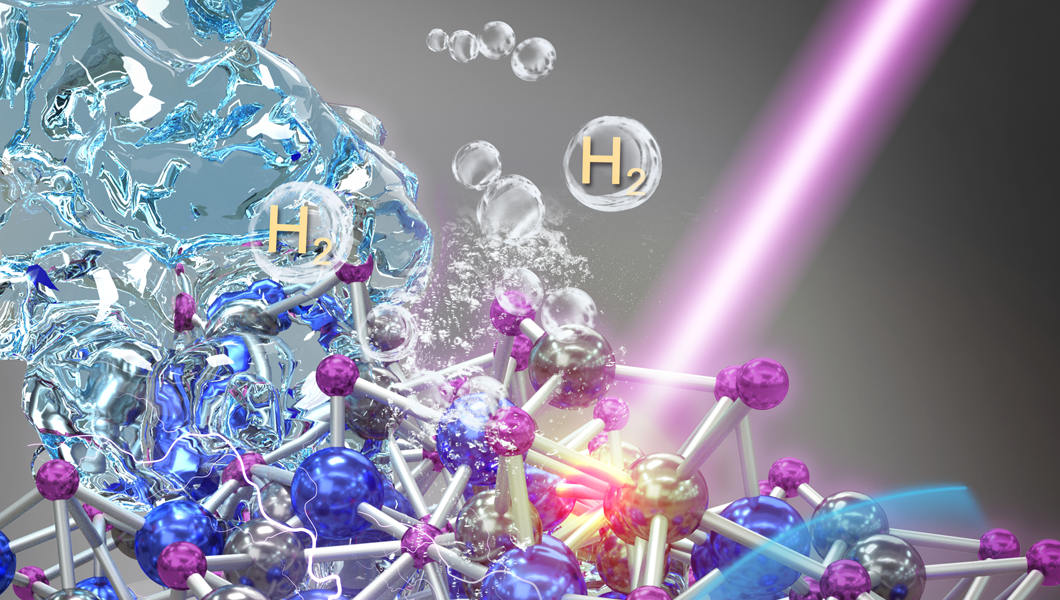
A new catalyst optimization technique could improve the efficiency of piezophototronic materials.

A new eco-friendly perovskite solar cell improves stability and minimizes harmful solvents and lead leakage found in conventional cells.

Researchers develop a composite membrane for long-lasting zinc-based flow batteries.

Data shows we don’t need to be as concerned about large methane releases from large carbon reservoirs in response to future warming; we should be more concerned about methane released from human activities.
 New theory suggests gravity is not a fundamental force
 Higgs boson may be driving the Universe’s expansion
 Water-powered gadgets may be on the horizon thanks to new evaporation-based energy device
 Scientists discover a new class of antibiotics
 Micron-sized hidden dimensions could solve two of physics’ deepest puzzles
 A new type of dark matter could explain mysterious radiation from the Milky Way’s core