University of Waterloo researchers develop a bifunctional oxygen electrocatalyst based on graphene that can recharge zinc-air batteries more efficiently.


University of Waterloo researchers develop a bifunctional oxygen electrocatalyst based on graphene that can recharge zinc-air batteries more efficiently.
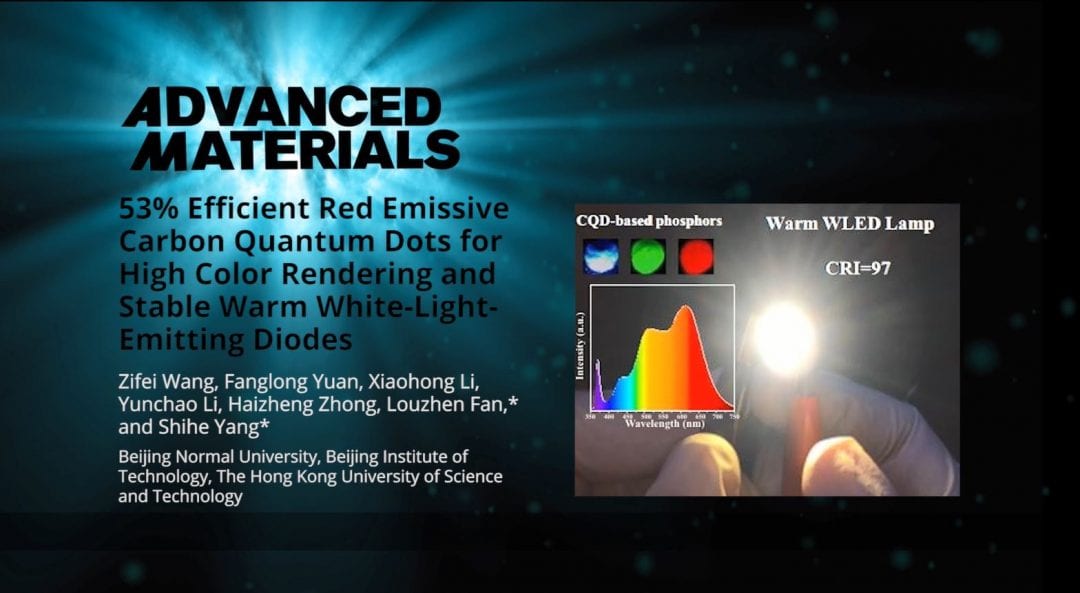
Highly efficient, red-emissive carbon quantum dots (R-CQDs) with a quantum yield of 53% are prepared and a CQD-phosphors-based warm white-light-emitting diode (WLED) is realized for the first time.
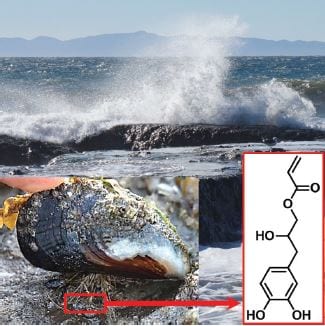
High hardness/rigidity compromises the extensibility and flexibility in state-of-the-art load-bearing polymer composites, including dental-resin composites. A look at an alternative.
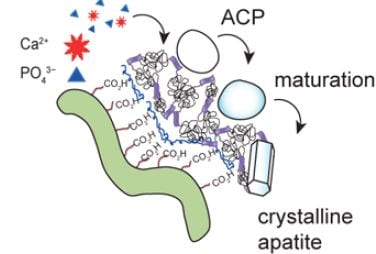
There is a growing body of evidence that a secondary structure of highly negatively charged proteins can play an important role in localizing calcium and phosphate ions to promote the formation of the HAp deposits.
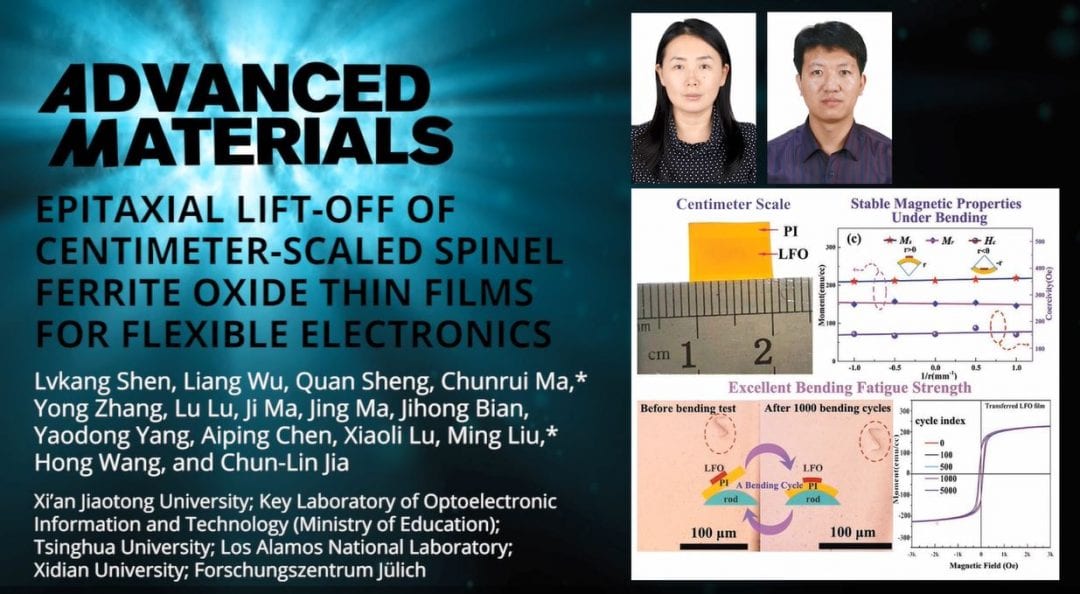
Chunrui Ma, Ming Liu, and colleagues develop a practical way to transfer flexible, centimeter-scale, single-crystalline spinel ferrite oxide thin films onto flexible substrates for applications in flexible and wearable electronics.

This years’ EUROMAT2017 conference will take place in Thessaloniki, Greece, 17-22 September.

Issue 25/2017 of Advanced Materials is a special issue featuring research carried out at RIKEN-Center for Emergent Matter Science (CEMS).
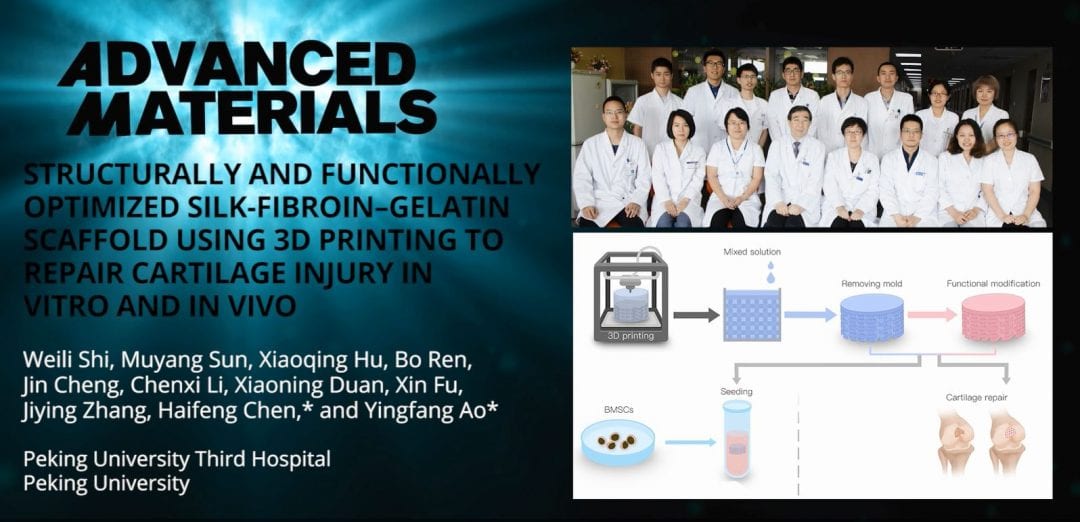
Professor Yingfang Ao from Peking University Third Hospital, Haifeng Chen from Peking University, and colleagues use 3D printing to generate a silk fibroin/gelatin scaffold for knee cartilage regeneration.

The symposium “The Great Transition” brought together leading scientists to address the criticality of materials as key to sustainable technologies.
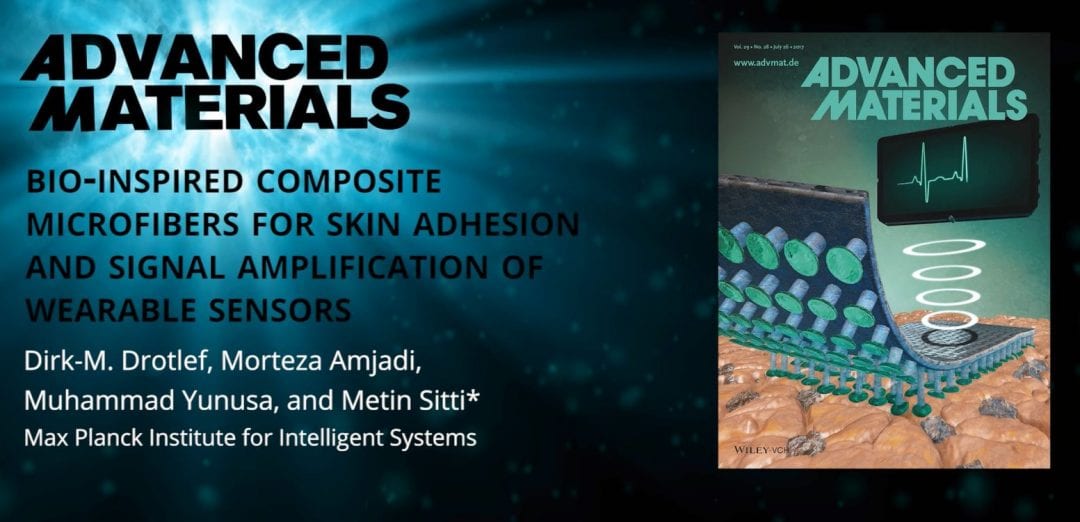
Researchers from the Max Planck Institute for Intelligent Systems develop a durable, flexible adhesive film for use in wearable healthcare devices.

 Micron-sized hidden dimensions could solve two of physics’ deepest puzzles
 Turning Periods into Power: Menstrual Blood a Valuable Resource for Medical Diagnostics
 Surfactants Steer Supraparticle Structure
 Bone loss in obesity traced to gut microbiota
 Edible electronics realize safe, complex monitoring devices
 Fermilab Confirms Muon g-2 Measurements