This video shows that it is possible to ‘mechanically sinter’ liquid metal nanoparticles to form soft, electrically conductive traces by hand.
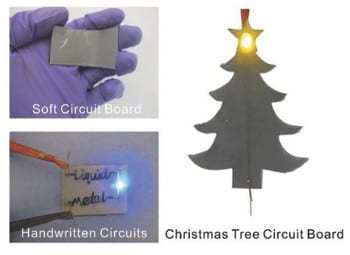

This video shows that it is possible to ‘mechanically sinter’ liquid metal nanoparticles to form soft, electrically conductive traces by hand.
Topography of plant virus nanoparticles has been shown to influence osteogenesis of bone derived mesenchymal stem cells.
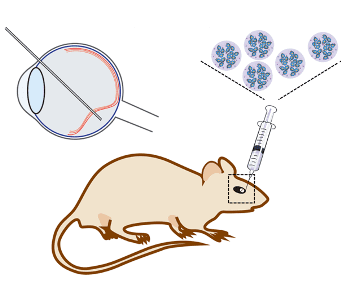
Researchers from Case Western Reserve University present an efficient non-viral gene delivery system for safe gene therapy to treat genetic eye disorders.
Aggregation-induced emission nanoparticles have been developed by East China University researchers for cancer diagnostics and treatment.
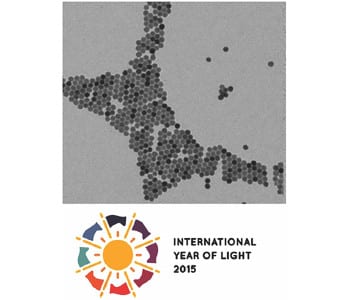
This month’s International Year of Light article reviews relevant advances and applications of plasmonic nanoparticles, from energy to health.

Researchers from the Netherlands present a timely overview on self-assembled fluorene or perylene based chromophores focussing on biological applications.
Interfacial miniemulsion polymerization is a facile route for the synthesis of nanoparticles for applications ranging from therapeutics to coatings.
This month’s International Year of Light article reviews nucleation, growth, and upconversion properties of lanthanide-doped fluoride nanoparticles.

Metallic and semiconductor elements combined to create these lovely flower-like nanoparticles by researchers collaborating across China and Australia.
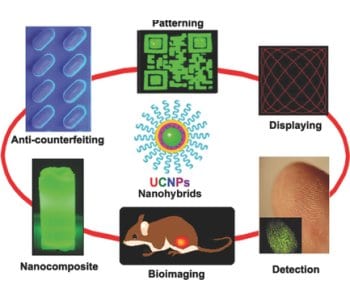
This overview article focuses on upconversion-luminescent nanoparticles/polymer nanohybrids and their new interesting applications.
 New theory suggests gravity is not a fundamental force
 Higgs boson may be driving the Universe’s expansion
 Water-powered gadgets may be on the horizon thanks to new evaporation-based energy device
 Scientists discover a new class of antibiotics
 Micron-sized hidden dimensions could solve two of physics’ deepest puzzles
 A new type of dark matter could explain mysterious radiation from the Milky Way’s core