Magnetically steerable, acid-resistant micromotors are developed that can be fabricated by electrostatic attraction between magnetite nanoparticles and gold microrods at pH ≈ 4.
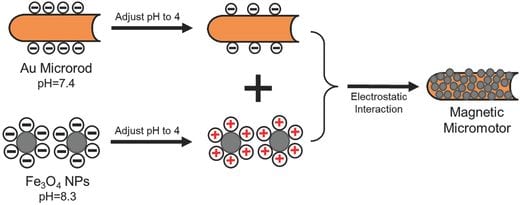

Magnetically steerable, acid-resistant micromotors are developed that can be fabricated by electrostatic attraction between magnetite nanoparticles and gold microrods at pH ≈ 4.

Micro/nanorobots to the rescue for environmental and medical applications.
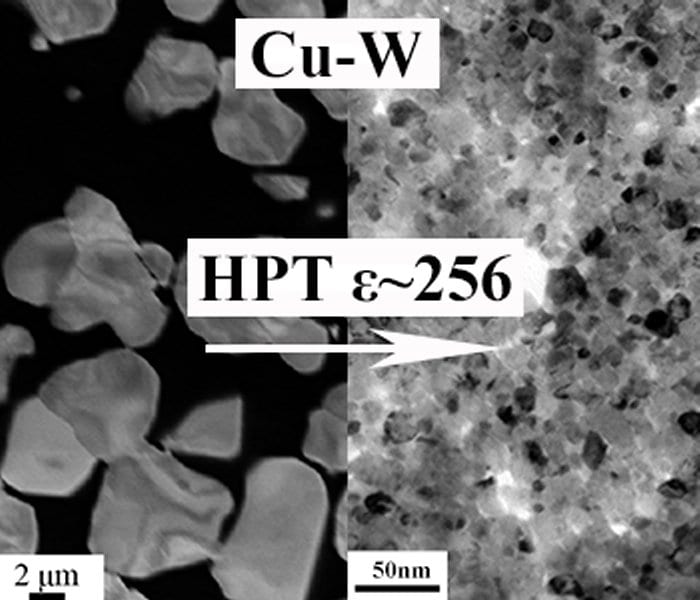
Bulk nanostructured materials have been the subject of extensive research over the past couple of decades due to their extraordinary mechanical and functional properties.
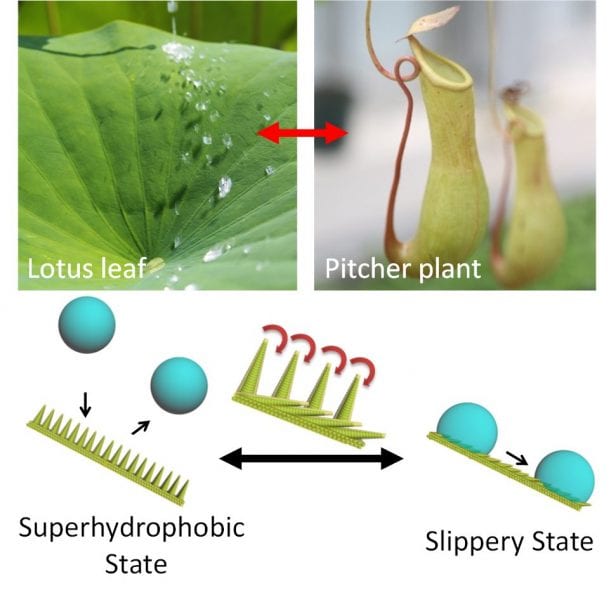
Researchers from Pennsylvania State University, USA, have now revealed a magnetically transformable surface that can reversibly switch between the lotus and the pitcher plant modes
Society is at a crossroads with many topics such as sustainability, energy, medicine, and healthcare. Material science offers many solutions to these problems.
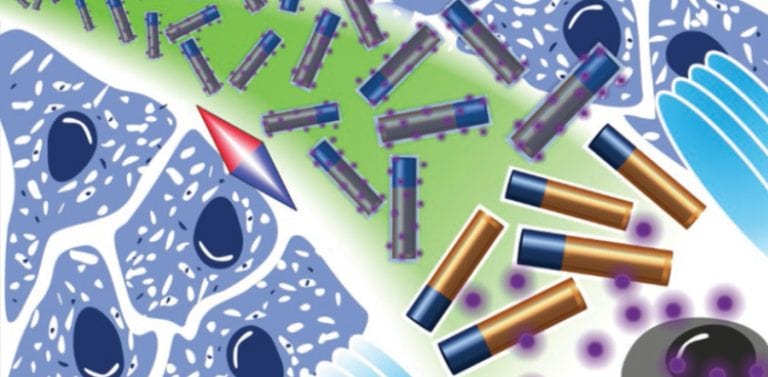
Salvador Pané and colleagues demonstrate core–shell magnetoelectric nanowires that can be triggered using different magnetic fields for targeted drug delivery to kill cancer cells.
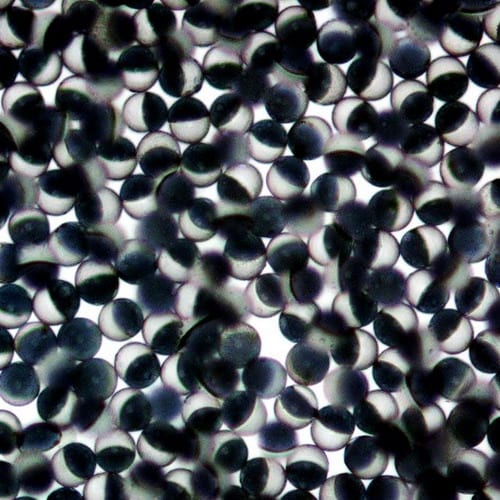
Shin-Hyun Kim and his coworkers at the Korea Advanced Institute of Science and Technology (KAIST) have developed a simple method to create bicolored Janus particles via phase separation of polymers in emulsion drops.
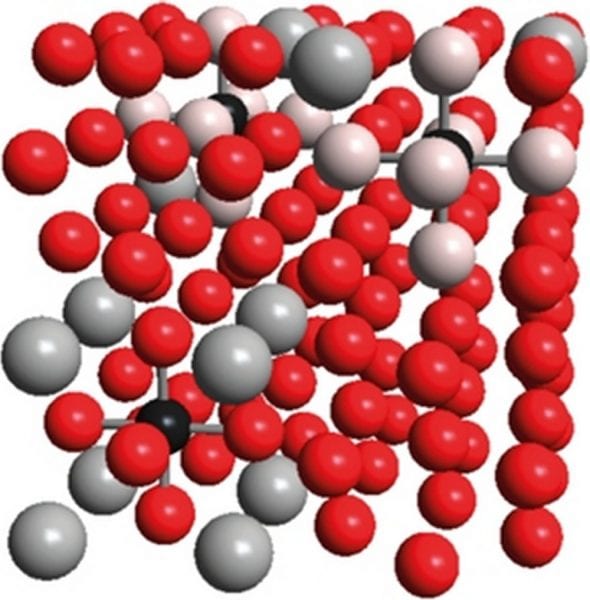
The energetic consequences of having iron, manganese or aluminum atoms sit at certain positions close to carbon are studied by performing first-principles quantum-chemical calculations.
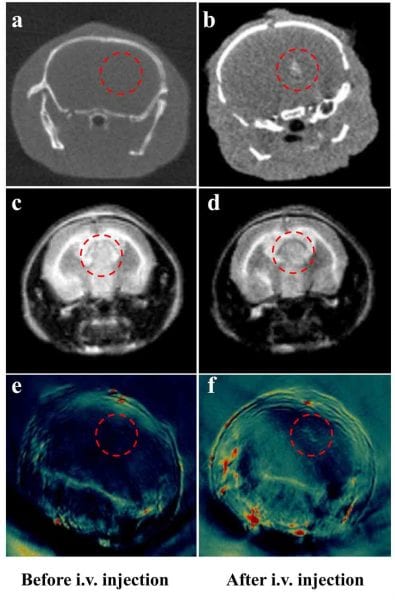
Researchers present the use of Au@MIL-88(Fe) nanoparticles that serve as triple-modality imaging agents, in CT, MRI, and PA imaging of gliomas.
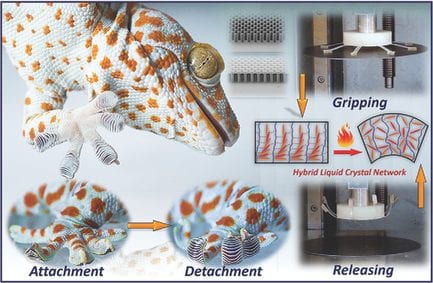
Cross-linked networks of liquid crystal polymers (LCNs) are used to regulate adhesion through stimuli responsive back-scrolling and self-peeling, to design a multi-legged gecko gripper.
 New theory suggests gravity is not a fundamental force
 Higgs boson may be driving the Universe’s expansion
 Water-powered gadgets may be on the horizon thanks to new evaporation-based energy device
 Scientists discover a new class of antibiotics
 Micron-sized hidden dimensions could solve two of physics’ deepest puzzles
 A new type of dark matter could explain mysterious radiation from the Milky Way’s core