Chinese researchers develop a new process to make flexible electrodes for lithium ion batteries quickly and easily.
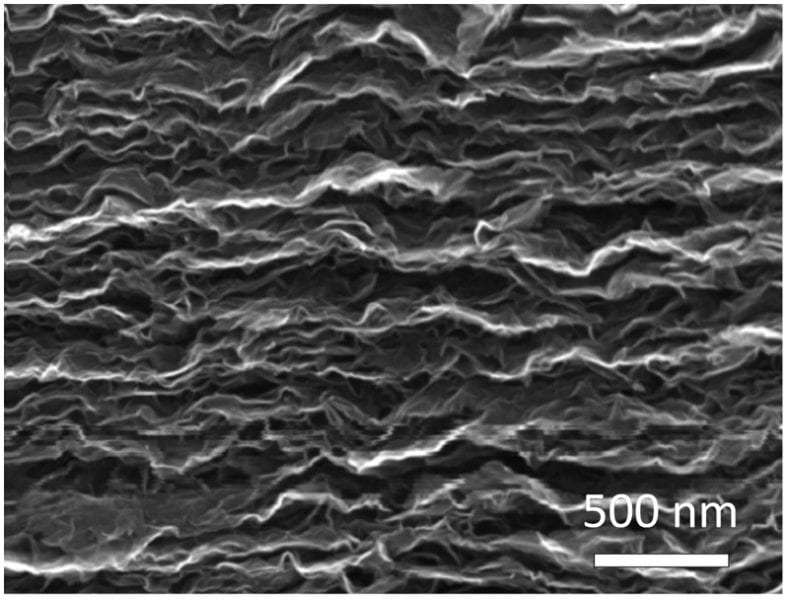

Chinese researchers develop a new process to make flexible electrodes for lithium ion batteries quickly and easily.
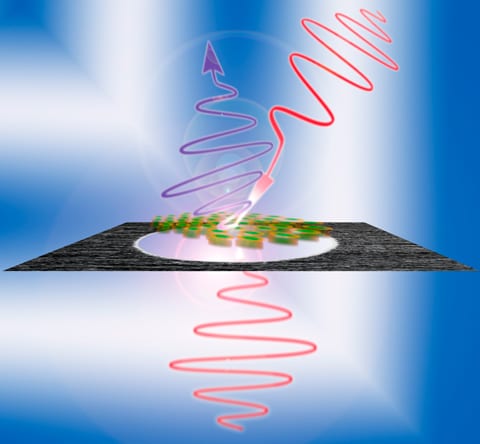
Researchers succeed in generating flashes of extreme ultraviolet radiation via the reflection from a mirror that moves close to the speed of light.
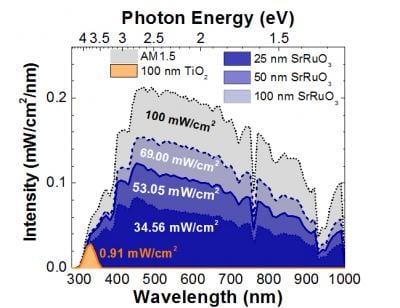
Development method allows researchers to more efficiently utilize the solar spectrum.
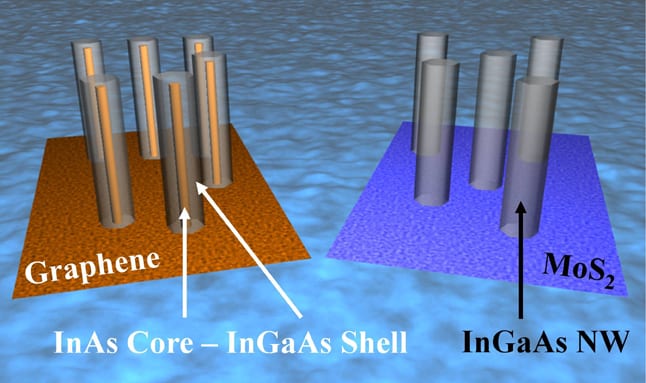
Discovery comes as researchers set out to grow nanowires of a compound semiconductor on top of a sheet of graphene.

PEEK-like phthalonitrile resin has superior high-temperature and flammability properties for use in numerous marine, aerospace, and domestic applications.
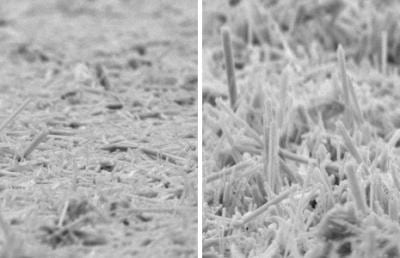
Fabricated nanorods are not only straight and tall (at least by nano-standards), but also have an optimal crystal structure.
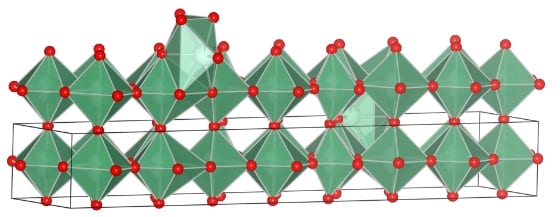
Synthesized form of niobium oxide developed at UCLA has a great facility for storing energy.
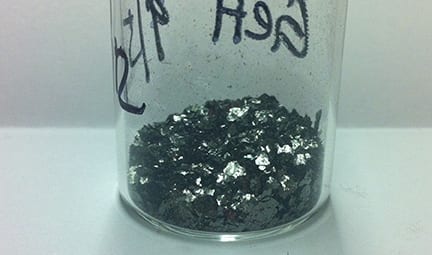
Thin germanium films, with properties similar to graphene, could lead to lighter, faster electronics.
ETH Zurich and Empa researchers develop a nanomaterial which enables considerably more power to be stored in lithium ion batteries.
Seven-atom ring that inevitably occurs at the junctions of grain boundaries in graphene is the culprit.
 New theory suggests gravity is not a fundamental force
 Higgs boson may be driving the Universe’s expansion
 Water-powered gadgets may be on the horizon thanks to new evaporation-based energy device
 Scientists discover a new class of antibiotics
 Micron-sized hidden dimensions could solve two of physics’ deepest puzzles
 A new type of dark matter could explain mysterious radiation from the Milky Way’s core