Renewable energy could fully power a large electric grid 99.9 percent of the time by 2030 at costs comparable to today’s electricity expenses.
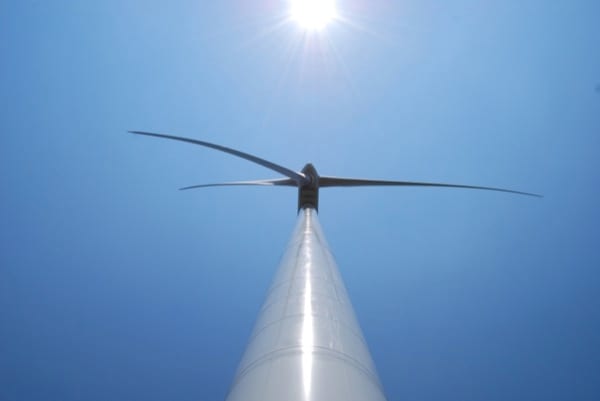

Renewable energy could fully power a large electric grid 99.9 percent of the time by 2030 at costs comparable to today’s electricity expenses.
Rolith has announced that it has received an exclusive license to methods of micro and nano-patterning substrates to make transparent conductive electrodes.

Insight into the properties of fullerene is set to open the door to better and cheaper organic solar cells.
Wanxiang to acquire substantially all of A123’s assets for $256.6 million subject to approval.
Saft has been awarded a multi-million dollar contract from Boeing to build Li-ion battery packs for four new 702SP communications satellites.
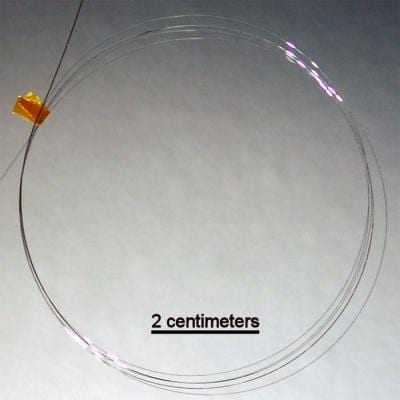
Researchers make a fiber out of crystalline silicon semiconductor materials that can function as a solar cell.
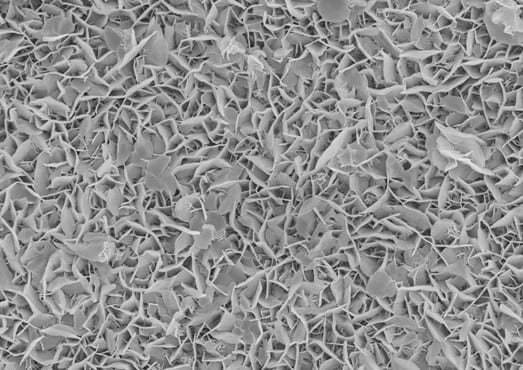
Professor X. W. Lou and co-workers report a new method to grow nanosheets on conductive substrates as a conductive agent-free electrode for supercapacitors.
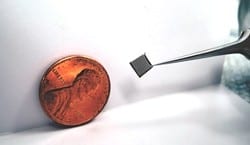
New breed of micro fuel cell could serve as a long-lasting, low-cost, and eco-friendly power source for portable electronic devices.
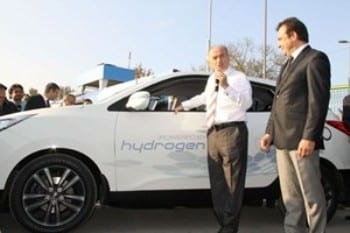
Hydrogenics Corporation has opened an electrolysis-based hydrogen fueling station at Golden Horn in Turkey.

Two Berkeley Lab research projects awarded grants by the Department of Energy’s Advanced Research Projects Agency-Energy to advance energy technologies.
 New theory suggests gravity is not a fundamental force
 Higgs boson may be driving the Universe’s expansion
 Water-powered gadgets may be on the horizon thanks to new evaporation-based energy device
 Scientists discover a new class of antibiotics
 Micron-sized hidden dimensions could solve two of physics’ deepest puzzles
 A new type of dark matter could explain mysterious radiation from the Milky Way’s core