New research from an American group shows the incorporation of DNA and RNA bases in organic light emitting diodes.
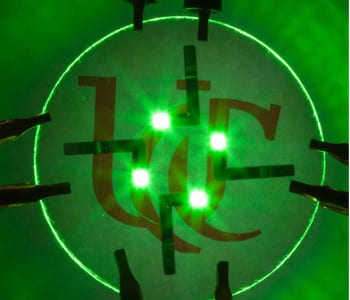

New research from an American group shows the incorporation of DNA and RNA bases in organic light emitting diodes.
Experiments examine the scale at which strong quantum effects emerge in silicon nanocrystals.
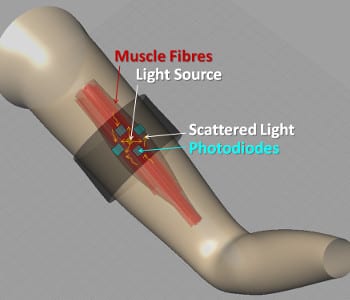
Researchers shine light into muscle to detect instructions for artificial limbs.
Researchers develop a high concentration graphene ink suitable for screen printing and a screen printing method for fabricating high-resolution patterns.
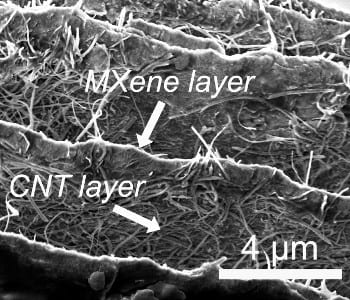
Flexible MXene/carbon composite electrodes composed of alternating layers of titanium carbide-based MXene and carbon nanotubes have been fabricated.

British researchers have reported a window electrode based on an ultra-thin bilayer of copper and amorphous tungsten sub-oxide.
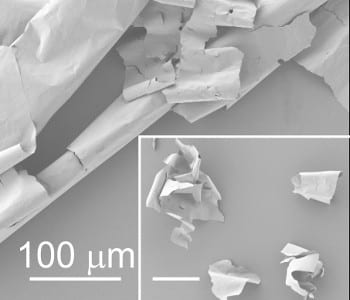
A German research team have fabricated magneto-electronics that fulfill the performance and processing requirements for consumer electronics.
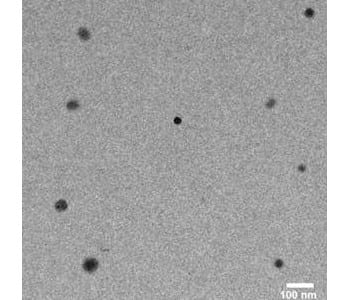
PDI-based organic nanomaterials have been successful developed and used for detection of deep human glioblastoma in mice models using photoacoustic imaging.
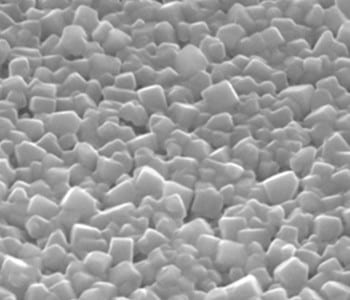
Researchers have formed perovskite films from a seed layer grown with atomic layer deposition, an standard technology for dielectric materials.
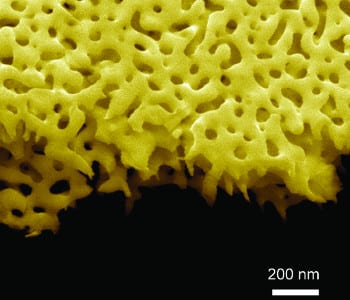
New research has found that “edge-free” monolayer MoS2 films supported by 3D nanoporous gold possess outstanding catalytic activity,

 Micron-sized hidden dimensions could solve two of physics’ deepest puzzles
 Turning Periods into Power: Menstrual Blood a Valuable Resource for Medical Diagnostics
 Surfactants Steer Supraparticle Structure
 Bone loss in obesity traced to gut microbiota
 Edible electronics realize safe, complex monitoring devices
 Fermilab Confirms Muon g-2 Measurements